Numbers-matching engines, original lacquer paint, and 50-year-old rubber were never built for 115°F. Here is how to store a muscle car in the desert without burning value.
A numbers-matching 1969 Camaro Z/28, a Hemi ‘Cuda, a Boss 429 — these are not cars you replace. They are appreciating assets where the original drivetrain, the factory build sheet, and the surviving paint are the entire value proposition. Park one in an uninsulated Las Vegas garage and you are running a slow chemical attack on every component that makes it worth six figures. At REVCity Auto Storage — 7185 Bermuda Rd, Las Vegas NV 89119, 725-272-1803 — we store vintage American muscle to the same 50–70°F, 40–50% humidity, UV-free standard we hold for Ferrari and Rolls-Royce clients. This is what the desert does to a classic muscle car, what it costs in real money, and how to store one so it gains value instead of losing it.
Modern collector cars have galvanized panels, urethane paint, ethanol-tolerant fuel systems, and sealed electronics. A vintage muscle car has none of that. Single-stage lacquer or enamel paint, bare-steel body cavities, a cast-iron block with thin water jackets, rubber and cork gaskets formulated in the Nixon administration, and a carburetor full of brass that ethanol eats alive. Every one of those weaknesses is amplified by desert heat.
Original lacquer paint is the first casualty. Las Vegas runs a UV index of 10–12 from May through September — the ‘extreme’ classification. Single-stage finishes have no clear coat to absorb that radiation. The pigment oxidizes, the surface chalks, and a survivor-grade original paint job that adds tens of thousands to a car’s value fades to a respray candidate. On a documented numbers-matching car, original paint can represent 15–30% of total value. Losing it to UV is a $15,000–$40,000 mistake on a six-figure car.
The fuel system is the second. Today’s pump gas carries up to 10% ethanol, which is hygroscopic — it pulls moisture out of desert monsoon air and turns it into corrosive acid inside the tank, lines, and carburetor. A Holley or Carter four-barrel left full of ethanol pump gas for a summer comes back with green corrosion on the brass, swollen accelerator pump diaphragms, and varnished jets. A proper carb rebuild runs $400–$900; a new-old-stock correct carburetor for a rare application can clear $2,500.
Then there is everything rubber. Date-coded bias-ply tires, original radiator hoses, fuel lines, and weatherstripping all dry-rot under UV and heat cycling. A correct set of reproduction Polyglas tires is $1,400–$1,800. Correct weatherstripping for a B-body Mopar runs $600–$1,200 installed. None of it had to fail — it failed because the car sat in the wrong environment.
Muscle car damage is predictable. The same five systems fail on every car that summers in an unconditioned Las Vegas garage. Manage these five and the car survives indefinitely.
Collectors who store badly tell themselves the car is ‘just sitting.’ It is not sitting — it is degrading on a schedule. Here is what a single Las Vegas summer of poor storage typically costs on a numbers-matching muscle car, versus the cost of doing it right.
| Damage From Poor Storage | Typical Repair / Loss | Preventable? |
|---|---|---|
| Faded original single-stage paint | $8,000–$40,000 value loss (survivor premium gone) | Yes — UV-free storage |
| Carburetor corrosion & rebuild | $400–$2,500 | Yes — fuel stabilizer / ethanol-free |
| Cracked weatherstrip & seals | $600–$1,500 installed | Yes — climate control |
| Flat-spotted / dry-rotted tires | $1,400–$1,800 per set | Yes — jack stands / climate |
| Dead battery & sulfated charging | $180–$400 | Yes — battery tender |
| Acidic coolant block corrosion | $1,500–$6,000+ | Yes — flush before storage |
Add it up and a careless summer routinely costs $12,000–$50,000 on a serious car — before you count the diminished value a knowledgeable buyer assigns to a car with a respray and replaced original components. Professional climate-controlled storage at REVCity costs a fraction of any single line item above. The economics are not close. The same logic drives our Las Vegas heat damage analysis and our climate-controlled vs temperature-controlled storage guide.
REVCity Auto Storage is Las Vegas’s only purpose-built climate-controlled luxury vehicle facility, and vintage muscle is exactly the use case it was designed for. The 50–70°F temperature band and 40–50% relative humidity stop the chemistry that destroys original paint, brightwork, and rubber. The fully enclosed, UV-free building means a survivor-grade lacquer finish that has lasted 55 years keeps lasting.
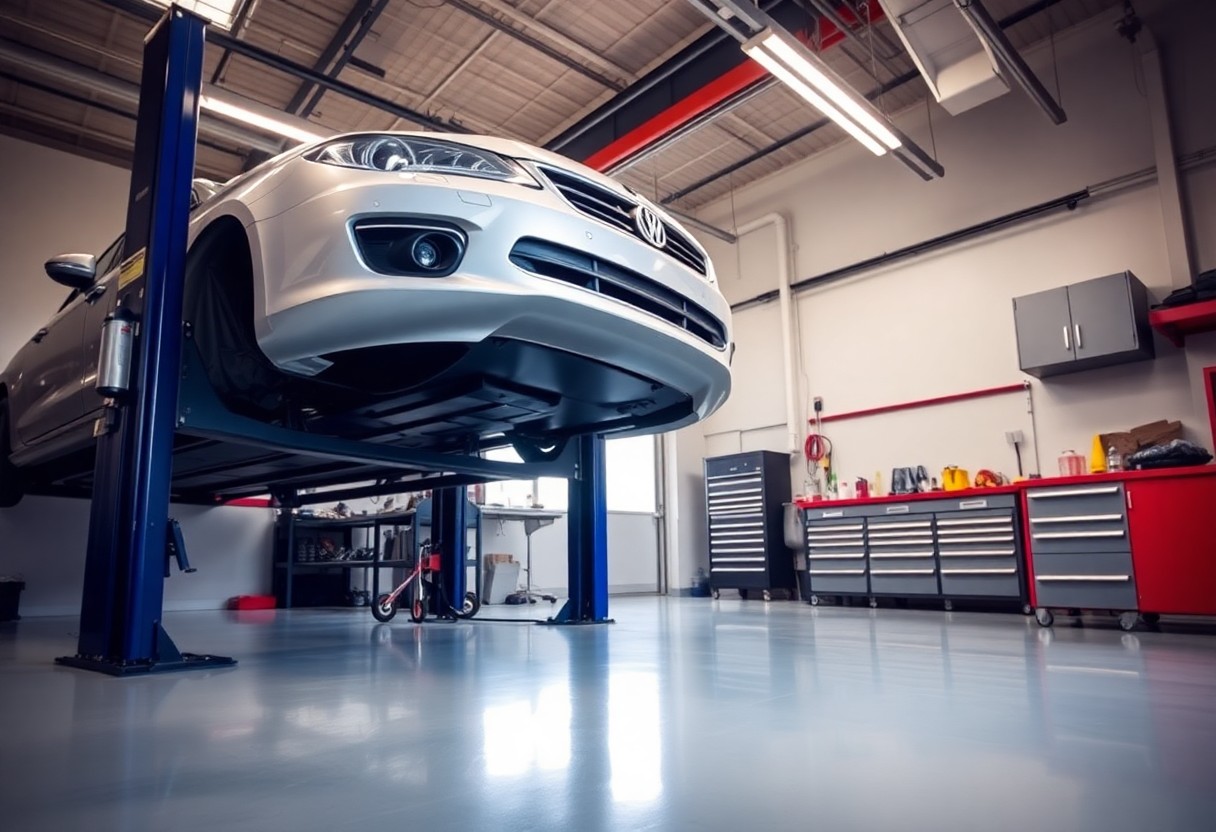
Every space includes a BendPak 4-post lift, which matters more for muscle cars than people expect. A car parked on a lift keeps its tires off cold concrete, eliminates flat-spotting, lets the suspension hang at rest, and makes it trivial to inspect the undercarriage of a restoration without crawling. Quality battery tenders — not trickle chargers — live at every space, and 24/7 monitored gated access protects a car that, in many cases, is irreplaceable.
The other half of the value is restraint: we do not start your engine every week, we do not move your car around, and we do not expose it to the elements. We store it the way the collector community and Hagerty agree a documented car should be stored — stabilized, tended, climate-controlled, and left alone until you want to drive it. For owners restoring a car with Nostalgia Hot Rods or another shop, the same space holds the car safely between phases of the build.
The right preparation turns a six-month layup into a non-event. Skip it and the car pays for it in spring. This is the protocol our team follows on every classic that comes through the door, and the one a careful owner can replicate before drop-off.
Wash, dry, and protect the paint. Bug acid, brake dust, and road film are corrosive when they bake on. Wash, dry every seam with compressed air, and lay down a coat of quality carnauba or a sealant. On original single-stage paint, that wax layer is a sacrificial barrier — cheap insurance on a finish that cannot be replaced without killing the survivor premium.
Change the oil and stabilize the fuel. Used oil is acidic and eats bearing surfaces over months of dormancy, so change it and run the engine five minutes to coat everything. Fill the tank to roughly 95% and dose with Sta-Bil 360 Marine or PRI-G — or better, store on ethanol-free fuel so there is no moisture-grabbing ethanol in the carburetor at all.
Flush the coolant, tend the battery, save the tires. Old coolant turns acidic and corrodes the cast-iron block from the inside; fresh 50/50 buffers it. Put the battery on a quality tender rather than a trickle charger. And get the weight off the tires — a BendPak 4-post lift does this automatically, which is why every REVCity space has one. Done right, the car sits happily for months and fires on the first crank when you want it.
Climate-controlled at 50–70°F. 40–50% humidity. UV-free. BendPak lifts and battery tenders at every space. Call 725-272-1803 or request a quote for vintage muscle car storage in Las Vegas.