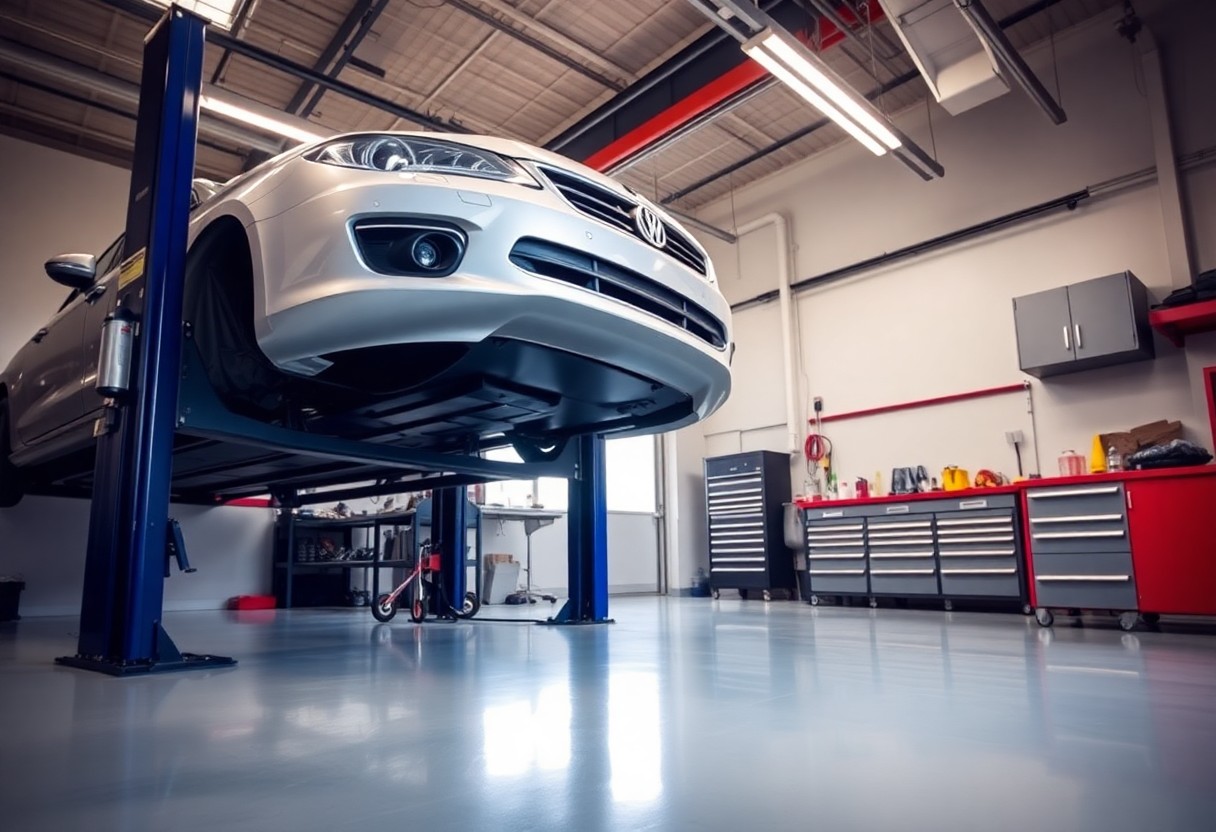
Storage temperature drives nearly every long-term failure mode — battery, paint, rubber, fluids, electronics. Here is the engineering answer and what 50–70°F actually delivers.
Related reading: How Long Can Fuel Sit in a Stored Car in Las Vegas?.
Storage temperature is the single largest variable controlling long-term vehicle preservation. Battery calendar aging, rubber and plastic hardening, fluid oxidation, paint clearcoat degradation, and corrosion rates are all temperature-dependent — most following Arrhenius chemistry (rate doubles every 15°F above 77°F). A car stored at 115°F Las Vegas garage ambient ages at roughly 3–4x the rate of one stored at 60°F. The engineering target for long-term storage of high-value vehicles is 50–70°F with 40–50% relative humidity. At REVCity Auto Storage — 7185 Bermuda Rd, Las Vegas NV 89119, 725-272-1803 — the facility maintains 50–70°F year-round, regardless of 115°F summer or 35°F winter outdoor conditions. The protocol below explains why that range exists, what happens above and below it, and how to evaluate the storage environment your collector vehicle currently lives in.
50–70°F is not arbitrary. It is the intersection of multiple failure curves: above 70°F, calendar aging accelerates; below 50°F, condensation risk rises sharply during tank and cabin breathing. The window is wide enough for practical climate control and tight enough to preserve materials.
Every 15°F above 77°F doubles oxidation and degradation rates across nearly all materials in the vehicle. The cumulative cost over a typical 5–10 year ownership cycle is meaningful — commonly $5,000–$25,000 in accelerated wear on luxury and collector vehicles.
| Storage Temp | Battery Aging | Rubber Hardening | Oil Oxidation | Paint Clearcoat |
|---|---|---|---|---|
| 50–70°F (climate) | Baseline (4–6 yr AGM) | Baseline (5–7 yr) | Baseline (5–7 yr) | Indefinite preservation |
| 77°F | 1.0x baseline | 1.0x baseline | 1.0x baseline | Slow oxidation |
| 92°F | 2.0x baseline | 2.0x baseline | 2.0x baseline | Noticeable in 8–10 yr |
| 107°F (typical LV garage) | 4.0x baseline | 4.0x baseline | 4.0x baseline | Noticeable in 4–5 yr |
| 122°F (LV garage peak) | 8.0x baseline | 8.0x baseline | 8.0x baseline | Noticeable in 2–3 yr |
| 160°F+ (sealed cabin sun) | Failure in months | Cracking in 12–18 mo | Failure in 1–2 yr | Yellow haze in 12 mo |
Below 50°F, condensation risk and lithium battery limitations become significant. Las Vegas winters do not normally hit freezing, but the engineering principle matters for context and for vehicles transported between climates.
Temperature without humidity control is incomplete. The 40–50% relative humidity target works with the 50–70°F temperature range to prevent both corrosion (high humidity) and material drying (low humidity). Las Vegas outdoor humidity ranges from 10% (summer days) to 60% (monsoon afternoons). Uncontrolled garage storage swings across this entire range daily.
Two terms used loosely in the storage industry. They mean different things, and the difference matters for a $500,000 Ferrari versus a $30,000 daily driver.
Most owners do not know the actual temperature inside their garage during peak summer. A $20 thermometer with min/max memory gives the answer in 48 hours. Place it on the dashboard, leave the car parked for 2 days, retrieve the reading.
Halves battery aging vs Las Vegas garage. Halves rubber hardening. Eliminates UV. Eliminates condensation. BendPak 4-post lifts. Smart float chargers at every space. 24/7 monitored gated access. Call 725-272-1803 to reserve.