
Ethanol and Classic Car Storage | REVCity Auto Storage
Ethanol Fuel Damage

Ethanol and Classic Car Storage — What You Need to Know

E10 gasoline is corrosive, hygroscopic, and aggressive on the rubber, fiberglass, and brass that classic fuel systems were never designed to handle. Here is what it does and how to store around it.

E10
Pump Gasoline Ethanol
90 days
Shelf Life In Tank
$3K–$15K
Carb / Tank Rebuild
50–70°F
REVCity Storage Temp
PRI-G
Recommended Stabilizer

Modern pump gasoline is E10 — 10% ethanol blended into 90% gasoline by EPA mandate since 2007. Ethanol is hygroscopic (it pulls water out of the air), it is a solvent (it dissolves varnish and old fuel residue inside the tank), and it is incompatible with much of the rubber, brass, fiberglass, and zinc-plated steel that classic American and European fuel systems were built around. Park a 1969 Mustang, a 1972 911, or a 1965 Corvette on E10 for a year in a Las Vegas garage and you can expect a fuel system rebuild that runs $3,000 to $15,000. Park the same car on stabilized non-ethanol or race fuel inside a climate-controlled facility and the fuel system survives indefinitely. The difference is fuel chemistry and storage temperature — nothing else. At REVCity Auto Storage7185 Bermuda Rd, Las Vegas NV 89119, 725-272-1803 — every classic vehicle in long-term storage runs the protocol below.

Why ethanol attacks a classic fuel system

Ethanol behaves like a solvent and a desiccant simultaneously. Three distinct chemistry problems unfold inside a fuel tank that sits on E10:

Hygroscopic moisture absorption
Ethanol pulls atmospheric water into the fuel. Once water content exceeds about 0.5%, the ethanol-water mix separates from the gasoline (phase separation) and sinks to the bottom of the tank. That water layer then sits on the fuel pickup, the sending unit, and the bare steel tank floor. Las Vegas low summer humidity helps — but the monsoon season (July–September) routinely sees 40–60% RH, and a vented tank breathes it in every night.
Solvent action on varnish and rubber
Ethanol is a polar solvent. It dissolves the varnish residue that decades of leaded and unleaded fuel left inside a classic tank, sending that crud through the fuel lines into the carburetor or the injectors. It also attacks natural rubber, nitrile rubber (pre-1988 fuel lines), fiberglass tanks (1960s Corvettes and early Lotuses), and the gaskets in mechanical fuel pumps.
Phase separation kills the engine
Once water and ethanol separate from the gasoline, the lower water-ethanol layer is non-combustible. The engine cranks but will not start — or starts and runs roughly until it pulls clean fuel from above the separation layer. Recovery means draining the tank, flushing the lines, and rebuilding the carburetor or injectors.
Aggressive on brass, zinc, and pot metal
Ethanol-water mixes corrode the brass jets in Holley, Carter, Rochester, Weber, and Stromberg carburetors. It corrodes the zinc-plated steel sending units in classic tanks. It attacks the pot-metal carb bodies common on 1960s European cars. A six-month sit on E10 is enough to ruin a fully restored Weber 40 IDF setup.
Affects fiberglass tanks
Fiberglass tanks (1953–1972 Corvette, early Lotus Elite, Excalibur, several boat brands) leach resin into the ethanol blend, generating black sludge that clogs fuel lines and injectors. Hagerty has documented multiple total-loss claims on fiberglass-tanked classics ruined by E10 storage.
Aluminum corrosion in modified cars
Custom aluminum fuel cells, aluminum fuel rails, and aluminum carb bodies pit and corrode under ethanol-water exposure. The pitting does not buff out — affected parts need replacement.
Fuel System Protection

E10 gasoline turns into a corrosive water-acid mix inside a stored classic tank within 90 days — the fix is fuel chemistry, not luck.

The Hagerty position on ethanol in stored classics

Hagerty Insurance — the leading collector car insurer in North America — has published guidance for stored classics. Their position is unambiguous and aligns with what every reputable classic engine builder says.

HAGERTY GUIDANCE
Hagerty recommends storing classic vehicles on either ethanol-free pump gasoline (where available) or on a non-ethanol storage-specific fuel such as VP Racing C12, Sunoco Standard, or Avgas 100LL. When non-ethanol is not practical, fill the tank to 95% capacity with fresh E10, add a dedicated ethanol stabilizer (PRI-G or Sta-Bil 360 Marine), and store at a stable temperature below 75°F. Tanks should be full to minimize vapor space and condensation. The fuel system should be cycled briefly (not idled long) before extended storage so stabilized fuel reaches the carburetor or injectors.

The Hagerty position lines up with what professional restorers do. The cheapest fuel system rebuild on a 1960s muscle car runs $3,000 (carburetor rebuild plus fuel lines). A complete fuel system rebuild on a 1965 Corvette with fiberglass tank, fuel cell conversion, and Weber carbs runs $12,000 to $15,000. A new Ferrari 308 fuel tank alone is $4,800. The ethanol prevention protocol costs $40 in stabilizer and 20 miles of driving on non-ethanol fuel. The math is not close.

Ethanol-free fuel sources in the Las Vegas Valley

Las Vegas has a limited number of stations that sell ethanol-free 90+ octane gasoline. The locations change. As of 2026, these are the operative options for collector owners storing through REVCity.

Fuel TypeOctaneUse CaseApproximate Cost / Gal (2026)
Ethanol-free pump gas (pure-gas.org listed)87–91Best for storage if available locally; verify station before buying$5.50–$6.50
VP Racing C12 (race fuel)108Leaded race fuel; ideal for stored race cars and hot rods$15–$18
Sunoco Standard110 leadedRace fuel; collector storage$14–$17
Avgas 100LL100 leadedAviation fuel; legally sold for off-road and storage use only$7–$9
E10 (regular pump gas) + PRI-G87–93Last-resort storage if ethanol-free unavailable; ~9 month max$4.10–$5.50
E10 + Sta-Bil 360 Marine87–93Last-resort; designed for hygroscopic moisture environments$4.10–$5.50
LAS VEGAS REALITY
Pure ethanol-free pump gas is hard to find inside the Las Vegas Valley. Most owners storing classics through REVCity bring their cars in on E10 with a heavy dose of PRI-G or Sta-Bil 360 Marine. Owners restoring high-value classics ($150,000+) typically run race fuel (VP C12 or Sunoco Standard) for storage because the per-gallon cost is irrelevant against the fuel system rebuild cost.

Fuel stabilizer that actually works on E10

Not every fuel stabilizer is effective against ethanol. Most consumer-grade stabilizers are antioxidants — they slow gasoline oxidation but do nothing about ethanol-water phase separation. The two products that classic engine builders consistently recommend are:

PRI-G (Power Research Inc.)
Industrial-grade fuel stabilizer used by power utilities for diesel and gasoline standby generators. Tested to maintain combustion stability for 12+ months on stored fuel. Does not prevent phase separation directly but extends usable shelf life on E10 to roughly 12 months versus 90 days untreated. Roughly $40 per 32 oz; treats 512 gallons.
Sta-Bil 360 Marine
Sta-Bil 360 Marine is specifically formulated for ethanol fuel in high-humidity environments. Contains additional moisture-displacing agents not found in regular Sta-Bil. Roughly $15 per 32 oz; treats 256 gallons. Effective for 6–12 month storage windows on E10.
VP Racing Madditive Storage
Newer storage additive formulated for ethanol blends. Strong corrosion inhibitors. Less established history than PRI-G but well-regarded among collector communities. Roughly $25 per 16 oz.
Sea Foam Motor Treatment
Multi-purpose cleaner more than stabilizer; useful for cleaning before storage. Not a substitute for PRI-G or Sta-Bil 360 Marine on long sits.
Star Tron Enzyme Fuel Treatment
Bio-enzymatic stabilizer. Some collectors prefer it on boats and small engines. Less proven on muscle car and exotic carb-fed engines. Acceptable for short storage.
Regular Sta-Bil (red bottle)
Not formulated for ethanol-water phase separation. Adequate for 30–60 day storage; not adequate for 6–12 month classic storage in a vented tank.

The full pre-storage fuel protocol for a classic car in Las Vegas

Run all of the following steps before the car enters long-term storage. The protocol below is what REVCity executes on every classic that enters our facility.

1. Choose the fuel for storage
If non-ethanol is available locally, drain the tank to 1/4 and refill with ethanol-free 91 or 93. If only E10 is available, top up with the freshest E10 obtainable (purchased that day, no more than 48 hours old).
2. Add stabilizer at full dose
PRI-G at 1 oz per 16 gallons, or Sta-Bil 360 Marine at 1 oz per 8 gallons. Add stabilizer BEFORE the last drive so it circulates fully through the fuel system.
3. Drive 15–25 miles
Long enough to bring engine, exhaust, and fuel system up to full operating temperature. This pulls stabilized fuel through the carburetor or injectors and burns off moisture in the exhaust and crankcase.
4. Top off the tank to 95% capacity
A nearly full tank minimizes vapor space and reduces condensation potential. Do not fill to 100% — leave room for thermal expansion.
5. Replace fuel line if NBR rubber pre-1988
Pre-1988 nitrile rubber fuel line is not E10-compatible. Replace with modern fluorocarbon (Viton/FKM) line rated for ethanol service. Roughly $40–$120 in parts.
6. Inspect and protect the fuel cap and vent
Modern EPA-compliant gas caps seal tighter than original-style caps. On classics with vented caps, install a temporary sealed cap for storage to minimize humid air ingestion.
7. Document the storage fuel and date
Record the fuel type, octane, stabilizer used, and the date the fuel was added. Photo of the receipt and the dipstick. Important for Hagerty agreed-value claims if anything goes wrong.
8. Battery tender connected separately
Fuel system protection is independent of battery management. See our tender vs trickle guide. Both protocols run in parallel.

Pre-1988 vs post-1988 classics — the materials problem

Fuel system materials compatibility with ethanol is a function of model year and OEM specification, not vintage alone. Many 1970s and 1980s European and American cars were built with materials that are not E10-tolerant.

Era / VehicleOriginal Fuel Line MaterialEthanol CompatibilityAction for E10 Storage
Pre-1980 American (Mustang, Camaro, Corvette, Chevelle)Natural rubber + NBRPoor — swells, cracksReplace fuel line with FKM/Viton; consider tank coating
1953–1972 Corvette (fiberglass tank)NBR + fiberglass tankTank leaches resinReplace tank with aluminum fuel cell, or run race fuel only
1970s European (911, 911 Turbo, Pantera, Ferrari)NBR + brass/pot-metal carbPoor — corrosion at carb jetsReplace fuel line; verify carb compatibility; storage stabilizer
1980s OE Bosch K-Jet / KE-Jet (911, Mercedes)NBR + steel injectorsMarginal — injector seals failReplace seals; FKM line upgrade; minimize E10 sits
Post-1988 AmericanFKM/Viton + modern injectionDesigned for E10Standard storage protocol acceptable
Modern collector (2010+)FKM + ethanol-compatible compositesExcellentE10 storage with stabilizer is fine

What a Las Vegas climate-controlled facility does that a home garage cannot

Fuel system chemistry is temperature-dependent. The Arrhenius rate principle applies: chemical reactions roughly double in speed for every 10°C (18°F) increase in temperature. A classic stored at 115°F peak summer in a Las Vegas garage runs every fuel system degradation reaction 3–4 times faster than the same car stored at 65°F.

Lower temperature = slower fuel degradation
Stable 50–70°F at REVCity halves the oxidation rate of stored fuel versus a Las Vegas garage that peaks at 100°F+. Stabilizer effectiveness extends proportionally.
Lower humidity = less water ingestion
REVCity holds 40–50% RH year-round. A Las Vegas garage swings from 8% (winter dry) to 60%+ (monsoon humidity). Vented classic tanks breathe the difference daily.
Stable temperature = no thermal cycling
Daily thermal cycling between 60°F nighttime and 120°F garage daytime drives the breathing cycle that pulls moist outside air into the tank. Stable storage temperature eliminates the cycle.
BendPak suspension = tank vapor space unchanged by tire compression
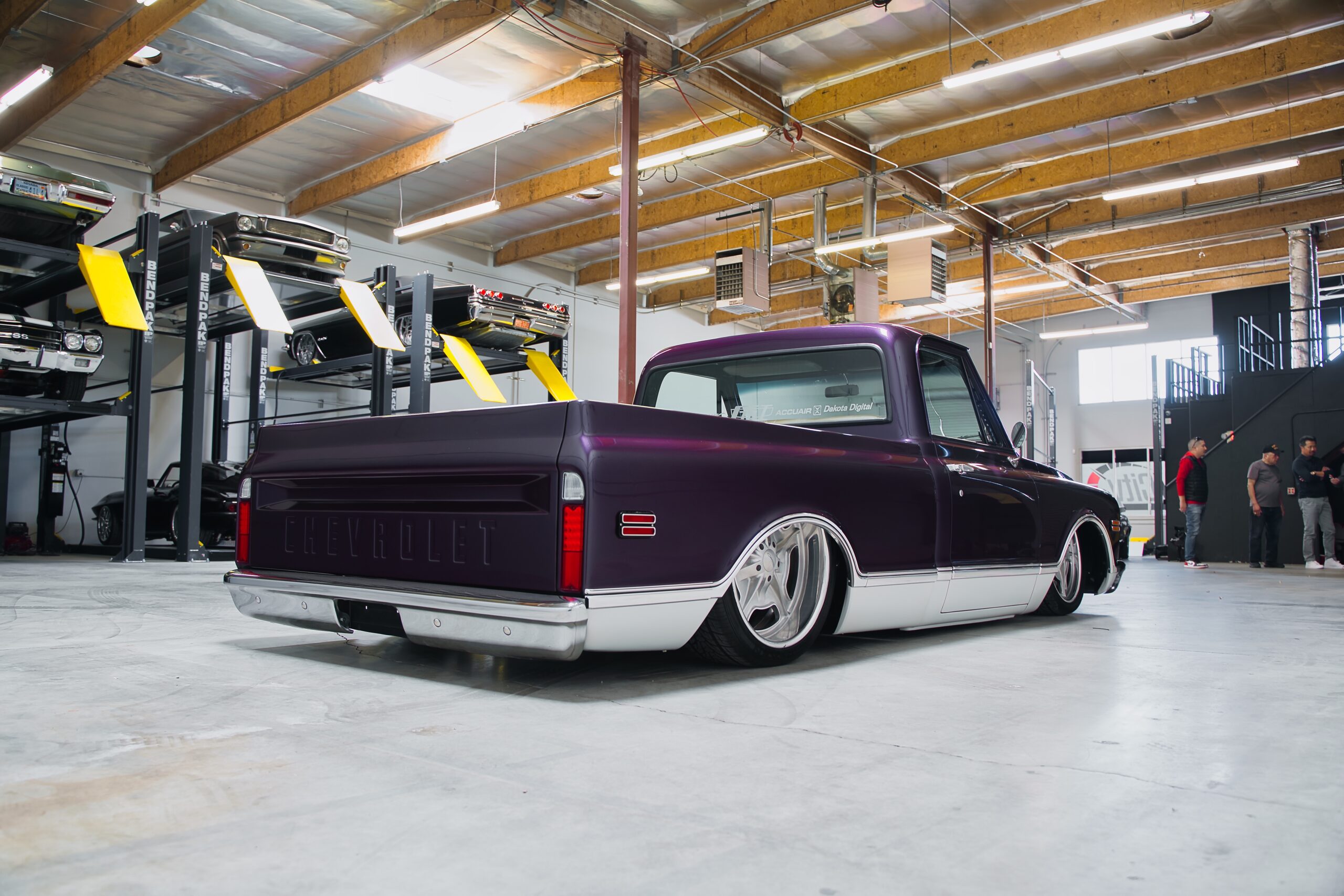
Vehicles on the ground for months can settle in a way that affects tank slope and vapor distribution; BendPak 4-post lifts (one at every REVCity space) keep the chassis in its design orientation for the duration.

Combined, the climate envelope at REVCity extends usable stored-fuel shelf life from the 90-day E10 typical to 9–12 months — long enough that owners can stabilize once and not think about fuel again for almost a full year. Climate control versus temperature control covers the underlying engineering.

Visit REVCity

Climate-controlled classic car storage that protects the fuel system, the carburetor, and the resale value

REVCity Auto Storage
7185 Bermuda Rd, Las Vegas NV 89119
Drive Times
  • Henderson12 min
  • Summerlin22 min
  • The Ridges24 min
  • MacDonald Highlands16 min
  • Lake Las Vegas28 min
  • Boulder City30 min
Frequently Asked

Common questions answered directly

How long can E10 gasoline sit in a classic car tank before going bad?
Untreated E10 in a vented classic tank in a Las Vegas garage is degraded in 60–90 days. Treated with PRI-G or Sta-Bil 360 Marine and stored in a Las Vegas garage at 100°F+ peak, usable life extends to 4–6 months. Treated and stored at REVCity in 50–70°F climate-controlled storage with 40–50% RH, usable life extends to 9–12 months. Race fuel (VP C12 or Sunoco Standard) stored under the same climate-controlled conditions remains usable indefinitely. Call REVCity at 725-272-1803 for classic storage with full fuel protocol.
Can I just leave my classic empty for storage instead of dealing with ethanol?
No. An empty tank in a vented classic is the worst storage state. Empty tank means maximum vapor space, maximum air exchange, maximum condensation, and bare steel exposed to humid air. Within 12 months an empty tank in a classic will develop visible interior rust that delaminates and clogs the fuel system on restart. Always store with a nearly full tank (95% capacity) of stabilized fuel, never empty.
Does ethanol-free ‘rec gas’ from marinas work for classic car storage?
Yes. Rec gas sold at marinas and small-engine retailers is typically ethanol-free 90 or 91 octane. It is fully compatible with classic fuel systems and stores well with conventional stabilizer (PRI-G or regular Sta-Bil). The downside is cost — $5.50 to $6.50 per gallon versus $4.10 for E10 — and limited availability in the Las Vegas Valley. For storage purposes the math is favorable on any classic worth more than $30,000.
What happens if my classic sits on E10 for 2 years with no stabilizer?
Expect phase separation in the tank (water-ethanol layer at the bottom), varnish dissolved into the fuel lines and clogging the carburetor, corrosion on brass jets and zinc fuel pump components, swollen or cracked NBR rubber fuel line, and possible tank corrosion. Restart attempts will fail or run rough. The repair runs $3,000 to $15,000 depending on vehicle — sometimes more if the tank or fuel cell is unique. For Las Vegas storage specifically, the heat accelerates every reaction. Hagerty has paid storage-damage claims on under-treated classics; see your policy for storage requirements.
Does REVCity have ethanol-free fuel available for fillup before storage?
REVCity does not sell fuel on premises. We can advise on the closest verified ethanol-free station before the vehicle arrives, and we will document the fuel type and date at intake for Hagerty or Chubb agreed-value claim purposes. For high-value classics we recommend the owner brings the vehicle in with race fuel or freshly stabilized ethanol-free pump gas already in the tank. Call 725-272-1803 to discuss the full pre-storage protocol before delivery.
DH
Written By
Dustin Hacker
Founder, REVCity Auto Storage & Nostalgia Hot Rods. Two decades restoring, racing, and storing collector vehicles in the Las Vegas Valley. Read full bio →
Reserve Classic Storage

Classic car storage that protects the fuel system, the brass, the rubber, and the resale value

Climate-controlled 50–70°F (4x slower fuel degradation than garage storage). 40–50% RH (eliminates phase separation risk). BendPak 4-post lifts at every space. Documented intake for Hagerty agreed-value claims. Call 725-272-1803 to reserve classic vehicle storage.
Call 725-272-1803 Request Quote
7185 Bermuda Rd, Las Vegas NV 89119