Climate, security, lift access, insurance — the technical and contractual gaps between a $90 self-storage unit and a purpose-built car storage facility.
On paper, a self-storage unit and a car storage facility look like the same product — covered, locked, indoors, monthly rate. In Las Vegas, that comparison breaks down within 60 days. A standard self-storage unit is a steel-walled box engineered to hold cardboard boxes at ambient temperature. A purpose-built car storage facility is engineered to hold a $300,000 Lamborghini Huracán at 50–70°F for a decade. The difference is not marketing — it is HVAC tonnage, insurance underwriting, security infrastructure, and contract law. At REVCity Auto Storage — 7185 Bermuda Rd, Las Vegas NV 89119, 725-272-1803 — we field this question every week from owners shopping climate-controlled options. Here is the full technical and financial breakdown.
Most self-storage facilities advertise “climate-controlled” units. Read the fine print. The industry definition of climate-controlled in self-storage is typically 55–85°F — a 30-degree window calibrated for furniture and electronics, not collector vehicles. A purpose-built car storage facility operates in a tighter band because vehicle materials are more sensitive than household goods.
Comparing self-storage to purpose-built car storage on identical metrics. A 10×20 climate-controlled self-storage unit in Las Vegas typically rents for $180–$280 per month. A single-vehicle space at REVCity ranges based on lift configuration and term length. The premium covers infrastructure that self-storage simply does not have.
| Specification | Standard Self-Storage | REVCity Car Storage |
|---|---|---|
| Temperature range | 55–85°F (30° window) | 50–70°F (20° window) |
| Humidity control | Passive — none active | 40–50% RH year-round |
| Floor surface | Bare concrete | Sealed concrete + BendPak lift option |
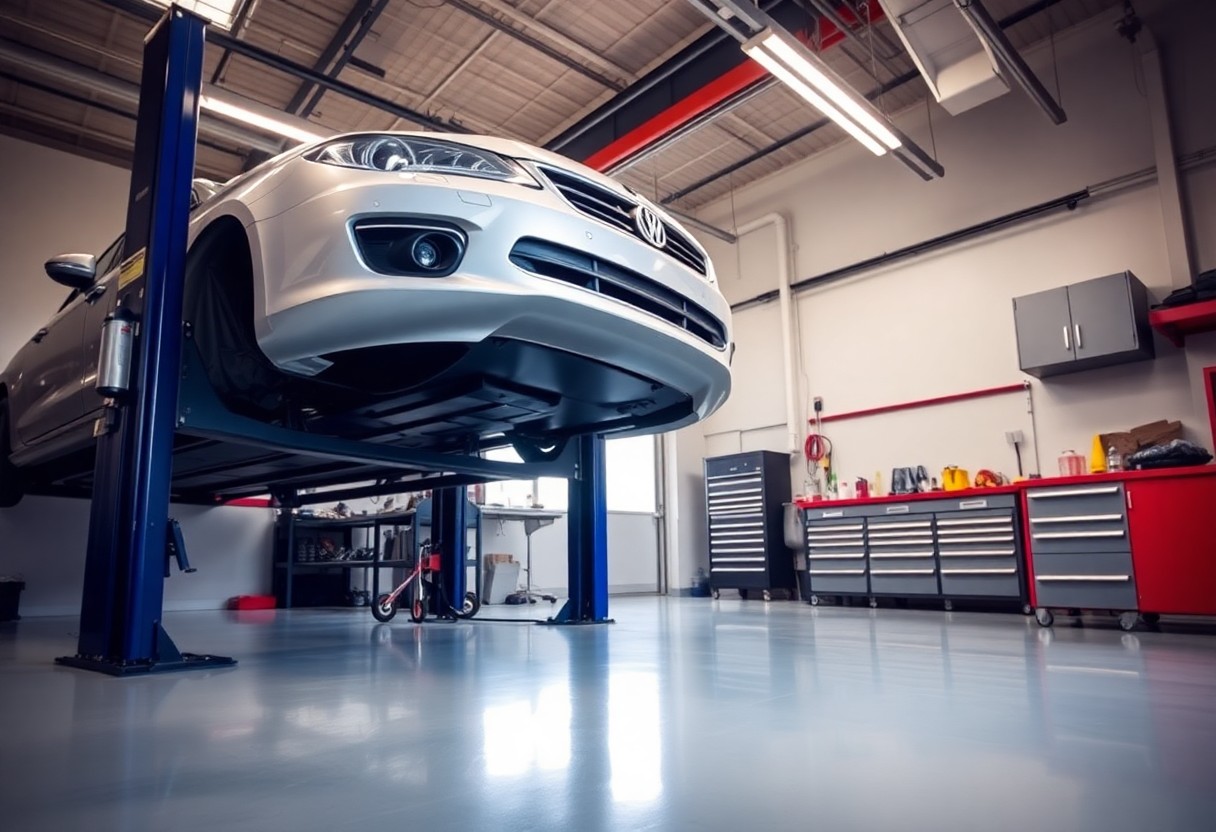
| Vehicle elevation | None — tires on concrete 24/7 | BendPak 4-post lift at every space |
| Battery tender hookup | None standard | Quality tenders provided |
| Vehicle access | Drive in only | Climate-controlled cabin transit |
| Security monitoring | Gate code + basic cameras | 24/7 monitored gated + vehicle-level oversight |
| Insurance recognition | Rarely qualifies for collector discount | Recognized risk reduction on Hagerty / Chubb |
| Contract language for vehicles | Often excludes operable vehicles | Built for vehicle storage specifically |
| Specialty staff | General self-storage attendant | Vehicle storage specialists, lift trained |
Read your self-storage lease before you put a $200,000 vehicle inside one. Standard self-storage contracts — Public Storage, Extra Space, U-Haul, CubeSmart — frequently contain language excluding operable vehicles, restricting fuel-in-tank quantities, or capping insurance recovery at $1,000–$5,000 per claim. The contract is not designed for collector vehicles.
Self-storage units work fine for furniture, holiday decorations, and seasonal items. The damage profile for vehicles stored in self-storage is well-documented across the collector community.
Battery death. Standard self-storage units do not provide power outlets at the unit level. Without a battery tender, a healthy AGM battery loses 1–2% charge per day at ambient temperature. At 100°F+ summer temperatures, that rate accelerates significantly. A vehicle left for 6 months in non-climate self-storage will almost always need a replacement battery — $180 for a standard AGM, $400+ for an OEM Porsche or Mercedes unit.
Tire flat-spotting. A vehicle sitting on the same tire contact patch for months develops a flat spot in the rubber that may or may not round back out with use. Michelin Pilot Sport Cup 2 rubber on a Porsche 911 GT3 is $1,400 mounted. Pirelli P Zero Corsa on a Ferrari 488 — $1,800 mounted. A BendPak 4-post lift at REVCity eliminates this risk entirely.
Fluid degradation. Without monitoring or maintenance windows, fuel goes stale, brake fluid absorbs water, coolant separates, and power steering fluid oxidizes. Recommissioning a vehicle stored badly for 12 months at a self-storage unit routinely runs $800–$2,500 in fluid services alone.
Rodent intrusion. Self-storage units share walls and HVAC plenums with neighboring units. Rodents — particularly the desert pack rats common in Clark County — migrate through these shared spaces. Modern automotive wiring uses soy-based insulation that rodents specifically target. Wiring harness replacement on a modern luxury vehicle is $2,000–$8,000 depending on extent.
Theft and break-in exposure. Self-storage facilities are designed for non-vehicle storage and rarely operate the security infrastructure required for $100,000+ vehicles. Rolling door locks are vulnerable to bolt-cutter attacks. Camera coverage at the unit level is rare.
Self-storage is not the wrong product — it is the wrong product for collector and luxury vehicles. There are legitimate use cases where self-storage is appropriate.
Daily driver short-term storage. If a $25,000 daily-driver Toyota Camry needs to be stored for 30 days while the owner travels, a climate-controlled self-storage unit at $240 is a reasonable choice. The vehicle is not appreciating in value, the cosmetic finish is not collector-grade, and the cost-benefit aligns with self-storage pricing.
Inoperable project vehicles. A non-running project car that the owner is slowly restoring and needs to keep off the street works fine in self-storage. The vehicle is not running, the fluids are not active, and the cosmetic condition is already work-in-progress.
Recreational vehicles with hard sides. Some self-storage facilities offer outdoor covered RV and trailer spaces specifically designed for those vehicles. That is a different product line within self-storage and works for its intended use.
The line is roughly drawn at vehicle value, appreciation potential, and intended duration. A vehicle worth more than $50,000, appreciating in value, or being stored more than 90 days is almost always better served by purpose-built car storage. Las Vegas heat damage and climate-controlled vs temperature-controlled distinctions matter most as vehicle value and storage duration increase.
The decision is rarely about per-month rate alone — it is about total cost of ownership over the storage period.
| Cost Category | Self-Storage (6 months) | REVCity (6 months) |
|---|---|---|
| Monthly base | $180–$280 × 6 = $1,080–$1,680 | Premium rate, full-service included |
| Battery replacement | $180–$400 likely | $0 — tender provided |
| Recommissioning fluids | $800–$2,500 typical | $0 — controlled environment |
| Tire damage (flat spots / dry rot) | $0–$1,800 risk | $0 — BendPak lift suspension |
| Paint/interior UV/heat damage | Minimal indoors, real risk if outdoors | $0 — UV-free, 50–70°F |
| Insurance premium impact | May not qualify for storage discount | Qualifies for collector storage credit |
| Six-month worst case total | $2,060–$6,380 | Premium rate only |
For a $150,000+ vehicle stored 6+ months, the question becomes which option costs more overall. The answer is almost always the self-storage unit, once recommissioning and damage costs land.
Physically, often yes — many facilities offer oversized drive-up units that fit a vehicle. Those units are engineered for household goods, which means bare concrete, no lift, usually no power for a battery tender and, at best, loosely controlled temperature with no humidity management at all.
Purpose-built vehicle storage manages temperature and humidity to a tight range, provides a four-post lift at every space to unload the suspension, supports battery maintenance, uses sealed vehicle-grade flooring and is staffed by people who handle collector and exotic cars daily. Self storage rents you a box.
Not always, once you compare like for like. Climate-controlled self-storage units large enough for a vehicle are priced at a premium, and lift-based vehicle storage doubles the density of a building, which narrows the gap considerably. The relevant comparison is total cost including what each option fails to prevent.
In Southern Nevada it is the single most important variable. Interior temperatures reach 160–190°F in direct sun, battery degradation roughly doubles per 15°F of sustained heat, and monsoon humidity swings drive moisture into brake fluid and upholstery. Temperature control alone, in a wide band, only addresses half of it.
Ask for the temperature and humidity setpoints in writing, confirm the building is fully enclosed with no UV path, verify every space includes a lift and tender power, and check how access is monitored. REVCity Auto Storage is a purpose-built climate-controlled facility at 7185 Bermuda Rd, Las Vegas NV 89119. Call 725-272-1803.
Purpose-built climate control at 50–70°F. BendPak lifts at every space. 24/7 monitored security. Call 725-272-1803 for a Las Vegas car storage quote.