How to Protect Car Paint in Las Vegas UV | REVCity Auto Storage
Paint UV Protection

How to Protect Car Paint in Las Vegas UV

Las Vegas UV index hits 10–12 May through September — the extreme range. Without protection, clearcoat fails in 3–5 years and resale takes a 5–10% hit. Here is the protocol that works.

UV 10–12
Las Vegas May–Sep
3–5 years
Outdoor Clearcoat Life
5–10%
Resale Loss From UV
$8K–$25K
Repaint Cost (Exotic)
0
REVCity UV Exposure

Las Vegas UV is in the extreme classification by World Health Organization standards. The UV index runs 10 to 12 from May through September, hits 8 to 10 in March, April, and October, and stays at 4 to 7 even in midwinter. Paint, clearcoat, rubber trim, leather, dashboards, and plastics all photodegrade on accelerated timelines compared to coastal or northern climates. Outdoor-parked vehicles in Las Vegas lose visible clearcoat performance in three to five years — oxidation, peel, fade, and chalking start meaningfully sooner than in any other major U.S. market. Resale impact for an enthusiast or exotic vehicle showing UV damage is 5 to 10% of book value, which on a $250,000 McLaren is $12,500 to $25,000 in pure asset depreciation. The protection protocol is well-established, but it is multi-layer: storage location, surface preparation, paint protection film, ceramic coating, and ongoing maintenance. At REVCity Auto Storage7185 Bermuda Rd, Las Vegas NV 89119, 725-272-1803 — indoor 50–70°F storage eliminates UV exposure entirely, which is the single highest-ROI paint protection decision available to a Las Vegas owner.

What Las Vegas UV actually does to automotive paint

Automotive paint is a multi-layer system: primer, basecoat (color), clearcoat (UV-resistant topcoat). UV light damages each layer through different chemistry. Understanding which mechanism is doing the damage informs the right protection strategy.

Clearcoat photodegradation
Modern clearcoats include UV absorbers (HALS — hindered amine light stabilizers) that absorb UV photons and convert the energy to heat. UV absorbers are consumable — they deplete over time. Once HALS are exhausted, UV photons reach the polyurethane resin and break the cross-links. Result: chalking, peeling, and microcracking. In Las Vegas UV, HALS depletion runs roughly 2–3x faster than in moderate climates.
Basecoat fade and color shift
Color pigments absorb specific wavelengths of light. Reds, blues, and purples are the most UV-sensitive. Sustained UV exposure shifts the chemistry of the pigment particles — reds fade to pink or salmon, blacks fade to gray, blues fade to teal. The fade is permanent and uneven (sun-side fades faster than shade-side, hood and roof fade faster than rocker panels).
Heat-driven thermal cycling
Las Vegas summer paint surface temperatures reach 160°F+ on dark colors in direct sun. The expansion and contraction cycle stresses the basecoat-clearcoat interface, accelerating delamination on vehicles where the bond is already weak (factory rework, accident repaint, lower-quality refinish work).
Oxidation of metallic flake
Metallic and pearl finishes contain aluminum or mica flakes oriented in the basecoat. UV-driven oxidation darkens or dulls the flake, killing the metallic sparkle. The effect is most visible on silver, champagne, and pearl white finishes.
Chalking and microcracking
Late-stage clearcoat failure presents as chalky white deposits on the surface (oxidized resin) and a network of microcracks. Once microcracks form, water penetrates the basecoat and the repaint clock starts. Common on 10+ year-old vehicles in Las Vegas that have lived outdoors.
Rubber and plastic degradation alongside paint
Window trim, mirror housings, plastic bumper covers, vinyl roof inserts, and rubber seals all degrade on parallel UV curves. Paint protection without trim protection produces a vehicle with great paint and gray, cracked rubber — not a clean look. The Las Vegas heat damage guide covers the trim and rubber side in detail.
Indoor Storage
Indoor Storage

Las Vegas UV does not penetrate an indoor climate-controlled facility — the single most effective paint protection decision available.

The five-layer protection stack

Paint protection in Las Vegas is best thought of as a five-layer stack. Each layer addresses a different failure mode. Skipping any one layer is acceptable depending on vehicle value and use case — skipping all five guarantees 5–10% resale loss within five years on outdoor-parked vehicles.

Layer 1: Indoor storage (highest ROI)
Indoor 50–70°F facility eliminates UV exposure entirely. Halts every UV-driven failure mode immediately. Single most cost-effective decision available to a Las Vegas owner. REVCity Auto Storage at 7185 Bermuda Rd delivers this protection on every stored vehicle.
Layer 2: Paint protection film (PPF / clear bra)
Self-healing polyurethane film applied to high-impact and high-UV surfaces (hood, front bumper, fenders, mirrors, rocker panels). Modern PPF (XPEL Ultimate Plus, 3M Pro Series, Suntek Ultra) includes UV stabilizers that protect both the film and the paint underneath. 10-year warranty typical. Cost: $4,000–$9,000 for full-body coverage on most exotics.
Layer 3: Ceramic coating
SiO2-based crystalline coating bonded to clearcoat. Provides additional UV resistance, hydrophobic surface, easier maintenance. Does NOT replace PPF for impact protection, but does extend clearcoat life by 1–3 years in Las Vegas conditions. Cost: $800–$2,500 professional application. See our ceramic coating guide for full details.
Layer 4: Outdoor cover (when indoor storage not available)
Multi-layer breathable cover for outdoor or partial-shade storage. Inferior to indoor storage but better than bare. Block UV and dust. Critical to use a breathable cover — non-breathable plastic traps moisture and creates worse damage than UV alone. See our best car covers guide.
Layer 5: Regular wash and detail maintenance
Pollen, dust, brake dust, and atmospheric contaminants etch into paint and provide UV reaction sites. Weekly to bi-weekly wash with pH-neutral shampoo, monthly clay bar and sealant. Critical even on indoor-stored vehicles — the contaminants accumulate during the drive in.
Layer 6 (optional): Window tint with UV filter
Ceramic film window tint (3M Crystalline, Llumar IRX, XPEL Prime XR Plus) blocks 99%+ of UV radiation entering the cabin. Protects dashboards, leather, and interior trim from photo degradation. Cost: $400–$1,200 for full vehicle. High-ROI on convertibles, glass-roofed sedans, and panoramic SUVs.

Outdoor vs indoor — the quantified difference

Indoor storage is not a luxury — it is the single highest-ROI paint protection decision available to a Las Vegas vehicle owner. Quantified:

Storage EnvironmentAnnual UV ExposureClearcoat Service Life5-Year Resale Impact
Outdoor uncovered (Las Vegas)2,400–3,200 hours direct sun3–5 years to visible failure−8 to −15% (severe)
Outdoor covered (multi-layer cover)200–400 hours scattered7–10 years to visible failure−3 to −6%
Carport (partial shade)800–1,400 hours indirect5–7 years to visible failure−5 to −10%
Home garage (south-facing windows)100–300 hours filtered10–15 years to visible failure−1 to −3%
Home garage (no windows)Near-zero UV20+ years to visible failure0%
REVCity (indoor, no windows, climate)Zero UVIndefinite0%
ROI MATH
Five-year resale loss on a $250,000 McLaren stored outdoors uncovered in Las Vegas is approximately 8%, or $20,000. REVCity storage at full annual cost is dramatically less than the depreciation hit. For any vehicle worth more than roughly $40,000 in Las Vegas, indoor climate-controlled storage pays for itself in resale preservation alone — before counting battery, fuel, tire, leather, and rubber protection benefits.

Paint protection film — what to install and where

Paint protection film is the single most effective long-term physical barrier between paint and UV. Modern PPF includes UV stabilizers, self-healing polyurethane (heals minor swirl marks at 100°F+), and 10-year warranties on premium products.

XPEL Ultimate Plus (premium tier)
Industry-leading PPF. 10-year manufacturer warranty against yellowing, peeling, cracking. Self-healing topcoat. Hydrophobic surface. Highest-end choice for $100K+ exotics. Cost: $5,500–$9,500 full-body.
3M Pro Series (premium tier)
Direct competitor to XPEL. 10-year warranty. Slightly different hand and shine profile — some prefer XPEL, some prefer 3M. Both are correct choices. Cost: $5,000–$9,000 full-body.
Suntek Ultra (premium tier)
Strong competitor with excellent self-healing performance. 10-year warranty. Common on East Coast and Western U.S. installations. Cost: $4,500–$8,500 full-body.
Partial-coverage installation
High-impact surfaces only: hood, front bumper, fenders, mirrors, A-pillars, rocker panels. Lower cost ($1,800–$4,500) but leaves trunk, rear quarters, and roof exposed. Better than nothing but does not address roof and trunk UV exposure, which are the worst zones in Las Vegas.
Stealth / satin / matte PPF
Available in satin finishes for matte-painted vehicles (BMW Frozen, Lamborghini Matte). Same UV protection as gloss PPF, matched aesthetic. Cost similar to standard premium tier.
Re-application timing
Premium PPF lasts 7–10 years before requiring removal and reapplication. Las Vegas UV accelerates the upper end of the wear curve — expect 7 years rather than 10 on vehicles parked outdoors any significant amount. Re-apply before yellowing or peel begins.

Ceramic coatings — what they do and what they do not do

Ceramic coatings (SiO2 / silica-based crystalline coatings) bond chemically to clearcoat and provide a thin, hard, hydrophobic surface layer. They are NOT a replacement for PPF on impact-prone surfaces, but they DO meaningfully extend clearcoat life by providing additional UV resistance and a much easier-to-clean surface.

What ceramic coatings do well
Hydrophobic surface that sheds water, dust, and contaminants. Additional UV photon reflection. Reduces oxidation rate by an estimated 30–50%. Makes routine washing significantly easier — pH-neutral shampoo and water removes most contaminants. Extends clearcoat service life by 1–3 years in Las Vegas conditions.
What ceramic coatings do NOT do
Do not stop rock chips. Do not stop bug etching from acid digestion. Do not stop tar embedment. Do not heal scratches. The hardness rating (often marketed as ‘9H pencil hardness’) refers to mineralogical hardness of the cured surface, NOT impact resistance.
Layering with PPF
Best practice on high-end vehicles: PPF on impact surfaces, ceramic coating over the entire vehicle including the PPF. PPF handles impact and self-heals minor swirl. Ceramic coating handles UV, hydrophobic surface, and ease of maintenance. The two layers work together.
Professional vs DIY
Professional ceramic coatings (CQuartz UK 3.0, Gtechniq Crystal Serum Ultra, Modesta BC-04) are not available to consumers without certification. DIY consumer products (Cquartz, Adam’s Graphene Ceramic, Chemical Guys HydroSlick) are usable but deliver shorter service life (1–2 years vs 5–7 years professional).
Service life in Las Vegas
Professional ceramic coatings advertised at 5–7 years deliver 3–5 years in Las Vegas heat and UV. Plan to maintenance-wax or top off the coating annually to extend service life. DIY consumer coatings need annual reapplication in Las Vegas conditions.
Compatibility with REVCity storage
Ceramic-coated and PPF-protected vehicles benefit from REVCity climate-controlled storage. Indoor storage halts UV exposure entirely, so the consumable UV stabilizers in PPF and ceramic coating last meaningfully longer. Effectively doubles the service life of both layers.

Pre-storage paint protocol — what to do before the car comes in

Before any extended storage period, run this protocol. It is what REVCity recommends to every owner during intake conversations.

1. Wash with pH-neutral shampoo
Remove pollen, dust, brake dust, road grime, and atmospheric contaminants. Do NOT use dish soap — it strips wax and ceramic coating sacrificial layers.
2. Decontaminate with clay bar or iron remover
Embedded contaminants (rail dust, brake dust, industrial fallout) provide UV reaction sites and cause clearcoat oxidation under the surface. Decontamination removes them before storage.
3. Inspect for damage and document
Photograph every panel under natural light. Catch existing chips, swirls, scratches — protect against post-storage disputes. Important for Hagerty agreed-value claim documentation.
4. Apply sealant or top off ceramic coating
Fresh sealant (Sonax PNS, Wolfgang Deep Gloss) or ceramic top-coat (CarPro Reload, Gtechniq EXOv5) provides a sacrificial layer that absorbs minor abuse before the underlying coating is touched.
5. Verify PPF condition
Check edges for lift, yellowing, or peeling. Have PPF reseated or replaced before storage if any failure points exist. Storage period is the worst time to discover a PPF edge has lifted.
6. Cover or store uncovered — depends on facility
Indoor climate-controlled facilities (REVCity): no cover needed. Outdoor or non-climate storage: multi-layer breathable cover required.
7. Schedule mid-storage inspection if duration > 6 months
REVCity offers periodic visual inspections during long-term storage as part of standard service. Catch developing issues (PPF lift, sealant breakdown) before they become large problems.
8. Document mileage and storage start date
For Hagerty agreed-value purposes and resale verification. Photo of dashboard mileage at intake.
Visit REVCity

Indoor climate-controlled storage that eliminates Las Vegas UV exposure entirely — the highest-ROI paint protection available

REVCity Auto Storage
7185 Bermuda Rd, Las Vegas NV 89119
Drive Times
  • Henderson12 min
  • Summerlin22 min
  • The Ridges24 min
  • MacDonald Highlands16 min
  • Lake Las Vegas28 min
  • Boulder City30 min
Frequently Asked

Common questions answered directly

Does Las Vegas sun damage car paint?
Yes — meaningfully. Las Vegas UV index runs 10 to 12 from May through September, in the extreme classification by WHO standards. Outdoor-parked vehicles develop visible clearcoat failure (chalking, peeling, microcracking) in 3 to 5 years — about 2 to 3 times faster than vehicles in moderate UV climates. Resale impact on enthusiast vehicles runs 5 to 10% of book value, which on a $250,000 vehicle is $12,500 to $25,000 in depreciation. Indoor storage at 50–70°F (REVCity) eliminates UV exposure entirely. Call 725-272-1803 to reserve.
Will paint protection film stop UV damage?
Mostly — if it is a quality PPF with UV stabilizers. Premium products (XPEL Ultimate Plus, 3M Pro Series, Suntek Ultra) block 99%+ of UV reaching the clearcoat underneath and carry 10-year warranties against yellowing and peeling. PPF on its own does NOT eliminate the photodegradation of the film’s own UV stabilizers — those deplete over time, particularly in Las Vegas. Expect 7 years of effective service life on Las Vegas outdoor-parked PPF vs 10+ years in moderate UV. Combine PPF with indoor storage and effective service life is essentially indefinite.
Is ceramic coating worth it in Las Vegas?
For most enthusiast and luxury vehicles, yes. Ceramic coating extends clearcoat service life by 1 to 3 years in Las Vegas conditions, makes routine washing easier, and provides hydrophobic protection against the few rain events that hit. Professional ceramic coating runs $800 to $2,500 — a fraction of the resale-loss math on UV-damaged vehicles. Ceramic coating is best layered with PPF on impact surfaces; the two protocols work together rather than as substitutes. See our ceramic coating guide for full details.
Do I need a car cover if my car is in an indoor storage facility?
No. Indoor climate-controlled facilities (REVCity) provide 100% UV protection, dust control, and temperature stability without a cover. In fact, a fitted cover on an indoor-stored vehicle can trap micro-dust between cover and paint and cause minor swirl marks during cover-off events. Indoor storage is the only environment where cover-free storage is recommended on a high-value vehicle. Outdoor or carport storage absolutely needs a multi-layer breathable cover.
Does REVCity storage protect paint better than my home garage?
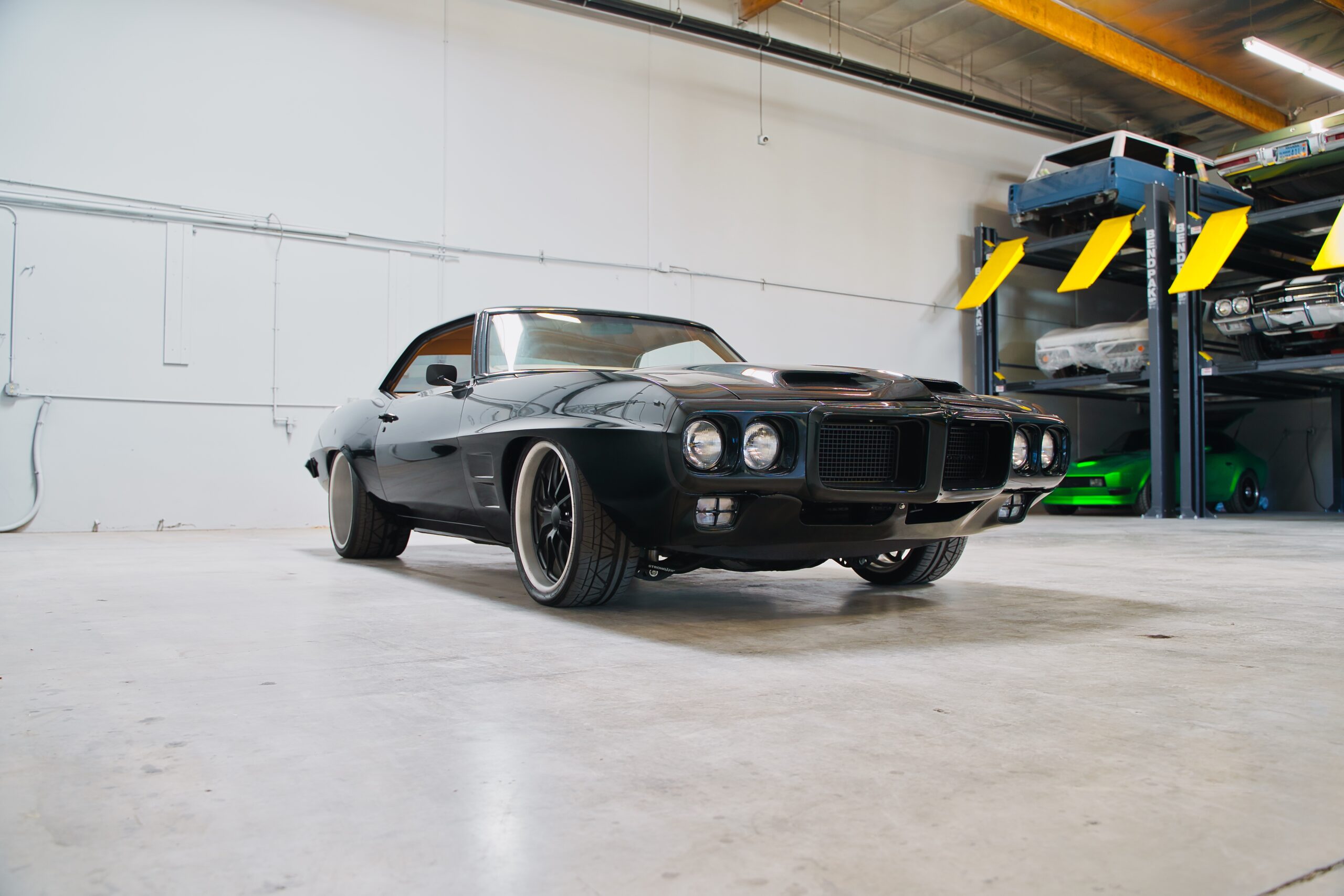
Generally yes — in three specific ways. First, REVCity has zero windows facing the storage bays, so UV reaching the vehicle is effectively zero versus a home garage with windows or skylights. Second, climate control holds 50–70°F year-round and 40–50% RH; home garages in Las Vegas swing 50–110°F seasonally, which drives thermal cycling stress on paint and clearcoat. Third, REVCity provides BendPak 4-post lifts that suspend the chassis and prevent uneven settling. For vehicles worth more than approximately $40,000, REVCity meaningfully outperforms a home garage on paint preservation. Call 725-272-1803 to reserve.
DH
Written By
Dustin Hacker
Founder, REVCity Auto Storage & Nostalgia Hot Rods. Two decades restoring, racing, and storing collector vehicles in the Las Vegas Valley. Read full bio →
Reserve UV-Free Storage

Indoor climate-controlled storage that eliminates Las Vegas UV damage on every vehicle

Zero UV exposure. 50–70°F climate-controlled (no thermal cycling stress on clearcoat). 40–50% RH. BendPak 4-post lifts at every space. Documented intake for Hagerty agreed-value purposes. Call 725-272-1803 to reserve indoor storage.
Call 725-272-1803 Request Quote
7185 Bermuda Rd, Las Vegas NV 89119