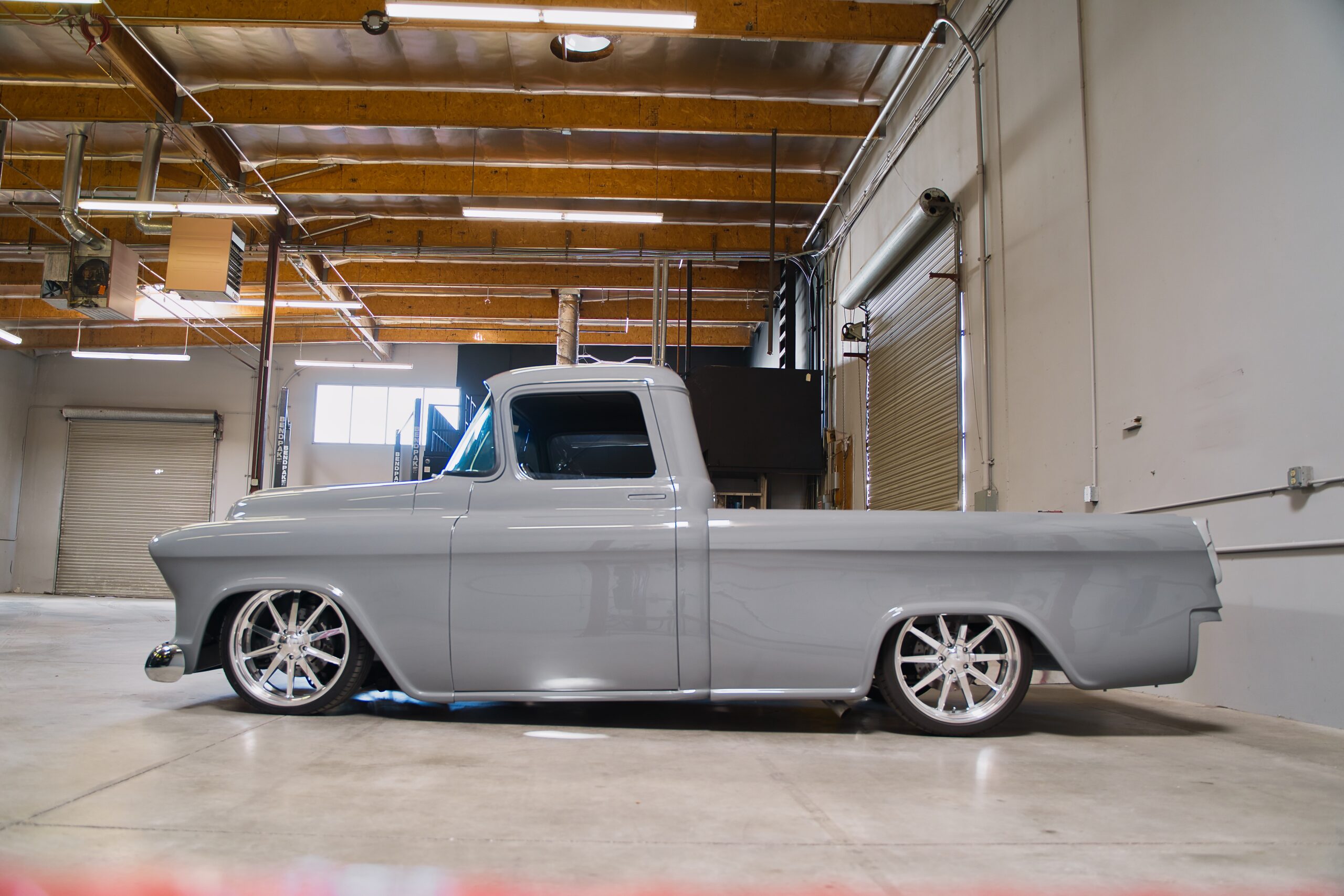
The technical, financial, and insurance differences that separate luxury vehicle storage from standard self-storage — and the vehicle value threshold where the upgrade pays for itself.
Luxury car storage and standard car storage solve different problems for different vehicles. Standard self-storage is a metal or cinder-block box rented monthly with a perimeter fence and a key code — appropriate for a daily-driver Civic or a project trailer. Luxury car storage is climate-conditioned, monitored, insurance-documented, and engineered specifically to preserve asset value on vehicles where a 1% finish loss is a $1,000–$10,000 line item. The two cost ranges overlap but the use cases do not. At REVCity Auto Storage — 7185 Bermuda Rd, Las Vegas NV 89119, 725-272-1803 — we operate purpose-built luxury vehicle storage in Las Vegas. This is the technical breakdown of what separates the two categories and when the upgrade is worth the money.
Most “car storage” listings in Las Vegas Google results are standard self-storage units — the same units that store furniture, seasonal decorations, and small business inventory. The vehicle is parked inside, the door is closed, and the customer comes back when they need it.
Standard self-storage typically delivers a perimeter fence with key-code entry, an unconditioned cinder-block or metal box with a concrete floor, a rollup door, and basic security camera coverage on common areas (not individual units). Interior temperatures track outdoor ambient with a 4–8 hour lag and an offset of +5 to +15°F due to sun exposure on the building envelope.
In Las Vegas, that means standard self-storage units regularly reach 120–140°F interior temperatures during July and August afternoons. Humidity tracks outdoor ambient — baseline 15–25%, monsoon spikes to 60%+. No battery tender provision. No vehicle-specific protocols. No insurance documentation tailored to vehicle storage.
For a $25,000 daily-driver Toyota Camry stored for 30 days, standard storage is acceptable. The vehicle is depreciating regardless and the damage rate is tolerable across short periods.
Luxury car storage is a different category of facility built specifically to preserve appreciating or high-value vehicles. The defining specifications:
The cost difference between standard and luxury storage in Las Vegas is typically $150–$400 per month. On a $25,000 daily driver, that gap is meaningful. On a $250,000 exotic, it is rounding error against the asset preservation value.
| Capability | Standard Self-Storage | Luxury Car Storage (REVCity) |
|---|---|---|
| Temperature control | None — tracks ambient | 50–70°F set point |
| Summer interior temp | 120–140°F | 50–70°F |
| Humidity control | None | 40–50% RH |
| Building envelope | Cinder block / metal | Insulated, sealed |
| Floor | Concrete | Sealed concrete with BendPak lifts |
| Battery tender | Not provided | Quality tenders included |
| Security | Perimeter fence | 24/7 monitored, gated, logged |
| Insurance documentation | No | Hagerty-aligned records |
| Other tenants | Mixed — furniture, daily drivers | Luxury / exotic / collector |
| Typical monthly cost | $80–$250 | $300–$700 |
| Appropriate for | Daily drivers under $25K, <30 days | Any vehicle >$50K, any collector vehicle |
The break-even math is not subjective. It depends on three variables: vehicle value, storage duration, and Las Vegas climate exposure.
Battery replacement. A quality OEM AGM battery for a luxury vehicle (BMW M Series, Porsche 911, Mercedes AMG) costs $400–$900 installed. In Las Vegas non-climate storage, AGM batteries last roughly 50% of their rated lifespan due to heat-driven sulfation. A battery that would last 4 years in San Diego storage lasts 18–24 months in standard Las Vegas storage. Climate storage at 50–70°F with a quality tender preserves rated lifespan.
Tire degradation. Performance tires like Michelin Pilot Sport Cup2 ($450–$700 per corner) or Pirelli P Zero Corsa ($500–$850 per corner) experience accelerated sidewall aging in heat. A $2,800 tire set ages roughly 2x faster in 120°F storage vs 65°F storage. On a 24-month storage period, that is $1,000–$1,400 of preventable tire life lost.
Paint and interior. Clearcoat UV damage in tier 1 or tier 2 storage drives finish repair quotes of $3,000–$15,000 for a full repaint of a luxury vehicle. Interior leather drying and dashboard cracking on a $100,000+ vehicle drives interior restoration quotes of $4,000–$12,000. These are not theoretical — they are line items on documented Las Vegas restoration invoices.
Resale impact. Hagerty data and standard collector vehicle market guidance indicate that documented climate-controlled storage history adds 5–10% to resale value on appreciating collector vehicles. On a $200,000 vehicle, that is $10,000–$20,000 in preserved value — 3 to 6 years of luxury storage cost.
Six specific damage mechanisms occur in standard Las Vegas storage and do not occur in climate-controlled luxury storage.
1. Heat-driven battery sulfation. Lead-acid and AGM chemistry degrades roughly 2x faster per 15°F temperature increase. 130°F storage cycles a battery’s life expectancy in under 24 months.
2. Clearcoat micro-cracking. Thermal cycling at the 30–40°F daily Las Vegas summer swing flexes paint clearcoat across 180+ cycles per summer. Micro-cracks become visible within 18 months on non-climate-stored vehicles.
3. Leather drying. Las Vegas baseline humidity 15–25% pulls plasticizers from leather over months. Climate storage at 40–50% RH maintains leather moisture content. See our Las Vegas heat damage guide for the chemistry.
4. Rubber seal hardening. Door seals, window seals, and engine bay rubber lose flexibility in dry heat. Hardened seals leak, whistle, and require replacement at $200–$800 per assembly.
5. Fuel system varnishing. Ethanol-blended pump fuel oxidizes and varnishes faster at elevated temperatures. Even with stabilizer, 130°F storage shortens stabilized fuel life from 12 months to 6.
6. Tire flat-spotting on hot concrete. Standard storage rests tires on uninsulated concrete that holds 110°F+ surface temps. BendPak lift storage eliminates the contact entirely.
For owners currently using standard self-storage who are considering the move to luxury storage, the transition is operationally simple. The decision is mostly about acknowledging that the current setup is not protecting asset value the way it should.
Step 1 — Audit current storage. Document interior temperature during a July afternoon visit. Check battery condition. Inspect leather and dashboard for early UV damage. Most owners discover damage they did not realize had occurred.
Step 2 — Quantify avoided damage cost. Battery replacement at $400–$900. Premature tire wear at $1,000–$1,400. Clearcoat correction at $3,000–$15,000. Interior leather restoration at $4,000–$12,000. These add up fast on a luxury vehicle.
Step 3 — Run the math against luxury storage cost. A $200–$400 monthly cost difference, multiplied across a 12-month storage period, is $2,400–$4,800 per year. The avoided damage on a $100,000+ vehicle typically exceeds that within 12–18 months.
Step 4 — Coordinate insurance. Notify the collector vehicle insurer of the storage facility change. Hagerty and similar carriers typically adjust agreed-value pricing once documented climate-controlled storage is on file.
Step 5 — Schedule the transition. REVCity offers concierge pickup and delivery for storage transitions. The vehicle moves once, the documentation updates once, and the storage standard upgrades permanently. See our best car storage in Las Vegas evaluation framework for the deeper comparison.
Standard storage rents you covered floor space. Luxury vehicle storage is engineered around the vehicle: actively maintained temperature and humidity, a four-post lift at every space to unload the suspension, battery tender support, sealed vehicle-grade flooring, and staff who handle exotic and collector cars daily. The difference shows up when the car comes out, not when it goes in.
Measure it against what it prevents. Sun, heat and monsoon exposure cost a collector car up to 10% of its market value over a few seasons through clearcoat failure, dashboard cracking, seal shrinkage and interior fade. On a $120,000 car that is $12,000 — more than a decade of the difference in monthly rate.
Yes, and the numbers are specific. Climate control reduces corrosion risk by up to 90% and extends interior component lifespan by up to 50%. Battery degradation roughly doubles for every 15°F of sustained temperature increase, which is why a 110°F garage ages a battery several times faster than a 70°F facility.
Ask for the actual temperature and humidity setpoints in writing, whether every space includes a lift, whether power is available for a battery tender, how access is monitored, and whether the facility is fully enclosed. Many operators advertise “climate controlled” while meaning temperature only, in a wide band, with no humidity management at all.
It helps with valuation rather than premiums directly. Hagerty, the leading collector-vehicle insurer, weighs documented storage conditions and maintenance history on agreed-value policies. A clean, documented, climate-controlled history is the evidence you want at claim time. Call REVCity at 725-272-1803.
50–70°F climate control. 40–50% humidity. BendPak lifts at every space. Quality battery tenders. 24/7 monitored. Call 725-272-1803 for purpose-built luxury vehicle storage in Las Vegas.