Chrome corrosion, carburetor varnish, tire flat-spotting, and battery death — what 115°F summers do to your bike and how to stop it. Related: How to Store a Hypercar in Las Vegas.
A motorcycle is the worst possible vehicle to store badly in Las Vegas. There is no climate-controlled cabin, no sealed paint refuge — every chrome surface, every rubber gasket, every fuel system component is fully exposed. Park a $28,000 Harley Davidson Road Glide or a $42,000 BMW S 1000 RR in a residential garage from May through September and you are running a year-long acid-and-UV test on parts that cost thousands to replace. At REVCity Auto Storage — 7185 Bermuda Rd, Las Vegas NV 89119, 725-272-1803 — we store motorcycles to the same 50–70°F, 40–50% humidity, UV-free standard we apply to Ferrari and Lamborghini clients. This is what kills a stored motorcycle in Las Vegas, what to do about it, and why a purpose-built facility costs less than one season of damage.
Motorcycle owners often assume a garage is a garage. In a coastal city, that is roughly true. In Las Vegas, an unconditioned garage routinely runs 95–110°F on summer afternoons, with overnight lows that barely drop below 85°F. The damage that accumulates over a 5-month summer is non-linear — every component has a temperature threshold beyond which the failure rate accelerates.
Chrome plating cracks when the base steel underneath expands at a different rate than the nickel-and-chrome layer above it. Heat cycles drive that delamination. Once moisture from monsoon humidity finds a hairline fracture, the corrosion sits between the layers where you cannot see it until the chrome blooms. A re-chrome job on a Harley front fender runs $400–$700. A full set of pipes, levers, and triple tree on a vintage bike can clear $3,500.
Carburetor float bowls hold residual fuel. Modern pump gasoline is up to 10% ethanol. In a hot garage, the ethanol absorbs atmospheric moisture and the volatile components evaporate, leaving behind a varnish that gums every jet and passage. A carb rebuild on a CV-style Harley unit is $250–$450 per side. A four-carb rack on a classic Honda CB750 — $800–$1,200, and that is assuming the brass jets are still serviceable.
Tires sit under the full weight of the bike on one contact patch for months. Dry rot from UV and ozone, combined with flat-spotting from static load, kills sport rubber faster than mileage does. A Pirelli Diablo Rosso IV set is $480 mounted. The Michelin Power Cup 2 on a track bike is $620 mounted.
Storage damage is not random. Every motorcycle that comes back wrong after a summer in storage failed in one of five predictable areas. Manage these five and the bike survives.
Whether you store at home or with a professional facility, the preparation protocol is the same. Skip any step and the bike pays for it.
Step 1 — Wash and dry completely. Salt, road grime, and bug acid are corrosive when left to sit. Use a quality motorcycle-specific wash like S100 Total Cycle Cleaner or Muc-Off Nano Tech. Dry every gap with compressed air at 30 PSI maximum to avoid blowing water into bearings.
Step 2 — Change the oil and filter. Used oil is acidic. The combustion byproducts in old oil eat bearing surfaces over months of dormancy. Mobil 1 Racing 4T 10W-40 or Motul 7100 is the right grade for most modern bikes. Run the engine 5 minutes after the change to coat every internal surface.
Step 3 — Treat the fuel system. Fill the tank to 95% capacity — the small air gap prevents pressure issues, but a fuller tank means less surface area for condensation. Add Sta-Bil 360 Marine (the marine formula handles ethanol-blended fuel better than the standard red Sta-Bil) at the dosing rate on the bottle. PRI-G is the alternative — many classic motorcycle owners swear by it for fuel that needs to last 12+ months. Run the engine 10 full minutes after treatment.
Step 4 — Remove or tend the battery. A motorcycle battery left without maintenance for 4+ months in Las Vegas heat will not start the bike in spring. Connect a quality tender — Battery Tender Plus, Optimate 4, or NOCO Genius 1 — and leave it on for the entire storage period. Cheap trickle chargers overcharge and boil electrolyte; quality tenders cycle and float.
Step 5 — Address the tires. Either lift the bike on a paddock stand (both wheels off the ground) or inflate to the maximum sidewall pressure printed on the tire (typically 41–48 PSI for sport tires) and roll the bike a half rotation every 30 days. Cardboard or plywood under the tire prevents cold-flow into concrete.
Step 6 — Protect chrome and bare metal. Apply a thin coat of ACF-50, Boeshield T-9, or even a quality paste wax to every chrome surface. The brake rotors get a light spray of WD-40 (yes, really — it wipes off in spring and prevents the surface flash rust that locks pads to rotors).
Step 7 — Cover correctly, or store indoors. A motorcycle cover that does not breathe traps moisture against the bike and accelerates corrosion. Use a breathable cotton-lined cover like the Dowco Guardian Weatherall Plus, or store indoors in a climate-controlled facility where no cover is needed at all.
Most Las Vegas residential garages are uninsulated, west-facing, and run 30+ degrees above ambient outdoor temperature on summer afternoons. A garage hitting 110°F for 8 hours a day, every day, from May through September accumulates the same damage profile as outdoor storage with shade.
| Storage Type | Summer Temp | Humidity | UV Exposure | Typical 6-Month Damage |
|---|---|---|---|---|
| Residential garage (uninsulated) | 100–115°F | 20–55% | None direct | Battery dead, carb gummed, chrome blooming |
| Residential garage (insulated) | 85–100°F | 20–55% | None direct | Battery degraded, fuel stale, slight oxidation |
| Outdoor with cover | 100–130°F surface | 20–55% | Reflected, monsoon rain | Paint fade, seal degradation, rust, theft risk |
| Self-storage unit (non-climate) | 100–120°F | Unsealed | None | Battery dead, dust, rodent risk, no security oversight |
| REVCity climate-controlled | 50–70°F | 40–50% | Zero | None — bike starts on first crank, no maintenance owed |
The math is simple. A $28,000 Harley losing 10% to UV and heat damage over a year is $2,800. A $42,000 sport bike losing the same percentage is $4,200. A single $1,200 carb rebuild plus a $480 tire set plus a $180 battery replacement is $1,860 in one season of poor storage — and that does not include the labor on chrome, the lost ride season, or the resale hit. Las Vegas heat damage on vehicles is documented across the industry; motorcycles take it worst because there is no insulating cabin.
REVCity Auto Storage is Las Vegas’s only purpose-built climate-controlled luxury vehicle storage facility — and that includes motorcycles. The same 50–70°F temperature range and 40–50% relative humidity that protects a Ferrari 488 protects a Ducati Panigale V4. The same 24/7 monitored gated access that protects a McLaren 720S protects a $90,000 Harley CVO Road Glide Limited.
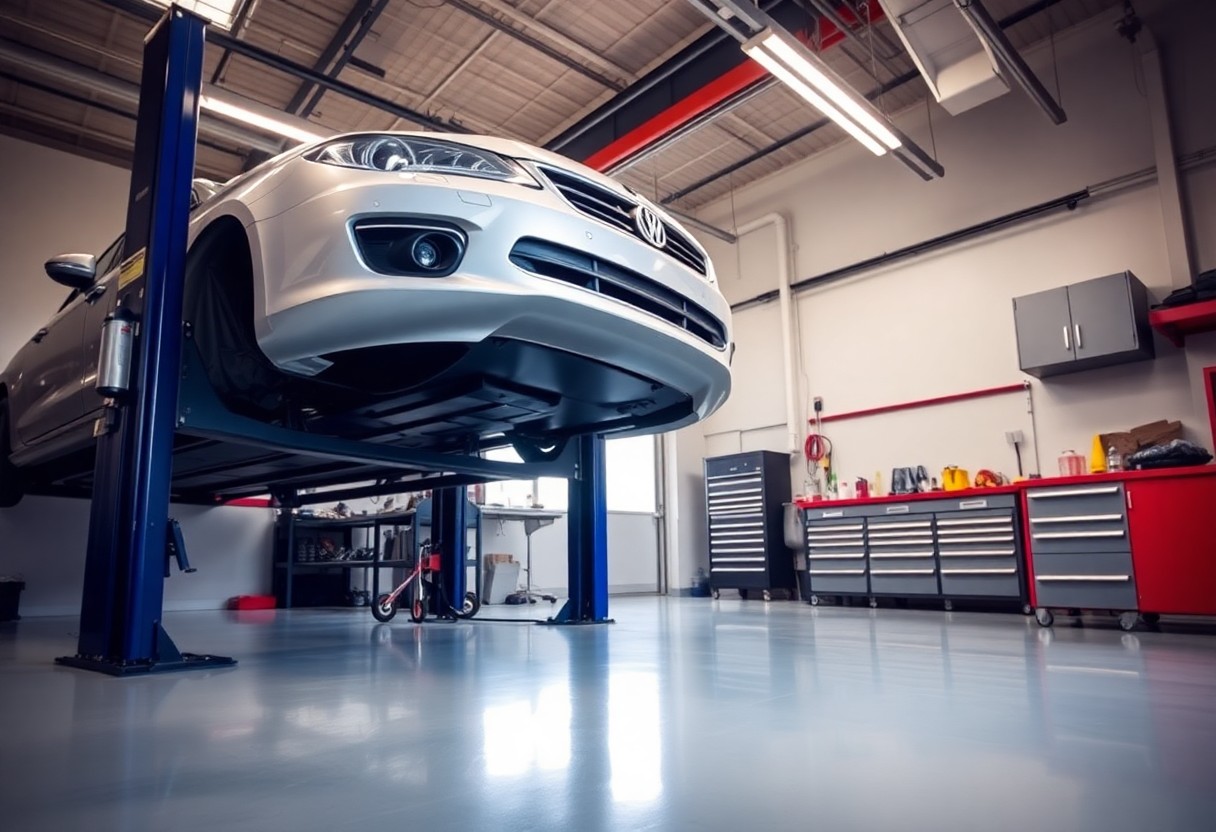
What is different for motorcycles is the storage density and access. We accommodate dedicated motorcycle parking with proper paddock stands, battery tender hookups at every space, and the option of BendPak 4-post lift storage for owners who want their bike elevated and their car beneath it — a common arrangement for collector clients with both. Hagerty Insurance, the leading collector vehicle insurer, recognizes purpose-built climate-controlled storage as a documented risk-reduction factor on agreed-value policies.
The other piece is what we do not do. We do not require monthly startups. Hagerty’s published guidance — and the consensus across the collector community — is that monthly startups do more harm than good. A cold start brings the engine to operating temperature for 5–10 minutes, condenses moisture into the oil, and shuts down before it can boil off. Stored properly with stabilized fuel and a battery tender, a motorcycle is happier sitting for 6 months untouched than being started weekly.
Climate-controlled at 50–70°F. 40–50% humidity. UV-free. Battery tenders at every space. Call 725-272-1803 or request a quote for motorcycle storage in Las Vegas.