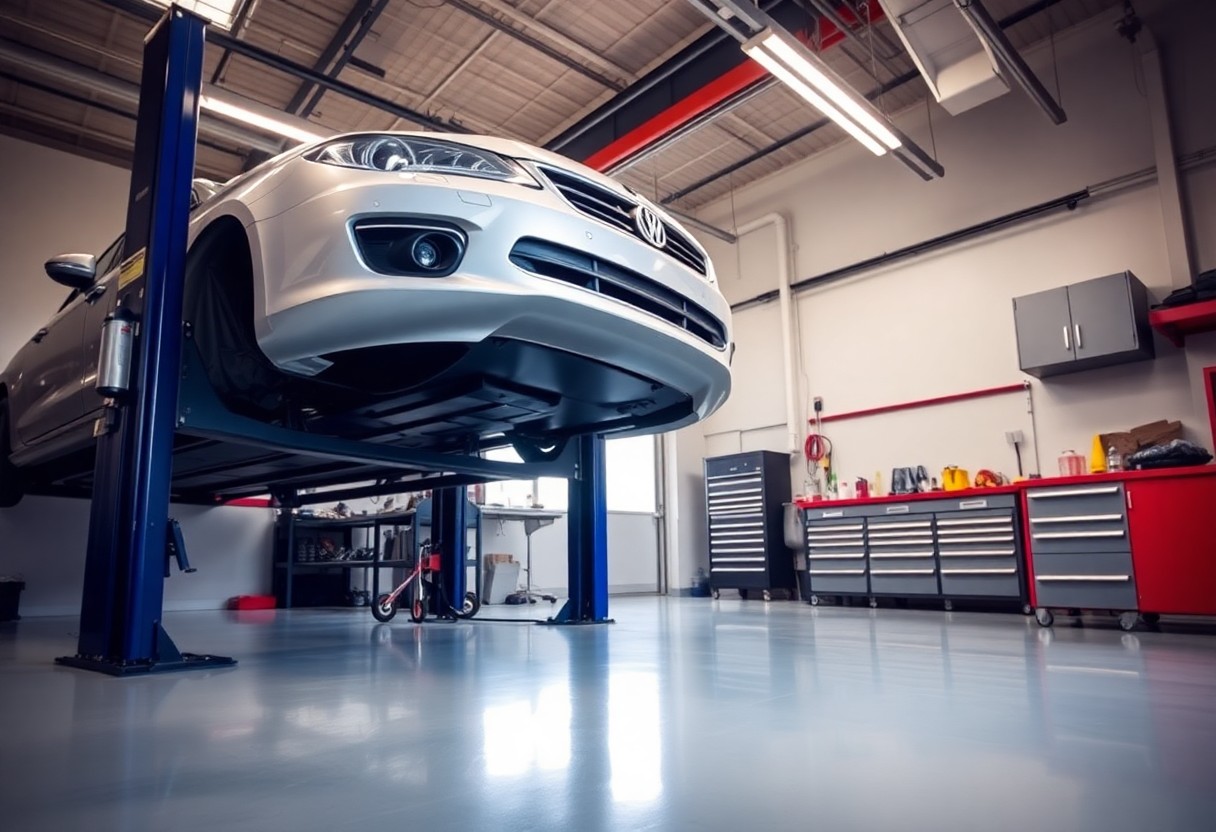
Six months, a year, or indefinite — the storage protocol changes everything once you cross the 90-day threshold in 115°F desert climate.
Long-term car storage in Las Vegas is fundamentally different from short-term storage. Anything beyond 90 days exposes a vehicle to multiple complete thermal cycles, full monsoon humidity windows, and the kind of UV accumulation that turns a $90,000 paint job into a $14,000 respray. Standard self-storage and covered RV lots that work fine for 30-day stints fail predictably at the six-month and twelve-month marks. At REVCity Auto Storage — 7185 Bermuda Rd, Las Vegas NV 89119, 725-272-1803 — long-term storage is the core operating model. Every protocol, from battery tenders to BendPak lifts to 40–50% humidity control, was engineered for vehicles parked for the long haul.
Industry definitions vary, but the operating distinctions are clear. Anything under 30 days is short-term — storage that mostly preserves the state the vehicle arrived in. Storage from 30–90 days is medium-term, where battery maintenance, tire pressure, and fluid stability begin to matter. Long-term storage is anything beyond 90 days, where compounding chemistry, materials science, and biological risk (rodents, mold spores) start producing measurable damage in untreated environments.
For Las Vegas vehicles, the 90-day threshold typically aligns with one full summer or one full monsoon season — both of which represent worst-case stress on a stored vehicle. A car put away in April and pulled out in October has lived through 180+ days of 100°F+ ambient temperatures. The wear is real, and it is preventable.
The damage mechanisms in long-term storage are not theoretical. They are measurable, repeatable, and well documented in the collector insurance industry. Five categories account for the vast majority of avoidable loss.
Long-term storage is the operating default at REVCity. Every space is set up the same way, regardless of whether the vehicle stays 30 days or three years.
The headline question on long-term storage is always the same: is the premium for climate-controlled storage worth it? For Las Vegas, the math is decisive once you frame it as damage avoided per dollar spent.
| Storage Tier | 12-Month Cost | Expected Damage (12mo, $100K vehicle) | Net Position |
|---|---|---|---|
| Self-storage unit | $2,400–$3,600 | $8,000–$22,000 (battery, tires, clearcoat, leather, possible rodent) | Net loss $5,600+ |
| Covered RV/boat lot | $3,000–$4,500 | $4,500–$12,000 (UV, dust, thermal cycling) | Net loss $1,500+ |
| Enclosed non-climate warehouse | $4,200–$6,000 | $2,000–$6,000 (heat soak, humidity) | Roughly break-even |
| REVCity (purpose-built climate) | $4,800–$8,400 | <$500 typical | Net positive $3,000–$15,000+ |
The vehicle handed off to long-term storage should arrive in storage-ready state. The protocol below applies to anything stored 90+ days in Las Vegas. For the full short-form checklist, see our car storage checklist.
REVCity is built specifically for the long-term storage problem — the use case where the storage environment compounds over months and years rather than days and weeks.
Purpose-built envelope. The facility is insulated, sealed, and mechanically conditioned from the foundation up. Not a converted warehouse with bolt-on HVAC.
Documented set points. 50–70°F and 40–50% RH year-round. Logs available for insurance documentation.
BendPak lifts at every space. The defining long-term protection. Tires unloaded, undercarriage inspectable, vehicle de-suspended. See our BendPak storage page.
Battery tender at every space. Smart float chargers, not trickle. The single most common point of long-term failure handled by default.
Tenant mix. Ferrari, Lamborghini, Rolls-Royce, McLaren, Bentley, vintage muscle, modern EVs. The operating standard reflects the asset class.
Founder accountability. Dustin Hacker, founder of Nostalgia Hot Rods, runs both businesses. Two decades of restoring and racing collector vehicles — the standards came from the inside of the hobby. See the founder page.
For a tier-by-tier breakdown of Las Vegas storage options, see our best car storage Las Vegas comparison. For the climate distinction specifically, see climate-controlled vs temperature-controlled storage. For the heat damage chemistry, see Las Vegas heat damage.
Climate-controlled 50–70°F. 40–50% humidity. BendPak lifts and battery tenders at every space. Call 725-272-1803 to tour the only purpose-built long-term luxury vehicle storage facility in Las Vegas.
Related: How to Store a Classic Car Long-Term