Haboobs during monsoon season blast paint with abrasive silica at highway speed. For a collector car, that’s a five-figure problem. Here’s the defense.
Related reading: How Las Vegas Heat Damages Paint Protection Film.
Las Vegas monsoon season runs July through September, and its signature event is the haboob — a wall of wind-driven dust that can roll across the valley at 60 mph or more. That dust is essentially fine silica and grit, and when it hits paint at speed it acts like a sandblaster on a molecular level. REVCity Auto Storage, at 7185 Bermuda Rd, Las Vegas NV 89119, keeps your vehicle fully enclosed and untouched. Call 725-272-1803 to get your car off the street before the next front.
A haboob isn’t just dirty air. The particles carried in a Las Vegas dust storm are hard, angular mineral grit — quartz and feldspar sand lifted off the Mojave floor. When a 60 mph gust drives that grit into a clear coat, each particle leaves a micro-scratch. Multiply that by millions of impacts across a single storm and you get a hazed, swirl-marked finish that no wash will fix.
On a daily driver you might not notice for a year. On a Ferrari 812 or a numbers-matching muscle car with an original single-stage lacquer finish, the damage is immediate and expensive. Paint correction to cut and polish that haze back out runs $3,000 to $8,000 at a competent Las Vegas detailer. If the grit has cut through the clear coat, you’re into panel respray or a full repaint — $15,000 and up for a car you actually care about, and a permanent hit to originality on a collector vehicle.
A repaint doesn’t just cost money — on a classic, it can erase the originality premium. Hagerty valuations reward original, unmolested paint. A dust-storm respray can quietly knock 10% off what a collector will pay.
Wind-driven dust finds every gap. Here is what a single bad monsoon season does to a car left exposed in Las Vegas:
Car covers help a stationary car, but a cover flapping in a 60 mph gust becomes its own abrasion problem — the fabric grinds trapped grit into the paint it’s supposed to protect. Ceramic coating adds a sacrificial layer and makes cleanup easier, but it does not stop a determined haboob from micro-scratching the surface underneath. The only defense that actually works is removing the car from the environment entirely.
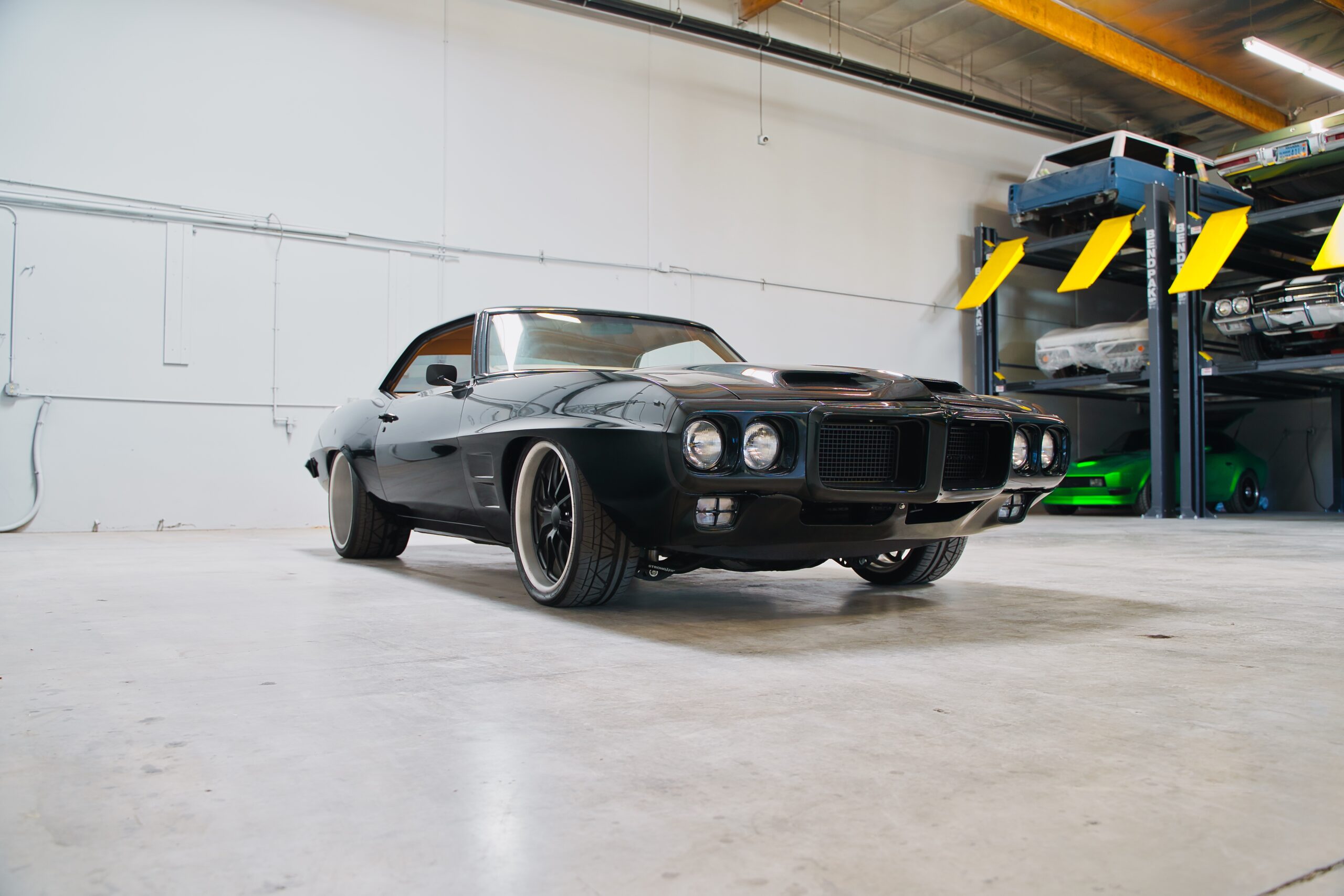
That is exactly what enclosed, climate-controlled storage does. Inside REVCity, there is no wind-driven grit, no UV, and no 115°F heat soak stacking damage on top of the dust. The car sits at 50–70°F and 40–50% humidity on a BendPak lift, untouched from the last spring drive to the first fall event. For the broader picture of what the desert climate does year-round, read our Las Vegas heat damage guide and our breakdown of climate-controlled vs temperature-controlled storage.
Las Vegas monsoon activity concentrates from early July through late September, but the worst dust fronts can arrive with less than 30 minutes of warning ahead of an outflow boundary. The collectors who protect their cars best don’t wait for the forecast — they move the car into storage for the whole season. Store it after the spring car-show circuit winds down and pull it out when the fall calendar picks back up, and the car simply never faces a haboob.
If your collector car is sitting in a driveway or an uncontrolled garage right now, in July, it is one outflow boundary away from a $3,000–$8,000 detailing bill. Call REVCity at 725-272-1803 and get it inside before the next front.
If your car did ride out a haboob outside, do not wipe it down dry. Dragging a towel across dust-covered paint grinds the embedded grit in and creates exactly the swirl marks you are trying to avoid. Flush the surface with a heavy stream of water first to float the silica off, then a proper two-bucket wash with plenty of lubrication.
Pay attention to the wheels and brakes as well. Abrasive silica bonds to hot rotor surfaces and settles into the barrels of forged wheels, where it keeps grinding every time you drive. A thorough decontamination wash and a careful wheel-face cleaning after any major dust event prevents that grit from etching finishes that cost thousands to restore. And if the car is a show or investment piece, the smartest move is not cleanup at all — it is never letting the dust reach the paint in the first place.
Check and replace the cabin and engine air filters — a single dust event can load them past their useful life. Inspect the base of the windshield, cowl vents, and door seals where grit collects, and look closely at the leading edges of the hood, mirrors, and front fascia under bright light for the fine haze that signals micro-abrasion. If you see it, get a professional paint assessment before it turns into a correction bill that climbs from hundreds into the thousands.
The most expensive mistake after a dust storm is wiping the car down dry. Flush first, wipe never on dry grit. Better still, keep the car where the dust never lands.
A haboob looks dramatic and then passes in twenty minutes, so it is easy to treat it as a one-time inconvenience rather than cumulative damage. The reality is that Las Vegas can see multiple significant dust events across a single July-through-September monsoon season, and the harm stacks. Each event adds micro-scratches; by the third or fourth, a once-flawless finish has a visible dullness under direct sun.
Combine that with the same season’s 115°F heat and 10–12 UV index and you have three forms of damage compounding at once on a car parked outside. That is why the collectors who keep their paint show-ready simply remove the car from the equation for the whole season. For the full climate picture, see our heat damage guide.
Dust damage is not only a cosmetic problem — it is a valuation problem. On a collector car, buyers and appraisers pay a premium for original, unblemished paint, and Hagerty’s agreed-value policies are written around documented condition. A finish that has been hazed by repeated haboobs and then corrected, or worse resprayed, tells a different story: it reads as a car that was left exposed, and the discount follows.
Keeping the car in enclosed, climate-controlled storage protects both the paint and the paperwork. There is no correction history to explain, no respray to disclose, and a clean record of professional storage that supports full value at sale and a strong position at claim time. Over a few seasons, the preserved value easily outweighs the cost of doing it right. For the money math on desert damage generally, see our heat damage guide, and for why the storage standard matters, our BendPak storage page.
REVCity is centrally located off Bermuda Road, so moving your car to safe indoor storage ahead of a monsoon front is a quick trip from anywhere in the valley.
Approximate drive times from 7185 Bermuda Rd, Las Vegas NV 89119. Actual times vary with traffic and route.
Yes. Haboob dust is hard mineral silica driven at 60 mph or more, which micro-scratches and hazes clear coat like fine sandblasting. Correcting it costs $3,000–$8,000, and severe cases require a respray of $15,000 or more.
Not well. In high wind a cover flaps and grinds trapped grit into the paint, often causing the swirl marks it’s meant to prevent. Fully enclosed indoor storage is the only reliable defense.
July through September. Dust fronts can form quickly ahead of thunderstorm outflow boundaries, sometimes with under 30 minutes of warning, which is why season-long indoor storage is the safest approach.
Ceramic coating adds a sacrificial layer and makes cleanup easier, but it won’t stop a 60 mph grit blast from micro-scratching the surface beneath. It’s a supplement to enclosed storage, not a replacement.
Call 725-272-1803. REVCity is centrally located at 7185 Bermuda Rd and offers concierge pickup, so we can often get a vehicle inside quickly ahead of an incoming front.
Founder of REVCity Auto Storage and Nostalgia Hot Rods. Dustin has spent decades building, restoring, and protecting collector and exotic vehicles across the Las Vegas Valley. He built REVCity to be the climate-controlled facility he always wanted for his own cars. Read his story →
Don’t let a monsoon dust storm sandblast your investment. Get your car into enclosed, climate-controlled storage at REVCity.
REVCity Auto Storage · 7185 Bermuda Rd, Las Vegas NV 89119 · 725-272-1803