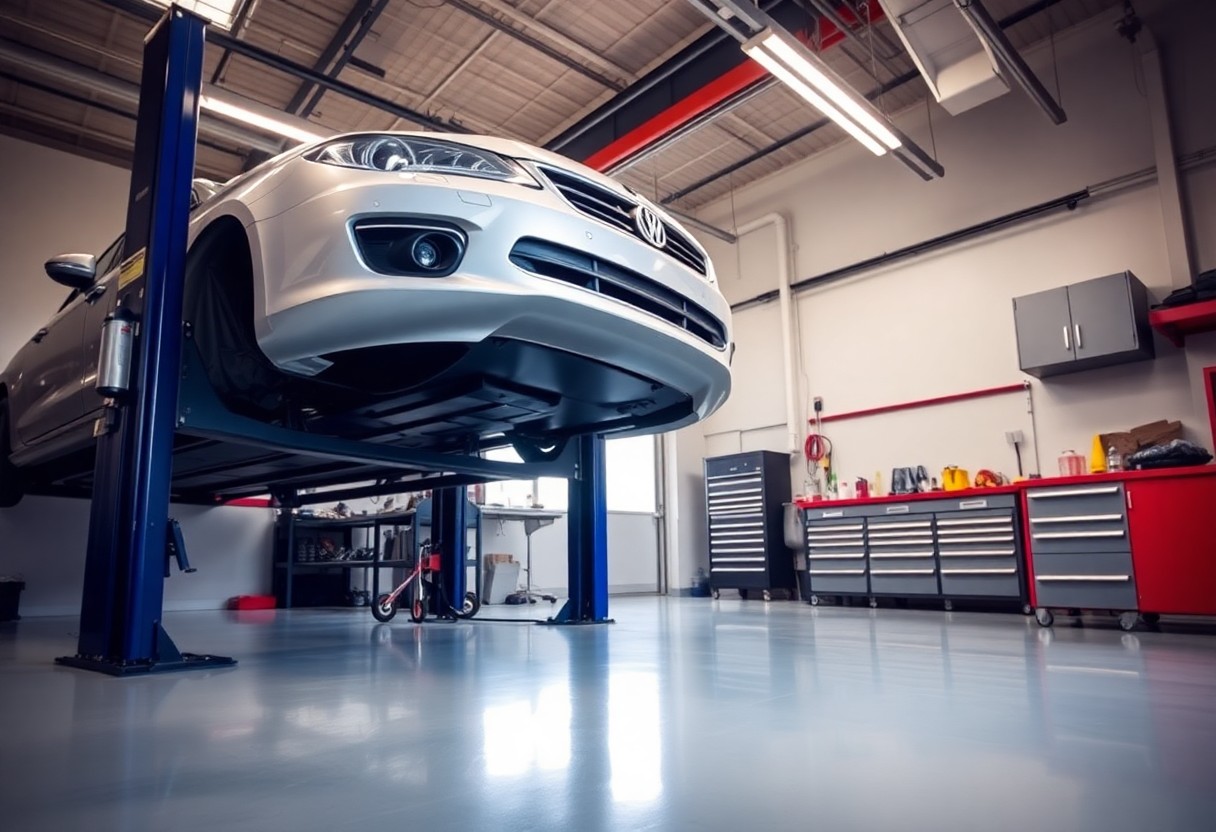
Pavement at 140°F+, UV index 10–12, and desert-dry air age tires from the inside and out. Here is exactly what heat does to rubber — and how to keep a $2,000 set of tires from dying early.
Tires are the one part of a stored or parked car that heat attacks from every direction at once — UV from above, ozone in the air, 140°F+ pavement from below, and the car’s own weight pressing a single contact patch into the rubber. In Las Vegas, that combination can retire a $2,000 set of performance tires years before the tread is worn out. REVCity Auto Storage, at 7185 Bermuda Rd, Las Vegas NV 89119, stores vehicles at 50–70°F to stop that clock. Call 725-272-1803 to protect your tires and your car. Here is exactly what the heat is doing.
Tire failure in the desert is not one problem — it is four, and they compound. Understanding each one tells you what to actually prevent:
1. Thermo-oxidative aging. Heat drives oxygen deeper into the rubber and accelerates the chemical reaction that turns flexible compound brittle. Tire engineers measure this directly; the rate of oxidation roughly doubles with every 18°F rise in temperature. A tire that would stay pliable for eight years in a temperate garage can harden dangerously in three or four sitting in Las Vegas heat. This is why the industry recommends replacing tires at six years regardless of tread — and why that six-year figure is optimistic here.
2. UV and ozone cracking. Las Vegas holds a UV index of 10–12 from May through September and sees 310+ sunny days a year. UV breaks down the anti-ozonant waxes on the sidewall, and once that protective bloom is gone, fine cracks — dry rot — spider across the sidewall and between the tread blocks. Those cracks are structural, not cosmetic; they are the leading edge of a sidewall failure.
3. Flat-spotting. A parked car presses its full weight onto four small contact patches. On cool pavement the tire recovers its round shape when you drive. On 140°F+ Las Vegas asphalt the rubber is soft enough that the flat spot sets in permanently over weeks of sitting — a vibration you feel at speed that no balancing can fix. We cover the mechanics in depth in our guide to flat-spotting and how to prevent it.
4. Pressure swings and blowouts. Air expands with heat — roughly 1 PSI for every 10°F. A tire set to 34 PSI in a 75°F morning garage can climb past 42 PSI on 140°F afternoon pavement. Combine over-pressure with a heat-embrittled, UV-cracked sidewall and you have the recipe for the summer blowouts Las Vegas freeways are known for.
A single performance tire for an exotic — a Michelin Pilot Sport Cup2 or Pirelli P Zero Corsa — runs $400–$700, so a full set is $1,600–$2,800. Replacing that set two or three years early because heat hardened the rubber before the tread wore out is a four-figure loss on a car that barely moved. Storage that controls temperature and UV is measured against that number, not against a bargain tire.
You cannot change the Las Vegas climate, but you can remove the exposure. In priority order:
Hagerty, the leading collector-car insurer, flags heat cycling, dry rot, and flat-spotting among the most common — and most preventable — storage-related tire problems, and recommends storing collector vehicles in a stable, climate-controlled environment with weight off the tires for extended layups. Tire manufacturers echo it: Michelin and others publish the six-year replacement guideline precisely because oxidation, not tread wear, is what ends most tires’ safe life — and in a 115°F climate that clock runs faster. The takeaway is the same from both directions: in Las Vegas, tires die of heat before they die of mileage, and controlling the storage environment is how you stop it.
The softer and more specialized the compound, the faster heat takes it. Track-focused and ultra-high-performance tires — Michelin Pilot Sport Cup2, Pirelli P Zero Corsa, and similar — use soft, grippy compounds engineered for temperature and traction, not longevity. They harden and lose their edge fastest in desert heat, which is brutal on exotic and track-day owners who may put only a few thousand miles a year on tires that cost $500–$700 each. All-season and touring tires last longer but still fall to the same six-year oxidation ceiling. And any tire on a rarely-driven collector car is at extra risk: low mileage means the tires age out on the calendar, cracking and flat-spotting long before the tread is used.
This is the counterintuitive part owners miss — the less you drive a car in Las Vegas, the more its tires are threatened by heat rather than wear. A garage queen that covers 500 miles a year can still need tires in four years purely from oxidation and UV. Controlling the storage environment is the only thing that changes that outcome. Related: Las Vegas Dust Storm (Haboob) Car Protection.
Before you trust a stored car’s tires, inspect them. Check the sidewall for fine spider-web cracking and for deeper cracks at the base of the tread blocks — that is dry rot, and it does not heal. Press a thumbnail into the rubber; a healthy tire gives slightly, while a heat-hardened one feels like plastic. Find the DOT date code on the sidewall — the last four digits are the week and year of manufacture — and treat anything past six years as suspect regardless of tread, sooner if it lived outdoors in Las Vegas. Feel for a steady vibration at 40–50 mph that smooths out after a few miles; that is flat-spotting, and if it does not clear, the set is done. Any of these signs on a valuable car is a cue to both replace the tires and fix how the car is stored — because new tires in the same open lot will age exactly the same way.
REVCity is at 7185 Bermuda Rd, Las Vegas NV 89119, central to the valley. However far your collector or daily driver travels — or doesn’t — storing it here keeps the tires out of the sun and off hot pavement.
Approximate drive times from 7185 Bermuda Rd, Las Vegas NV 89119. Actual times vary with traffic and route.
Far less than the tread suggests. The industry replaces tires at six years regardless of wear because of oxidation, and Las Vegas heat accelerates that — oxidation roughly doubles for every 18°F rise. Tires parked in the sun here often crack and harden in three to four years, long before the tread is gone.
Dry rot is UV and ozone breaking down the sidewall rubber, producing fine cracks along the sidewall and between tread blocks. It is structural and irreversible. The only real prevention is keeping tires out of direct UV — a fully enclosed, climate-controlled facility stops it, while a shaded outdoor spot only slows it.
Yes. Air pressure rises about 1 PSI per 10°F, so a tire set to 34 PSI in a cool garage can exceed 42 PSI on 140°F pavement. Add a UV-cracked, heat-hardened sidewall and the over-pressured tire is far more likely to fail — the classic Las Vegas summer freeway blowout.
For long stays, significantly. Taking the vehicle’s weight off the tires with a BendPak 4-post lift eliminates flat-spotting entirely, and combined with UV-free, temperature-controlled storage it removes nearly every way heat and sitting damage tires.
Tires are only part of it, but the tire math alone is compelling: a performance set is $1,600–$2,800, and heat can retire it years early. Add the paint, interior, and battery protection climate control provides and the value is clear for any car worth keeping.
If Las Vegas heat is hard enough on tires to retire a $2,000 set early, consider what the same heat is doing to everything else on a parked car — the battery draining twice as fast per 15°F, the fuel varnishing, the leather and dash cracking under 160–190°F interior temperatures, the brake rotors flash-rusting in humidity swings. Tires are simply the most visible casualty. Fixing how a car is stored to protect the rubber — UV-free, 50–70°F, weight off the wheels — protects all of it at once, as our full Las Vegas heat damage guide lays out. That is the case for climate-controlled storage in a nutshell: it is not one benefit, it is the removal of the single force that ages every part of the car simultaneously.
Founder of REVCity Auto Storage and Nostalgia Hot Rods. Dustin has spent decades building, restoring, and protecting collector and exotic vehicles across the Las Vegas Valley. He built REVCity to be the climate-controlled facility he always wanted for his own cars. Read his story →
UV-free, 50–70°F storage with weight-off-the-tires lifts keeps rubber young and cars ready. Call 725-272-1803 to reserve a space.
REVCity Auto Storage · 7185 Bermuda Rd, Las Vegas NV 89119 · 725-272-1803