You spent $6,000 wrapping the car in PPF to protect the paint. In Las Vegas, the film itself is now the thing under attack — UV index 10–12, 180°F+ hood surfaces, and adhesive that was never engineered for this climate.
Paint protection film is the single most expensive piece of preventive maintenance most exotic owners buy, and in Las Vegas it is also the most misunderstood. PPF is a sacrificial layer — it is designed to degrade so your clearcoat does not. The question is not whether it degrades, it is how fast, and in this valley the answer is: much faster than the marketing implies. REVCity Auto Storage, at 7185 Bermuda Rd, Las Vegas NV 89119, stores vehicles indoors at 50–70°F with zero UV exposure, which is the only thing that meaningfully extends film life. Call 725-272-1803. Here is what the heat is actually doing to your film.
Modern paint protection film is a three-layer construction, and each layer fails in a different way under desert conditions. Understanding the stack tells you exactly what you are looking at when film goes wrong.
XPEL Ultimate Plus, 3M Scotchgard Pro Series, SunTek Ultra Defense, and STEK DYNOshield all use variations of this stack with proprietary topcoat chemistry. They are genuinely good products. None of them were engineered on the assumption that the car spends 310 sunny days a year under an extreme-classification UV index.
Most premium PPF carries a 10-year warranty against yellowing, cracking, staining, and bubbling. Read the exclusions. Warranties are near-universally prorated, they typically cover material only — not the $2,000–$4,000 of labor to strip and re-wrap a car — and many explicitly exclude damage from environmental fallout, acts of nature, and improper care. In a UV 10–12 climate, a manufacturer has a defensible argument that extreme UV exposure is exactly that. Do not budget as if the warranty will pay for the re-wrap.
A partial front-end wrap — full hood, front fenders, mirrors, front bumper — runs roughly $2,000–$3,000 in the Las Vegas Valley on a normal car. Full-body coverage on an exotic with complex bodywork runs $6,000–$8,000 and higher on a car with a lot of aero. Track-focused cars with splitters, canards, and diffuser detail sit at the top of that range because every piece is a separate pattern and a separate labor line.
Manufacturers commonly cite seven to ten years of service life. Detailers who work in the Southwest will tell you privately that a daily-driven car parked outdoors here realistically gets three to five before the front clip needs replacing, and sometimes less on a black or dark-blue car where surface temperatures run highest. Black paint in direct Las Vegas sun measures 180–200°F at the hood surface — hot enough to soften adhesive every single afternoon for five months a year.
The gap between the top row and the bottom row is real money, and it is money most owners never account for when they compare storage options. Film life is a storage decision.
There is a short list of things that measurably extend PPF life in this climate, and a long list of things that do not.
A ceramic coating on top of film adds hydrophobicity and makes washing easier, and it does add a modest sacrificial UV layer. It does not stop UV from reaching the TPU underneath, and it does nothing about adhesive heat cycling. It is a useful addition to a storage plan and a poor replacement for one.
Film degradation is the visible symptom of a condition that is damaging everything else at the same time. Interior temperatures in a car parked in direct Las Vegas sun reach 160–190°F, which is what cracks dashboards and shrinks leather. UV oxidizes clearcoat directly wherever film does not cover — roof, decklid, rear quarters on a partial wrap. Tire compounds harden and sidewalls develop ozone cracking. Battery degradation approximately doubles for every 15°F rise in temperature. The cumulative effect on a car’s resale can reach 10% of value.
Climate-controlled storage at 50–70°F and 40–50% relative humidity addresses all of it at once, and reduces corrosion risk by up to 90% while extending interior component lifespan by up to 50%. Hagerty, the leading collector-car insurer, is direct on this point: environmental control is the primary variable in long-term vehicle preservation, ahead of nearly every other storage practice. If you want the mechanism explained in full, the Las Vegas heat damage guide covers it, and the difference between true climate control and simple temperature control is laid out on the climate-controlled storage comparison page.
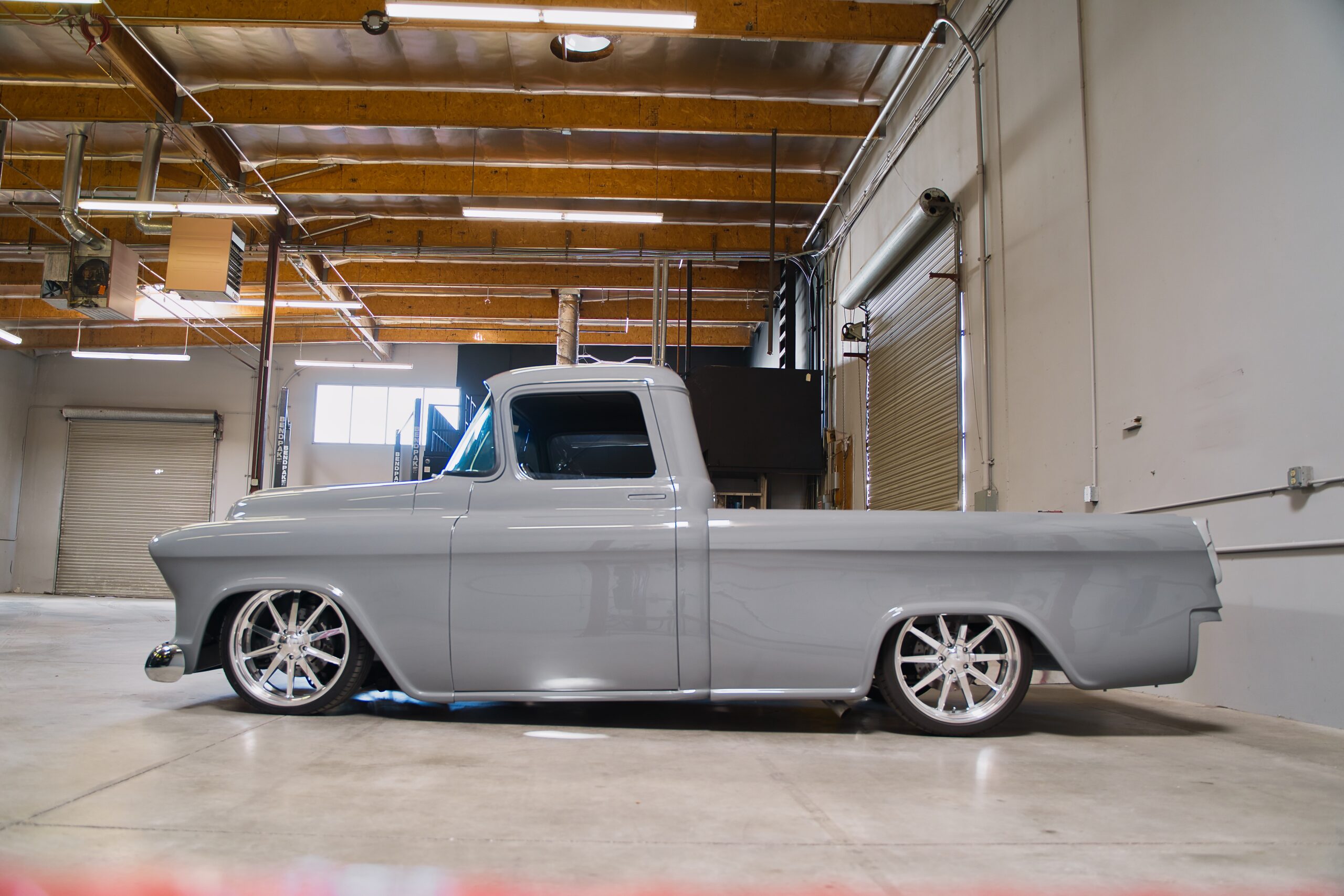
REVCity stores every vehicle on a BendPak 4-post lift inside a UV-free enclosed facility with 24/7 monitored gated access. For a car carrying a $6,000 wrap and a six-figure valuation, that is the cheapest insurance on the invoice.
REVCity is on Bermuda Road just east of Las Vegas Boulevard, a short drive from most of the valley’s high-end detail and PPF installers as well as from Harry Reid International. Cars come to us straight from the wrap shop regularly — film cures best without a 180°F hood cycle on day two.
Approximate drive times from 7185 Bermuda Rd, Las Vegas NV 89119. Actual times vary with traffic and route.
Yes. Sustained UV at index 10–12 breaks down the film’s self-healing topcoat and yellows the TPU layer, while daily heat cycling to 180°F+ hood surface temperatures softens the acrylic adhesive and causes edge lift. A wrap that a manufacturer rates for seven to ten years realistically lasts three to five on a car parked outdoors in the Las Vegas Valley.
Three to five years for a daily-driven car parked outdoors, five to seven in an uncooled garage, and eight to ten or more for a vehicle kept in enclosed climate-controlled storage with zero UV exposure. Dark paint colors sit at the short end of every range because they run the highest surface temperatures.
Often not in the way owners expect. Most warranties are prorated, cover material cost only rather than the $2,000–$4,000 of removal and reinstallation labor, and exclude environmental fallout and acts of nature. Read the specific exclusions on your XPEL, 3M, SunTek, or STEK warranty before assuming a re-wrap is covered.
Partially. A ceramic coating adds a thin sacrificial layer and makes the surface easier to clean, but it does not block UV from reaching the polyurethane underneath and does nothing to prevent adhesive heat cycling. It is a worthwhile supplement to indoor storage, not a replacement for it.
REVCity Auto Storage at 7185 Bermuda Rd, Las Vegas NV 89119 stores vehicles in an enclosed, UV-free facility at 50–70°F and 40–50% relative humidity, on BendPak 4-post lifts with 24/7 monitored gated access. Call 725-272-1803 to reserve a space.
Founder of REVCity Auto Storage and Nostalgia Hot Rods. Dustin has spent decades building, restoring, and protecting collector and exotic vehicles across the Las Vegas Valley. He built REVCity to be the climate-controlled facility he always wanted for his own cars. Read his story →
Zero UV exposure. 50–70°F year-round. 40–50% relative humidity. The only storage environment in Las Vegas built specifically to preserve what you paid to protect.
REVCity Auto Storage · 7185 Bermuda Rd, Las Vegas NV 89119 · 725-272-1803