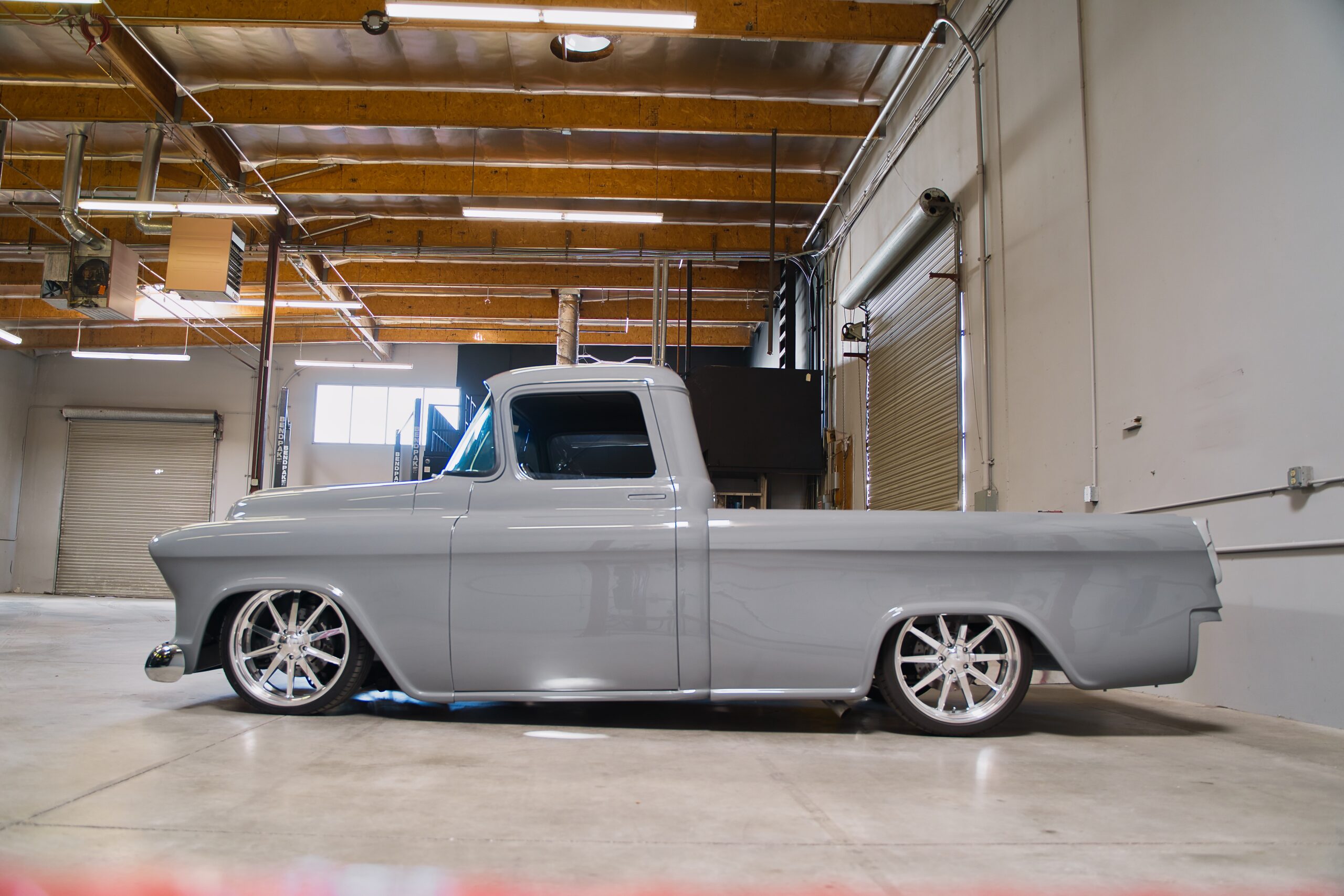
The hammer falls, the adrenaline drains, and you own a vehicle you have never driven, with fluids of unknown age, sitting in a convention hall with a load-out deadline. Here is the 72-hour plan.
Las Vegas runs one of the densest collector car auction calendars in the country — Barrett-Jackson at the Las Vegas Convention Center, Mecum, Bonhams, and the satellite sales that follow SEMA and the Grand Prix. Every one of them ends the same way: a load-out deadline, a floor full of cars that have to be gone, and a buyer standing next to a vehicle they have owned for four hours and never driven. REVCity Auto Storage, 7185 Bermuda Rd, Las Vegas NV 89119, is roughly 15 minutes from the Convention Center and holds every vehicle at 50 to 70°F and 40 to 50% relative humidity, on a BendPak 4-post lift with a multi-stage battery tender. Call 725-272-1803.
An auction car is a car with a gap in its history. It may be immaculate and it may have been consigned by an owner who did everything right — but between the last time it was maintained and the moment the hammer fell, it sat. It sat in a transporter, it sat in a staging lot, it sat under arena lighting on a floor for three days with the battery drawing down and the fuel doing whatever fuel of unknown age does.
What almost nobody does, and what causes most of the expensive post-auction surprises, is drive it home and park it. Driving an unknown car any distance before an inspection risks turning a $400 problem into a $9,000 one, and parking it in an uninsulated Las Vegas garage starts a clock on damage that was not present at sale. The correct move is boring: get it moved on a truck, get it into a controlled environment, and do the diagnostic and preservation work with the car stationary and the timeline yours.
Do not drive an auction car home. Move it on a flatbed or an enclosed transporter, put it somewhere climate controlled, and inspect it on a lift before it turns a wheel under its own power. Brake fluid of unknown age and tires with unknown date codes are not things you discover on the I-15.
With the car on a lift in a climate-controlled building, the work is straightforward and it is all cheap relative to what it prevents. Run it in this order.
Fuel deserves a specific note. If the tank contents are of genuinely unknown age — a car that sat for years before consignment — drain it rather than treat it. If the fuel is known-recent, fill the tank to roughly 90% to minimise the air volume available for condensation, treat with PRI-G or Sta-Bil 360 Marine, and run the engine long enough to circulate treated fuel through the entire system before it goes back to rest. Our full breakdown is in the fuel stabilizer guide.
Buyers who live here default to the home garage, and buyers who do not default to whatever self-storage unit is closest to the Convention Center. Both are the same mistake with different postcodes.
Las Vegas peaks at 115°F and holds a UV index of 10 to 12 — the "extreme" classification — from May through September across 310-plus sunny days a year. Interior surfaces in direct sun reach 160 to 190°F. An uninsulated garage or a metal self-storage unit tracks that and holds it after sundown, cycling 40-plus degrees every 24 hours. Every rubber, adhesive, and plastic component in the car ages against that cycle. Monsoon season, July through September, adds humidity swings on top of it. Our guide to Las Vegas heat damage covers the mechanism in detail.
A self-storage unit fails on more than temperature. There is no lift, so the car sits on its tires and flat-spots. There is no tender, so the battery goes flat and then dies. There is no humidity control, so brake hardware and electrical connectors corrode. And there is no meaningful security — a roll-up door on a public drive aisle is not a plan for a car you just paid six figures for on a televised auction broadcast. The distinction between marketing language and actual capability is the subject of our comparison of climate-controlled versus temperature-controlled storage.
Do not add a monthly start-up to your post-auction routine. Hagerty has argued against the practice for years: a short idle never reaches the temperature needed to boil condensation out of the oil and exhaust, but it is more than long enough to wash the cylinder walls with fuel and load the catalytic converters with moisture. On a freshly purchased car with unknown history, that is the worst possible combination. Prep it properly and leave it alone — see how often you should start a stored car.
All three end in the same place: the car needs to be stationary, cool, dry, unloaded, on a tender, and behind a gate. That is not a general-purpose storage product. It is what REVCity was purpose-built to do — the only purpose-built climate-controlled luxury vehicle storage facility in Las Vegas, at 50 to 70°F, 40 to 50% relative humidity, with a BendPak 4-post lift at every space so the tires carry no load, quality multi-stage battery tenders rather than trickle chargers, a fully enclosed UV-free building, and 24/7 monitored gated access.
REVCity Auto Storage sits at 7185 Bermuda Rd, just east of the I-15 and minutes from Harry Reid International — a short transporter run from the Las Vegas Convention Center, the World Market Center, and the airport freight terminals where out-of-state carriers stage.
Approximate drive times from 7185 Bermuda Rd, Las Vegas NV 89119. Actual times vary with traffic and route.
No. Move it on a flatbed or enclosed transporter. An auction car has a documented gap in its maintenance history, and brake fluid, tires, and coolant of unknown age are exactly the components that fail under load. Inspect the car on a lift before it turns a wheel under its own power.
Before it leaves the building. Coverage does not transfer automatically, and a standard auto policy pays actual cash value rather than what you paid at the hammer. Hagerty writes agreed value policies for collector cars and will bind coverage on an auction purchase with the bill of sale.
If the age is genuinely unknown, drain it. Nevada pump premium is E10, and ethanol is hygroscopic — it pulls moisture from the air and phase-separates into a water-alcohol layer that sits where the fuel pump picks up. If the fuel is known-recent, fill to roughly 90%, treat with PRI-G or Sta-Bil 360 Marine, and run the engine to circulate it.
It is the worst common option. A metal unit tracks the valley’s 115°F summer highs and cycles more than 40 degrees a day, there is no lift so the car flat-spots its tires, no battery tender, no humidity control, and a roll-up door on a public drive aisle is not security for a six-figure car. REVCity holds 50 to 70°F and 40 to 50% humidity behind 24/7 monitored gated access.
Properly prepped — fresh oil, treated or drained fuel, tires unloaded on a lift, battery on a multi-stage tender, at 50 to 70°F and 40 to 50% relative humidity — a car sits comfortably for a year or more with no start-ups. The variable is the prep, not the duration. Call 725-272-1803 to arrange space at 7185 Bermuda Rd, Las Vegas NV 89119.
Founder of REVCity Auto Storage and Nostalgia Hot Rods. Dustin has spent decades building, restoring, and protecting collector and exotic vehicles across the Las Vegas Valley. He built REVCity to be the climate-controlled facility he always wanted for his own cars. Read his story →
Purpose-built climate-controlled storage at 50–70°F and 40–50% humidity, BendPak 4-post lifts at every space, multi-stage battery tenders, and 24/7 monitored gated access. Reserve a space at 7185 Bermuda Rd.
REVCity Auto Storage · 7185 Bermuda Rd, Las Vegas NV 89119 · 725-272-1803