How to Document a Collector Car’s Condition Before Storage
Two trades each hold half of this answer. Appraisers will tell you what to record. Insurers will tell you where the car has to sleep. Almost nobody puts the two together at the one moment that matters, which is the day the car leaves your hands.
Handing a car over for six months is the only moment when its exact condition is a settled fact that two people agree on. Nobody writes it down. Then something happens, or nothing happens and a question comes up anyway, and the condition of the car becomes a matter of memory. REVCity Auto Storage at 7185 Bermuda Rd, Las Vegas NV 89119 holds 50 to 70°F and 40 to 50% relative humidity year round. Call 725-272-1803 about space, and read this before you drop the keys off anywhere.
Two Trades Each Hold Half of This
There is good advice about documenting a collector car and there is good advice about storing one. They come from different places and they almost never meet.
From the appraisal side, the instruction is thorough and it is consistent. Photograph and document originality now rather than after a loss. Record chassis and engine numbers, factory finishes, date coded components and interior materials. Keep the full provenance file, meaning restoration invoices, judging sheets, registry correspondence and prior sale records. That is professional appraisal practice and it is sound. What it doesn’t mention, anywhere, is storage.
From the collector insurance side the emphasis lands somewhere else entirely. A collector policy normally carries a storage condition. An enclosed locked garage is treated as the baseline, carports and driveways and street parking usually are not acceptable, and some carriers ask for photographs of where the car is kept. Photos, receipts and build sheets are described as how an owner defends a valuation.
Read those two together and the gap is obvious. One trade says make a record. The other says the place the car sleeps is part of what we’re underwriting. The day the car goes into storage is the day both of those things are true at once, and it is the one day nobody has written a process for.
What Belongs in the Record
Start from the appraiser’s list, because it’s better than anything a storage operator would come up with on its own. It splits cleanly into what is on the car and what is in the file.
Two categories, and both matter. On the car: chassis and engine numbers, factory finishes, date coded components and interior materials. In the file: restoration invoices, judging sheets, registry correspondence and prior sale records. The reason given is originality. Originality is the asset on a collector car, and it’s the thing that can’t be reconstructed after the fact. This is appraisal guidance rather than a storage standard, and it is worth following because the people who write it are the people who value cars for a living.
Notice what that list is for. It establishes what the car is, so a figure can be agreed and defended. Hagerty and the agreed value approach are built on exactly that foundation, which is why the paperwork carries as much weight as the photographs do.
Then add the part the appraisal list does not cover, because it assumes the car stays with you. A handover needs a condition record with a date on it. Not originality, which does not change, but condition, which does change. Panel by panel, wheel by wheel, the interior, the odometer, the fuel level and any mark that already exists. You are not documenting what the car is worth. You’re documenting what it looks like today.
The Sequence to Run on the Day
Most advice here is a list of things to have rather than a process to run. A process is more useful, because it happens in an order and the order matters.
| Step | What to capture | Why the order matters |
|---|---|---|
| 1. Before you wash it. | Photograph the car exactly as it sits, dirt included. | A clean car hides small marks. You want the honest version first. |
| 2. Walk it panel by panel. | One frame per panel, square on, in even light. | Angled shots flatter paint and lose the detail you may need. |
| 3. Close on anything already imperfect. | A stone chip, a scuff, a stress crack in a lens. | Existing marks are the ones arguments are made of later. |
| 4. Record the numbers. | Chassis and engine numbers, and any date coded parts you can see. | This is the originality half, and it never needs redoing. |
| 5. Photograph the cabin and the gauges. | Odometer, fuel level, seat and trim condition, the trunk. | Mileage and fuel are the two facts people remember wrongly. |
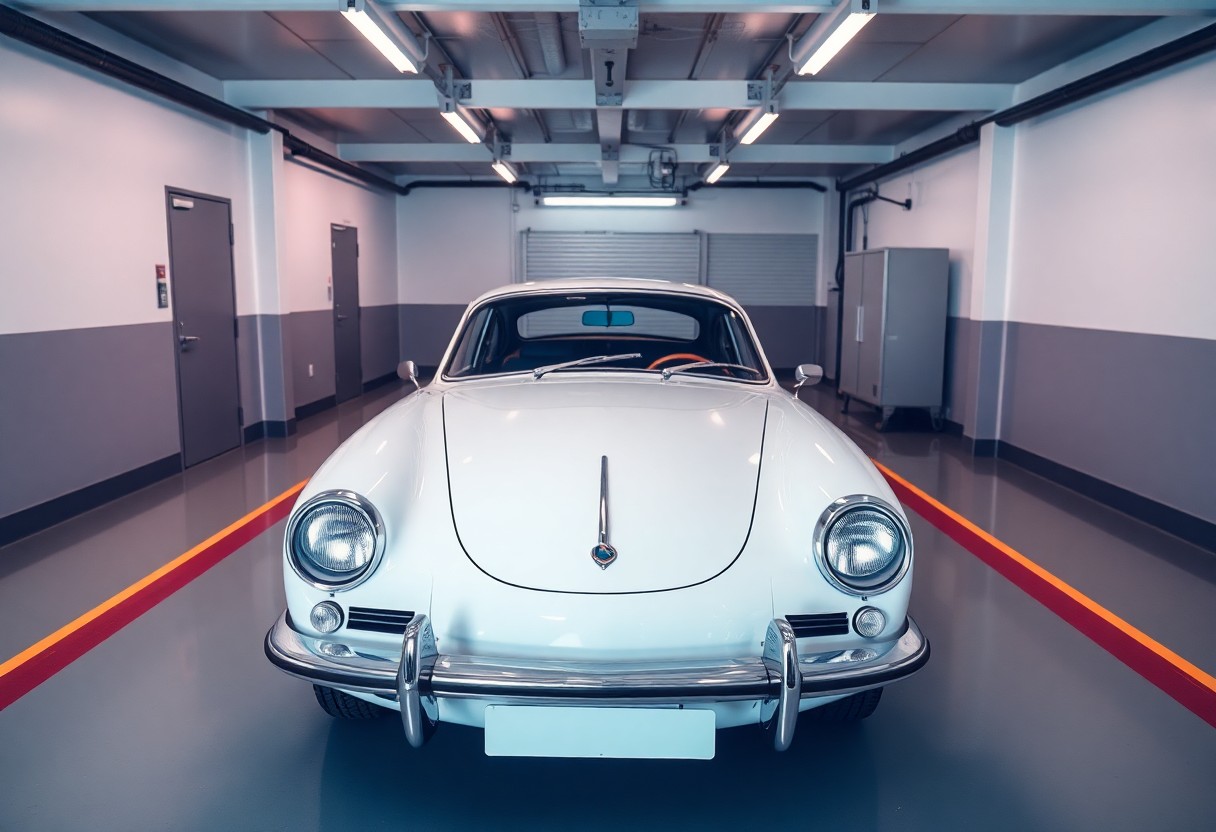
| 6. Photograph where it is going. | The space itself, and the building it sits in. | Some carriers ask for this, and asking later is harder. |
| 7. File it once, somewhere dull. | Dated folder, cloud copy, and the provenance file beside it. | A record nobody can find is the same as none at all. |
The whole thing takes about twenty minutes with a phone. It’s worth saying plainly that a phone is fine. Nobody needs a photographer for this, and the value of the record is in the date and the completeness rather than the quality of the images.

A Handover Changes What the Record Is For
When the car stays with you, a condition record has one job. It supports a claim if something goes wrong. That’s the job the appraisal advice is written around, and it is a real job.
A handover gives the same record a second job, and it is the one that comes up far more often. It is the before picture. Months later the car comes back out, somebody notices a mark on a wing, and the only question that matters is whether it was there in February. With a dated set of photographs that question takes a minute. Without them it becomes a disagreement between two people who both remember honestly and differently.
That second job is worth more than it sounds. Claims are rare. Questions about condition after a long sit aren’t rare at all, and most of them are entirely innocent. An owner returns to a car they have not looked at closely in half a year, looks at it closely, and sees things they had stopped noticing. A record settles that without anybody having to be wrong.
It also protects the storage facility, which is worth being honest about. A building that keeps cars for other people has exactly the same interest in a dated record as the owner does. Ask whatever facility you use what it records at intake and whether you get a copy. If the answer is nothing, your own record is the only one that exists.
The Storage Condition, and What It Is Actually Asking
The storage requirement on a collector policy is not there to be awkward. Where a car sleeps is most of its risk, and an underwriter knows it.
Enclosed and locked is the usual baseline. What sits above that baseline varies, and it’s genuinely worth a phone call to your own carrier rather than a guess, because the detail differs between companies and between policies at the same company. We are not going to tell you what yours will accept. What we can tell you is what is commonly asked for, and photographs of the storage location are on that list often enough to be worth having in advance.
This is also where storage stops being only a policy condition and starts being about the car. In this valley the difference between a locked garage and a conditioned building isn’t a small one. A home garage here follows the outside temperature, and that is the whole of why climate control and temperature control are not the same thing.
REVCity holds 50 to 70°F and 40 to 50% relative humidity, with a BendPak four post lift at every space, quality battery tenders rather than trickle chargers, no daylight in the building at all and 24 hour monitored gated access. We don’t claim that satisfies any particular policy wording, because that is your carrier’s call and not ours. It is, however, the shape of storage those conditions are describing. If the policy itself is what you are trying to understand, how insurance works on a stored vehicle in Las Vegas covers that side, and long term car storage in Las Vegas covers the protocol for the sit itself.
Do It Once, Properly, and It Keeps Working
The originality half of this record doesn’t expire. Chassis numbers and date codes are the same next year. Make that file once and it serves every future conversation about the car, including a sale you have not thought about yet.
The condition half is different and it wants refreshing. A new set of photographs each time the car goes in or comes out keeps the record honest, and it takes a fraction of the time the first set took because the framing is already decided.
If the car is about to sit for a long stretch, the record is the cheap part of doing it properly. The rest of the checklist is covered in how to store a classic car long term, and none of it costs anything except attention. The photographs cost twenty minutes. Not having them has cost people considerably more.
Owners store with us from Summerlin, Henderson, The Ridges, MacDonald Highlands, Seven Hills, Southern Highlands, Lake Las Vegas and Boulder City.
Common Questions
Work through it in order. The car as it sits before any cleaning, then one frame per panel square on in even light, then close ups of anything already marked. Add the chassis and engine numbers, any date coded components, the cabin, the odometer and the fuel level. Finish with the storage space itself. A phone camera is fine, because what matters is the date and the completeness.
Because washing it removes evidence. A clean car looks better and shows less, and the point of the first set of frames is an honest record rather than a flattering one. Wash it afterwards if it’s going into a long sit, which it should be.
That is what it is for. An agreed value figure rests on establishing what the car is, and originality is the largest part of that. Photographs, invoices, judging sheets and prior sale records are how owners support a valuation rather than argue it later from memory.
A storage condition is normal on a collector policy. An enclosed locked garage is generally the baseline, and carports, driveways and street parking usually are not acceptable. Some carriers ask for photographs of the location. The detail varies by carrier and by policy, so confirm yours with them rather than assuming ours applies.
Ask us, and ask any facility you are considering, because the answer isn’t the same everywhere. Whatever it is, make your own record as well. It costs twenty minutes and it means a dated set of photographs exists that belongs to you.
The originality file never needs redoing. The condition set is worth refreshing every time the car goes in or comes out, which is quick once you have done it once. Call 725-272-1803 for current availability.
Store It Where the Record Stays Short
Climate controlled storage for exotic, classic and collector vehicles at 50 to 70°F and 40 to 50% relative humidity, with BendPak lifts at every space, quality battery tenders and 24 hour monitored access. 7185 Bermuda Rd, Las Vegas NV 89119.
REVCity Auto Storage · 7185 Bermuda Rd, Las Vegas NV 89119 · 725-272-1803