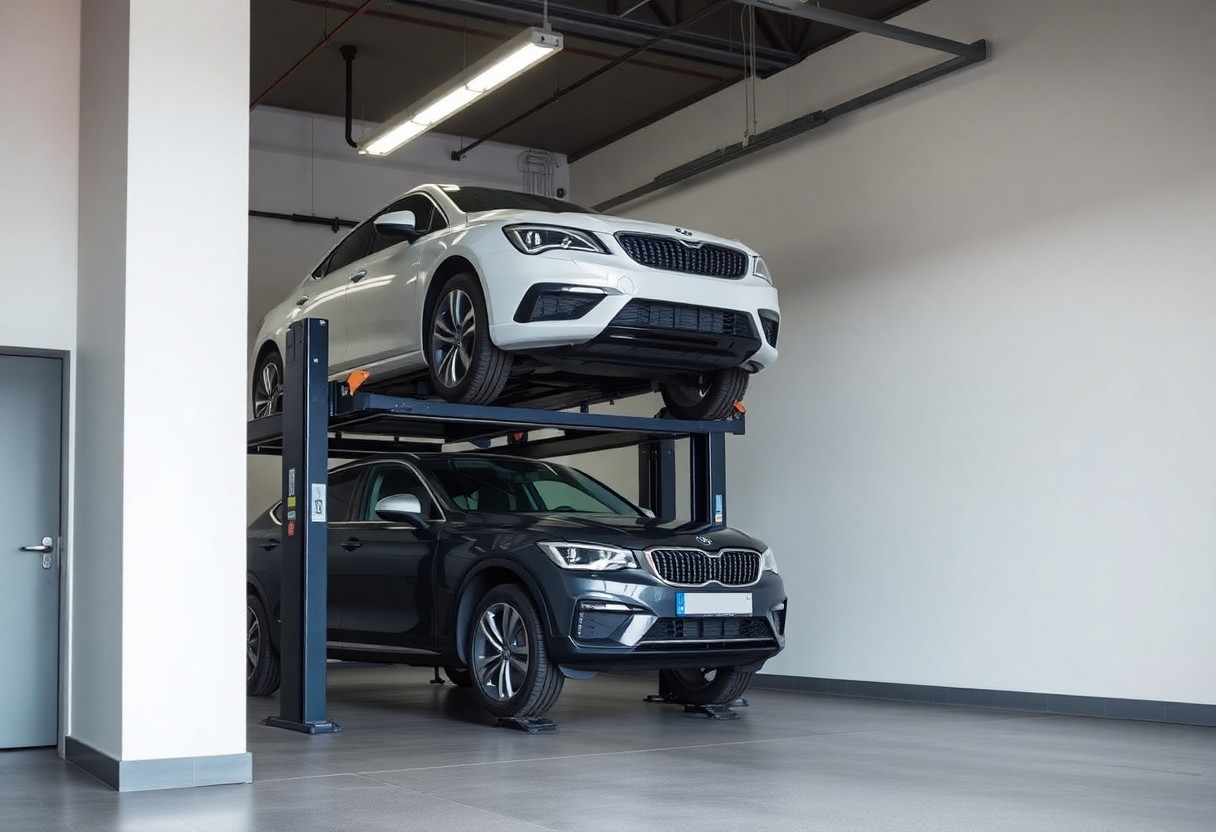
Concierge collection from your building, climate-controlled storage at 50–70°F, and a BendPak four-post lift under every vehicle — ~15 min from Palms Place.
Palms Place is the residential tower on the Palms campus, west of the Strip on Flamingo. Residents get a resort at the door and a pool people fly in for. They also get resort parking, which behaves very differently on a Saturday night than it does on a Tuesday morning. REVCity Auto Storage is ~15 min away at 7185 Bermuda Rd, Las Vegas NV 89119 — call 725-272-1803.
The Palms campus runs a busy entertainment calendar — the theatre, the clubs, the restaurants, the sportsbook — and on event nights the parking structure fills with people who do not live there, are in a hurry, and are frequently driving something they rented at the airport that afternoon.
That combination is the single biggest risk factor for a stationary vehicle on a resort campus. Unfamiliar driver, unfamiliar car, unfamiliar structure, and a time pressure. It is concentrated into predictable windows, which is small comfort when your car is parked in the same space through all of them.
A vehicle left from May through October sits through dozens of those nights. Nothing about any single one is likely to end badly. The cumulative probability across a season is a different calculation entirely.
The heat picture is unchanged from anywhere else in the valley: an unconditioned structure that runs 105–120°F through a July afternoon and stays warm past midnight as the decks release what they absorbed.
A meaningful share of Palms Place residences are second homes, used heavily for part of the year and lightly for the rest. A vehicle kept for those visits can easily sit four to six months untouched, and in Las Vegas the months it sits are usually the summer ones.
That is precisely the pattern professional storage exists for. The car is laid up correctly — oil changed, fuel stabilised, battery on a proper tender, suspension unloaded — rather than left to discharge, heat-soak and flat-spot in a structure full of weekend traffic.
The difference shows up on return. A correctly stored car is delivered running, with pressures set. A car that spent six months in a hot deck frequently needs a battery before it will move, and sometimes tires shortly after.
Palms sits west of the Strip on Flamingo, closer to open ground than the resort core, which matters during monsoon season from July through September.
Wind-driven mineral dust arrives with less between it and the building, and parking structures are ventilated by design, so they cannot exclude it. That dust is mildly alkaline and abrasive: left on a hot panel it etches clearcoat, and wiped off a dry car it installs swirl marks that only reveal themselves under direct sun.
For a car being driven weekly this is a detailing cycle. For one sitting still through the season it is months of undisturbed contact between abrasive mineral dust and clearcoat, which is a materially worse situation.
A car stored in the Palms structure from May to October sits through roughly twenty-two weekends of event traffic. Contact damage is a probability problem and that is a lot of trials. Moving the vehicle off-campus takes the number to zero, and takes the heat and the dust with it.
If the vehicle is going into storage, the preparation sequence matters as much as the destination.
Decontaminate before you store, not after: wash, iron-remover, clay, dry completely. Anything left on the paint has the full term to bond and etch. Change the oil before storage rather than after, because used oil carries acidic combustion byproducts that sit against bearing surfaces. Fill the tank to roughly 90% and stabilise it with PRI-G or Sta-Bil 360, then run the engine long enough to move treated fuel through lines, filter and injectors.
Use a microprocessor-controlled battery tender rather than a trickle charger — constant current will cook a healthy battery across six months. And do not fit a cover for indoor storage; in filtered, conditioned air it only traps residual dust against the finish.
It is the obvious alternative and worth addressing directly, because plenty of residents try it first.
A second space in the same structure solves allocation and nothing else. The vehicle is still in an unconditioned deck at ambient temperature, still surrounded by event-night traffic, still standing on its own tires, still without power for a tender, and still without any record of its condition.
Conditioned storage at comparable cost changes all five of those variables at once. The comparison people should be making is not storage versus a parking space, but storage versus a parking space plus a replacement battery, plus a set of flat-spotted tires, plus whatever the paint needs after a season of monsoon dust.
Stated that way the arithmetic is not close, which is why most residents who try the second-space route end up moving the dormant car anyway.
Collection from Palms Place is arranged around your building’s loading and valet access, so the vehicle is handled once on the way in and once on the way out. Further reading: our BendPak lift guide, the difference between climate-controlled and temperature-controlled storage, and what Las Vegas heat does to a vehicle.
REVCity sits on Bermuda Road in the airport corridor, ~15 min and roughly ~7 mi from Palms Place, and under ten minutes from Harry Reid International.
Approximate drive times from 7185 Bermuda Rd, Las Vegas NV 89119. Actual times vary with traffic and route.
The concern is traffic rather than security. The campus runs a busy entertainment calendar, and on event nights the structure fills with visitors and rental cars parking in a hurry. A vehicle left in one space from May to October sits through roughly twenty-two weekends of that, and contact damage is a probability problem.
Lay it up properly rather than leaving it in the structure. Part-year residences typically mean the vehicle sits four to six months, and in Las Vegas those are usually the summer months — the exact window that degrades batteries, tires, seals and interiors fastest. Call REVCity at 725-272-1803 to arrange seasonal storage and delivery for your next visit.
A second space solves allocation and nothing else. The car is still at ambient temperature, still surrounded by event-night traffic, still standing on its tires, still without tender power and still without a condition record. Conditioned storage at comparable cost changes all five at once.
Parking structures are ventilated by design, so they cannot exclude airborne dust. Monsoon dust is mildly alkaline and abrasive: on a hot panel it etches clearcoat, and wiped off dry it installs swirl marks. On a car sitting still through the season it has months of undisturbed contact with the paint.
Wash, iron-remover decontamination, clay and dry completely; change the oil before storage rather than after; fill to roughly 90% and stabilise the fuel with PRI-G or Sta-Bil 360, running the engine to circulate it; and use a microprocessor-controlled battery tender rather than a trickle charger. No cover indoors.
Roughly ~7 mi, about ~15 min outside peak traffic, to 7185 Bermuda Rd, Las Vegas NV 89119 in the airport corridor south of the Strip — and under ten minutes from Harry Reid International.
Yes. Multi-vehicle arrangements are common among high-rise residents precisely because building allocation runs out long before a collection does. Call 725-272-1803 to discuss configuration.
Yes — keep the vehicle insured. What professional storage adds is documented conditions and a condition record, which collector insurers such as Hagerty weigh when settling an agreed-value policy. Confirm the specifics with your own agent.
Founder of REVCity Auto Storage and Nostalgia Hot Rods. Dustin has spent decades building, restoring, and protecting collector and exotic vehicles across the Las Vegas Valley. He built REVCity to be the climate-controlled facility he always wanted for his own cars. Read his story →
50–70°F, 40–50% humidity, zero UV, a BendPak lift under every vehicle and 24/7 monitored access — ~15 min from your building.
REVCity Auto Storage · 7185 Bermuda Rd, Las Vegas NV 89119 · 725-272-1803