Every storage guide is written for a single car. Run three and the problems stop being mechanical and start being administrative, which is the part nobody warns you about.
A single stored car is a job you remember. Three or more is a system, and systems fail quietly: the one you forgot, the tender you moved, the tyre you meant to check. REVCity Auto Storage is at 7185 Bermuda Rd, Las Vegas, NV 89119. Call 725-272-1803 about space, and here’s what genuinely changes once you pass two.
Some storage problems multiply neatly. Others change shape, and those are the ones worth your attention.
Climate scales perfectly. A building that holds a temperature and a humidity range holds it for one car or for ten, and nothing about the air cares how many vehicles are in it. Tyres and batteries don’t scale at all, because each car has its own and each one needs its own answer.
And one thing appears that simply doesn’t exist with a single car: you now have to know which car you did what to, and when. With one car you remember. With four you don’t, and the one you forget is the one that greets you with a flat battery and a set on its tyres.
It stops being about the cars and starts being about the record. Which car was last started, which tender was on which battery, which one is due for brake fluid, which one the insurer has at what value. None of that is hard. All of it is forgettable, and forgetting it is what costs money.
Taken one at a time, with what a collection needs rather than what one car needs.
| What changes | With one car | With three or more |
|---|---|---|
| Battery tending. | One tender, left on, easy to check. | One per car. A tender moved between batteries is a tender not doing its job. |
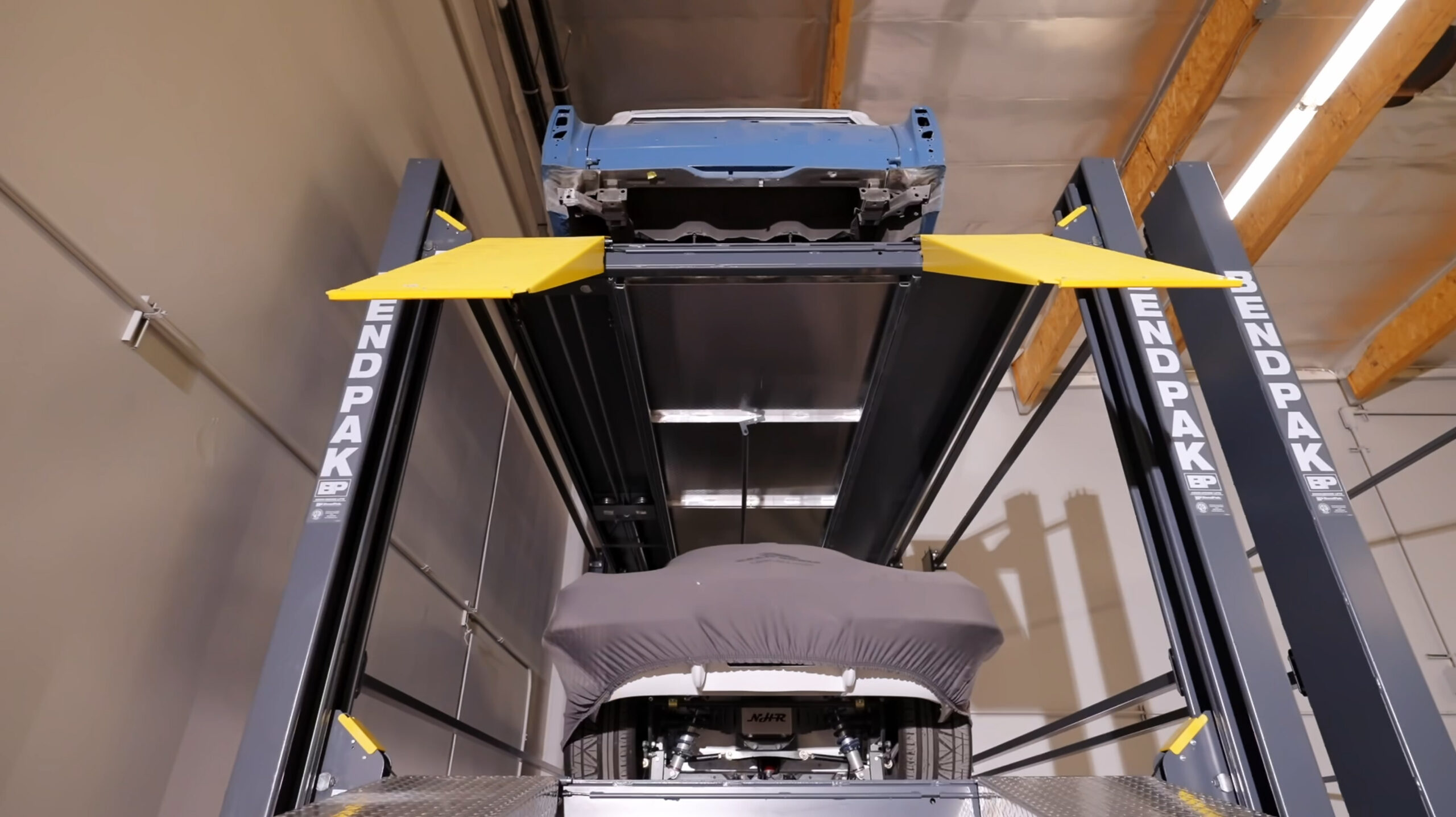
| Tyres. | One set, one decision. | Every car is carrying weight somewhere. Lifts stop that being four separate problems. |
| Exercise and rotation. | You start it when you think of it. | Needs a written order, or the same two cars get all the attention. |
| Insurance. | One policy, one value. | An insurer starts asking about aggregate value, location and security. |
The pattern is that each one turns from a decision into a routine. Routines need writing down, which is the least glamorous advice on this page and the most useful.
With a collection, attention is a finite resource and it distributes unevenly.
The honest version of what happens is this. You have a favourite. It gets started, it gets driven, it gets looked at. The other three sit, and the one at the back of the building sits longest of all. Six months later the favourite is fine and the forgotten one has a problem that started five months ago.
The fix is a written order rather than a good intention, and the simplest version works: a list, in order, and you take the one at the top. How often you should start a stored car covers the interval question for a single vehicle, and the honest extension to a collection is that the interval matters less than the rotation being even.
Worth saying what we do and don’t do here. Every space has a four post lift and batteries sit on quality tenders, so the two things that degrade fastest while a car stands are handled by the building rather than by somebody remembering. Whether anyone starts or exercises a car on your behalf is a question to ask us directly rather than assume from a web page, and we’d rather you asked.
This is where a collection stops looking like several cars to the people who matter.
Insure one car and the conversation is about that car. Insure five in one building and the questions change: what’s the total value in one place, what’s the security, is there a single event that could take all of them. That’s a reasonable set of questions and it’s better to have answers ready than to discover them at renewal. How insurance works on a stored vehicle covers the single car ground properly, including the part people get wrong.
The part people get wrong, briefly: a storage building’s own insurance covers the building and the building’s negligence. It is not cover on your vehicles. With one car that’s a detail. With five it’s the whole risk position, so keep your own cover in force and make sure it knows where the cars are.
If the collection came to you rather than being assembled, the first job is different again, and storing an inherited car collection is written for exactly that. Values, titles and what to do first are a separate problem from running a collection you built.
One page of paper per car, or one spreadsheet. The format matters far less than it existing.
| Worth recording per car | Why |
|---|---|
| Date last started and by whom. | Makes the rotation visible instead of remembered. |
| Tender fitted, yes or no. | The commonest quiet failure in a collection. |
| Fluid dates, especially brake fluid. | It degrades on a calendar, not on mileage. |
| Condition photographs at intake. | The only thing that settles a paint question later. |
| Insured value and policy. | Values move. The record should move with them. |
The photographs are the item people skip and regret. Fine scratching across months has no single moment anyone can point at, so without a record it becomes nobody’s problem. Documenting a collector car before storage is the method, and doing it for four cars takes an afternoon once rather than an argument later.
Values are worth revisiting rather than setting once, which is the subject of how storage affects a car’s value.
Practical and short, because the building answers most of this better than a paragraph can.
Every space carries its own BendPak four post lift, so no car in a collection is standing on its tyres while another one gets the lift. Batteries sit on quality tenders rather than trickle chargers. We hold 50 to 70°F and 40 to 50% relative humidity year round in a sealed building with no daylight, and access is gated and monitored around the clock. How the four post lifts work explains why that matters more for a collection than for a single car.
What we’re not going to do on a web page is quote you a rate for several cars, imply a volume discount, or tell you how many spaces are free this month. None of that is published and any of it could be wrong by the time you read it. Ask on the phone and you’ll get a real answer for the number of cars you actually have.
Most owners with more than one car book a walkthrough first, which makes sense: you want to see the spaces next to each other. From there we schedule drop offs that suit you. Long term car storage in Las Vegas describes how an open ended arrangement works, and what to ask a storage facility before you book is worth reading before you choose anywhere, for one car or for five.
Collectors store with us from Summerlin, Henderson, The Ridges, MacDonald Highlands, Seven Hills, Southern Highlands, Lake Las Vegas and Boulder City.
The mechanical problems stay the same but stop being memorable. Each car needs its own battery tender and its own answer on tyres, and you now need a record of which car you did what to and when. Climate is the one thing that scales perfectly: a controlled building holds the same range for one car or ten.
Yes, if they’re all going to sit. A tender moved between batteries is a tender that isn’t doing its job on three of them. Every space here has a quality tender rather than a shared trickle charger for that reason.
Write the rotation down and work from the top of the list rather than from how you feel. Attention distributes unevenly in a collection: the favourite gets started and the car at the back of the building sits longest. A written order is the entire fix.
It tends to ask different questions: aggregate value in one location, what the security is, and whether one event could affect everything. Those are fair questions and worth having answers to before renewal. Keep your own cover in force, because a facility’s policy covers the building and its negligence, not your vehicles.
Ask us. We don’t publish rates and we’re not going to imply a volume discount on a web page that might be wrong by the time you read it. Call 725-272-1803 with the number of cars and we’ll tell you what’s actually available.
That’s a question to put to us directly rather than read off a page, and we’d rather say so than imply an answer. What the building does without anyone remembering is hold the climate, keep every car on its own four post lift and keep every battery on a tender.
Climate controlled storage for exotic, classic and collector vehicles at 50 to 70°F and 40 to 50% relative humidity, with a BendPak four post lift at every space, quality battery tenders and 24 hour monitored gated access. 7185 Bermuda Rd, Las Vegas, NV 89119.
7185 Bermuda Rd, Las Vegas, NV 89119