Most storage checklists are written for boxes. A car asks different questions, and the useful part isn’t the question itself. It’s knowing what a bad answer sounds like.
A storage unit holds a sofa. A car is a machine with fluids, a battery, tyres under load and a paint finish, and it’s going to sit still for months. REVCity Auto Storage is at 7185 Bermuda Rd, Las Vegas, NV 89119. Here are the questions we’d want answered if we were the one handing over the keys, and what a weak answer tells you.
Search for questions to ask a storage facility and you’ll find a good list for the wrong thing. It asks about unit sizes, access hours, monthly rates and whether the gate has a camera.
Those aren’t bad questions. They’re just the questions you’d ask about furniture. None of them touches what actually decides whether a car comes out of six months the way it went in: what the air is doing, what the tyres are standing on, what’s keeping the battery alive, and who’s allowed to open the door.
So this is the car version. Nine questions, and for each one the answer you want next to the answer that should worry you.
If you only ask four, ask these.
| Ask this | A good answer sounds like | A weak answer sounds like | Why it matters |
|---|---|---|---|
| Is it climate controlled or temperature controlled? | Two numbers: a temperature range and a humidity range. | Climate controlled, with no numbers offered. | Cooling air and controlling moisture are different jobs. |
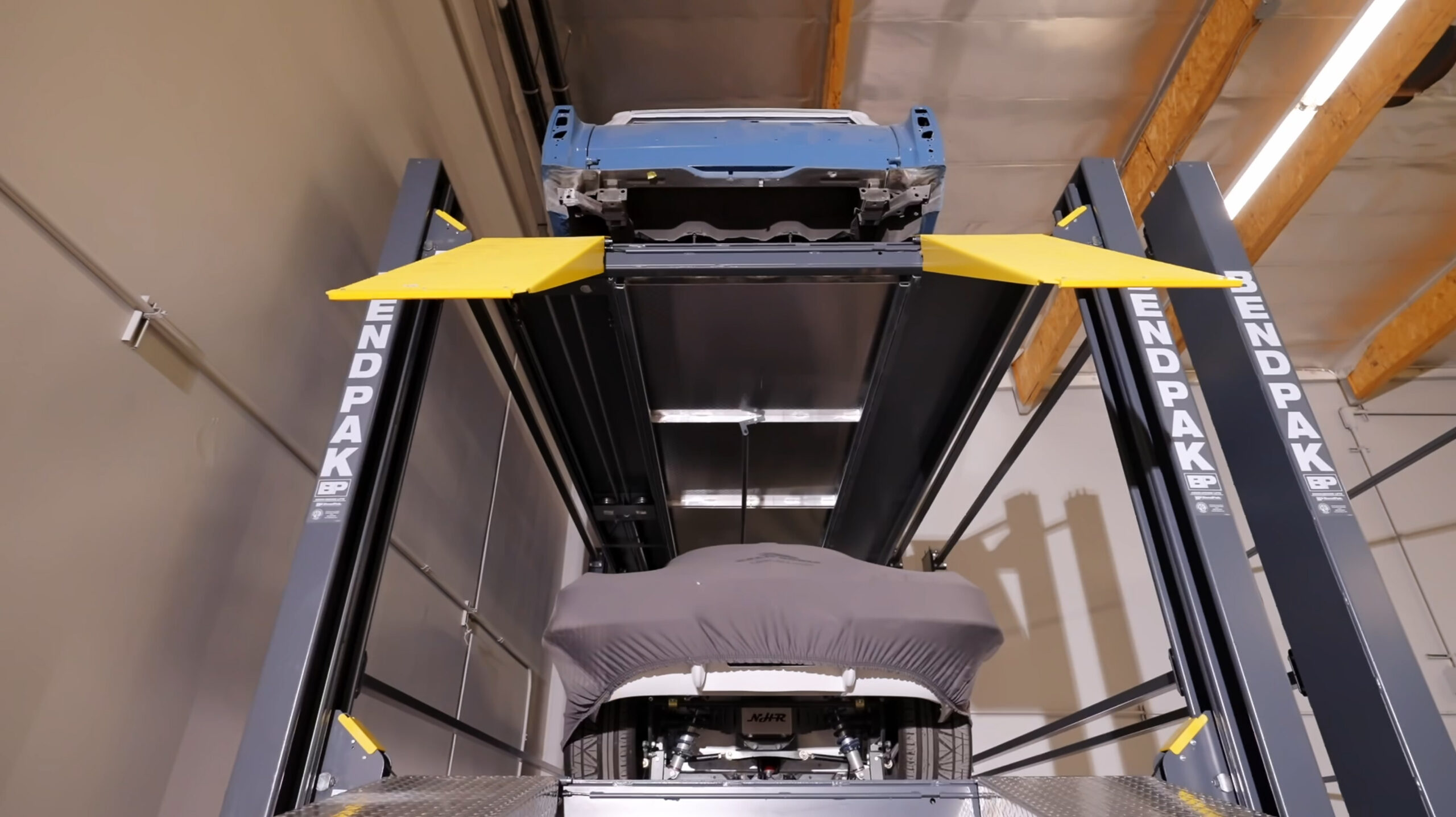
| Does the car sit on its tyres for the whole stay? | It goes on a lift, or the pressures are managed and the car is moved. | It’ll be fine on the floor. | Tyres take a set where they carry weight for months. |
| What keeps the battery alive? | A quality tender per car, named. | We can jump it when you collect. | A flat battery is a dead car and sometimes a replacement. |
| Who’s allowed to release my car, and what do they need? | A named process with identification. | Whoever turns up with the paperwork. | This is the question nobody asks until it goes wrong. |
Notice the pattern. In every case the good answer is specific and the weak answer is reassuring. Reassurance is cheap. A number or a named process costs something to maintain, which is why it’s worth asking for.
Ask what the building holds, in numbers, for both temperature and humidity. If the answer is one number, the building is controlling one thing. If it’s no number at all, nobody is measuring. For the record, we hold 50 to 70°F and 40 to 50% relative humidity, year round.
Climate controlled is a phrase, not a specification, and it gets used for buildings that only watch a thermostat.
Cooling air changes how much water that air can hold, so a building can sit at a steady temperature while the moisture content drifts with the weather outside. Both ends of the humidity scale do damage, and in this valley it’s the dry end you’ll meet: leather, rubber and adhesives suffer in air that’s too dry, which is a different failure from rust. what humidity level a stored car actually needs goes through both ends of that range, and climate control against temperature control is the distinction itself.
The follow up question is worth asking too: is it held all year, or only in summer? A building that cools in July and does nothing in January is a seasonal solution being sold as a permanent one.
Two different questions hide inside the word security, and most answers only cover one.
The first is the building: gates, monitoring, who’s on site and when. The second is authorisation, which is the question of who can take your car away. Those aren’t the same thing, and a camera on a gate doesn’t answer the second one.
Ask it directly. Who is allowed to collect the vehicle, what identification do they need, and what happens if you send a transporter or a shop instead of coming yourself? If you’re out of state this is the single most important answer in the whole conversation, which is why car storage for out of state owners exists as its own page. What secure storage actually means in Las Vegas covers the building half.
Ask about access for you, as well. Can you visit, does it need notice, and can somebody meet you there? A building that’s reluctant to let you in is telling you something.
This is where assumptions cost people money, so ask it plainly: what does your insurance cover, and what does mine have to cover?
A storage building’s own policy covers the building and the building’s negligence. It is not cover on your vehicle. That surprises people, and the time to find out isn’t after something has happened. Keep your own policy in force, and understand that what suits a car being driven often isn’t what suits one standing still for five months. how insurance works on a stored vehicle goes through it properly.
Ask whether the facility requires proof of insurance or current registration before intake, because some do and it changes what you need to bring. We’d rather you asked us that on the phone than assumed either way. There’s also a Nevada rule about the order of operations between your registration and your policy, set out in registration and insurance while your car sits in storage, and getting it backwards costs money rather than saving it.
Ask what drives the price rather than asking for a number you can compare on a spreadsheet.
For a car the real drivers are the vehicle, the space it needs and how long it’s staying. A facility that quotes you a flat figure before knowing any of that is quoting a unit, not a car. Ask what’s included, ask what isn’t, and ask whether anything changes if you want the car moved or looked at while it’s there.
| What drives the price | Why |
|---|---|
| The vehicle. | A wide car needs a wider space than a narrow one. |
| The space it needs. | Not every space in a building is the same. |
| How long it is staying. | A season and an open ended stay are different arrangements. |
We’re not going to publish a rate on this page, because the honest answer depends on your vehicle and what’s available. Ask on the phone and you’ll get a real number rather than a range you have to decode.
Ask about the term as well: how long is the commitment, what notice do you give, and what happens if plans change. Long term car storage in Las Vegas describes how an open ended arrangement actually works.
The last question is the simplest, and it tells you how organised the place is: walk me through the day I drop it off.
A good answer has an order to it. You book a time, the car is looked at with you there, its condition is recorded, and you leave knowing what happens next. Documenting a collector car before storage is worth reading before that appointment, because the record is easier to make than to reconstruct.
Bring the car clean if you can, with a wash and a proper dry rather than a wipe. Settled grit is abrasive, and dragging a cloth across a dusty panel is how paint picks up fine scratches. Beyond that, how to prepare a car for long term storage is the checklist to work through, and how to start a car after storage is the one for the other end.
Most owners book a walkthrough before committing to anything, which is the right instinct. Standing in a building answers more of these nine questions than any phone call.
Owners store with us from Summerlin, Henderson, The Ridges, MacDonald Highlands, Seven Hills, Southern Highlands, Lake Las Vegas and Boulder City.
Ask what the building holds, in numbers, for temperature and for humidity. One number means one thing is being controlled. No number means nobody is measuring. Everything else on the list matters, but that answer tells you fastest what kind of building you’re dealing with.
Its policy covers the building and the building’s negligence, not your vehicle. Keep your own cover in force and ask the facility directly what it requires from you, because some want proof of insurance or current registration before intake and it changes what you bring.
A car standing on its tyres for months takes a set where the weight sits. Every space here carries a BendPak four post lift for that reason. If a building keeps cars on the floor, ask what it does about tyre pressures and whether anything gets moved.
Ask, and ask whether it needs notice. The answer varies and it’s reasonable either way, but a building that’s reluctant to let an owner in is telling you something worth hearing.
It depends on the vehicle, the space it needs and how long it’s staying, which is why we don’t publish a figure that would be wrong for most people. Call 725-272-1803 and you’ll get a real number for your car.
That’s a question for whichever facility you choose, and you should get a named process with identification rather than a shrug. It matters most if you’re out of state or sending a transporter. Ask us and we’ll tell you exactly how we handle it.
Climate controlled storage for exotic, classic and collector vehicles at 50 to 70°F and 40 to 50% relative humidity, with a BendPak four post lift at every space, quality battery tenders and 24 hour monitored gated access. 7185 Bermuda Rd, Las Vegas, NV 89119.
7185 Bermuda Rd, Las Vegas, NV 89119