Most overflow advice is about finding acres. If the problem is four cars that can’t sit in the sun, acres aren’t the answer and a yard ten minutes away isn’t either.
Search for dealer vehicle storage and you’ll get overflow lots. Industrial yards, parking structures, cameras on poles, somewhere ten to thirty minutes from the store. That’s the right answer for most inventory and it’s a solved problem. It isn’t the answer for the few cars on your floor where the sun is the thing that’ll cost you money. REVCity Auto Storage is at 7185 Bermuda Rd, Las Vegas, NV 89119. Call 725-272-1803 and tell us what you’ve got.
Two different problems get called the same thing, and the industry only writes about one of them.
The first is volume. You’ve taken a trade cycle you didn’t plan for, the lot’s full, and you need somewhere to put forty units until they move. That’s about square footage and a fence, and an industrial yard does it perfectly well. Nothing on this page improves on that.
The second is condition. You’ve got a handful of cars where the paint, the interior and the battery are a material part of what they’re worth, and every week they spend outside in this valley takes something off that. A yard with a fence doesn’t help, because the fence isn’t what’s damaging them.
| What you’re storing | Outdoor overflow lot | Conditioned indoor space |
|---|---|---|
| Volume inventory | The right answer | Overkill and more expensive |
| Aged units you’ll discount anyway | Fine | Not worth it |
| High value, low volume cars | Costs you money every week | What the space is for |
| Anything with delicate paint | Sun and dust work on it daily | No daylight reaches it |
| Consignment and customer cars | Somebody else’s asset in the sun | Defensible if something goes wrong |
Most dealers need both, and the useful question isn’t which one. It’s which cars belong in which.
Industry coverage of overflow lots has shifted in the last couple of years, and the shift is worth knowing about.
The old framing was security. Put inventory on a remote lot and you’ve created a theft target, so buy cameras. True, and incomplete. The newer framing is fragmentation. Every car on a secondary site costs staff time to find, to fetch and to prepare, and that time comes out of selling. A salesperson driving thirty minutes each way to retrieve a unit for a test drive is the real recurring cost, and it doesn’t show up on any security line item.
There’s a second cost that only appears once. Insurance written for your licensed premises may not extend to every location you park a car on, and finding that out after a hailstorm is an expensive way to learn it. Confirm in writing which sites your policy covers before you put a car on one.
Ask your carrier, in writing, which addresses your inventory policy actually covers and under what conditions. Off site parking is a common gap and the answer is rarely what people assume. It costs nothing to ask and it’s the single cheapest thing on this page.
None of this is news to anyone who sells cars here. It’s worth putting numbers round it anyway, because the damage is gradual and the invoice arrives all at once.
Sun is the expensive one. Ultraviolet works on clear coat continuously, and on a car that sits for a season the result is a panel that photographs badly and details out worse. Dashboards and door cards dry and crack. Black trim goes grey. What the heat and sun here actually do to a car is the same mechanism whether it’s a customer’s car or yours.
Dust is the one people underestimate. Blown grit settles, then the first wash drags it across the paint. A car that’s been washed repeatedly to stay presentable can end up with more swirl marks than one that was left alone.
Batteries are the quiet cost. A car that sits in this heat for a few months is a car that needs a battery before it can be demonstrated, and a flat one on a test drive loses the sale in front of the customer.
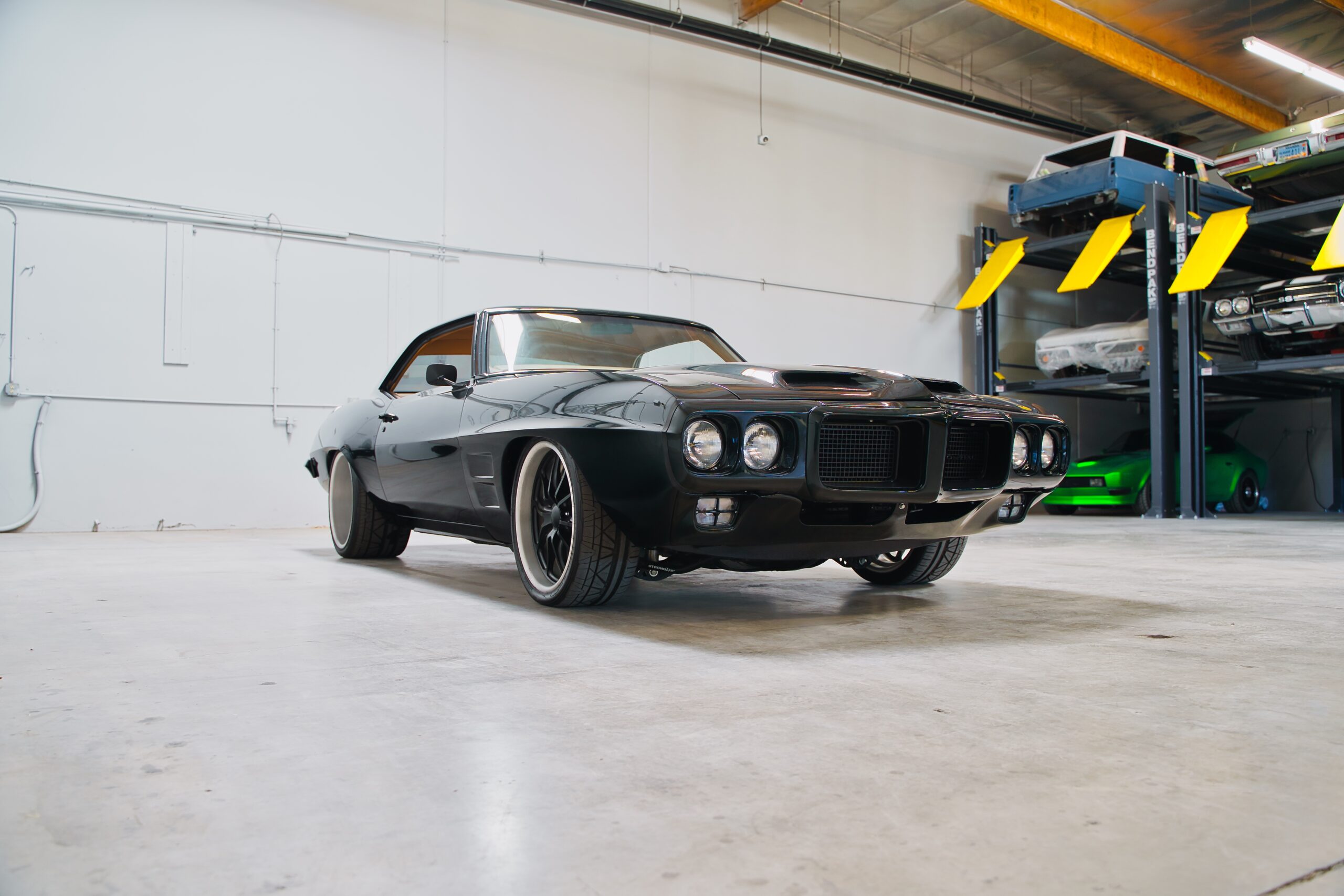
Our building is sealed, so no daylight reaches the cars and there’s no blown dust at all. Temperature holds between 50 and 70°F and relative humidity between 40 and 50%, year round. Indoor storage with the conditions actually held is a different proposition from a covered structure, and the difference is whether the air is managed or just shaded.
This is worth a paragraph because it’s an easy and costly mistake.
Search for off site inventory storage rules and the clearest guidance you’ll find is often published by another state. Florida’s, for example, permits a dealer to store inventory off site but requires that inspections, test drives and purchases happen at the licensed dealership itself. That’s a specific and useful rule. It is also Florida’s rule, and it has no authority here.
We haven’t read Nevada’s equivalent and we’re not going to tell you what it says. Check with the Nevada DMV or your own counsel before you arrange anything that involves a customer seeing or buying a car away from your licensed premises. The point of this section is only that a confident search result is not the same thing as your jurisdiction.
Two practical things matter once a car is somewhere that isn’t your lot.
The first is who can get to it. Access here is gated and monitored around the clock, and collection goes through people rather than a public row of roller doors. For a car that belongs to a customer or sits on a consignment agreement, being able to say exactly who handled it and when is worth more than a camera. How the access and monitoring here work is the part most dealers ask about first.
The second is retrieval. A car on a four post lift in a conditioned building comes down, starts and drives. It doesn’t need a jump, a wash and an hour of detailing before anyone can look at it. That’s the difference that makes a secondary site workable rather than a standing nuisance.
If moving cars back and forth is the friction, we publish a concierge pickup and delivery service and can handle the transport instead of your staff. Ask what’s involved when you call.
Here’s the honest position, because a page like this usually pretends otherwise.
We don’t publish a trade programme. There’s no volume rate, no account structure, no minimum number of cars and no dealer discount on this website, and this page isn’t going to invent one. We’re also not going to tell you how many spaces are free, because that changes.
What we’ll do is talk about what you’ve actually got. Call and tell us how many cars, what they are, and roughly how long. If a trade arrangement makes sense for your situation, that’s a conversation rather than a published rate card.
On the sum itself, compare a monthly rate against what the alternative costs you. A paint correction on one car, a battery, a set of tyres that flat spotted, and the staff hours spent fetching units from a yard across town. For volume inventory the yard wins easily. For the cars this page is about, it usually doesn’t.
| What to ask any site you’re considering | Why it matters to a dealer |
|---|---|
| Are the conditions held or just shaded | Shade doesn’t manage humidity |
| Who may collect a car, and on what notice | Your staff won’t always be the same person |
| Does my insurance cover this address | Off site cover is a common gap |
| How fast can a car be ready to demonstrate | A test drive won’t wait |
| Is the weight off the tyres | Flat spots become a customer complaint |
| Is there a record of who handled the car | You may need it for a consignment dispute |
Those apply wherever you end up. A longer list of questions worth asking covers the rest, and most of it applies to a dealer as much as to an owner.
The process is deliberately short.
Call to reserve space and tell us what the cars are. We’ll talk through what’s available and what makes sense. You’re welcome to come and walk the building first, and a walkthrough before you commit is normal rather than something we do as a favour.
Then schedule a drop off. Check in involves going over each car and recording its condition, which takes a little longer than handing over keys and is the part that protects you if anyone disputes anything later. Book it for a quiet hour rather than the end of a busy Saturday.
After that it’s a phone call whenever you need a car back. Call 725-272-1803 and we’ll get started.
We’re at 7185 Bermuda Rd, Las Vegas, NV 89119, close to the airport and a short run from the Strip, Henderson and the Valley Automall.
Not a published one. There’s no volume rate, no minimum count and no account structure on this website, and we’re not going to imply one. Call and tell us what you need and we’ll talk about it properly.
That changes week to week, so any number on a web page would be wrong by the time you read it. Call and we’ll tell you what’s actually available.
Check the Nevada rules before you plan anything around that. Guidance you’ll find online is often another state’s, and we haven’t read Nevada’s, so we won’t tell you what it permits.
No, and it isn’t trying to be. A yard is the right answer for volume inventory. This is for the few cars where a season outside costs more than the storage would.
It comes off the lift, starts and drives. Give us a call and we’ll have it ready. If you want it brought to you instead, we publish a pickup and delivery service.
Ask your carrier in writing. Off site locations are a common gap in inventory policies, and the answer is rarely what people assume it is.
How many, what they are and roughly how long. We’ll talk through the space and what it would take to get them here, and we’ll be straight with you about which of your cars are better off on a yard.
7185 Bermuda Rd, Las Vegas, NV 89119