A bonded aluminum tub and a carbon monocoque have one thing in common: the adhesive holding them together does not like 115°F. Neither does a 130 kWh battery pack.
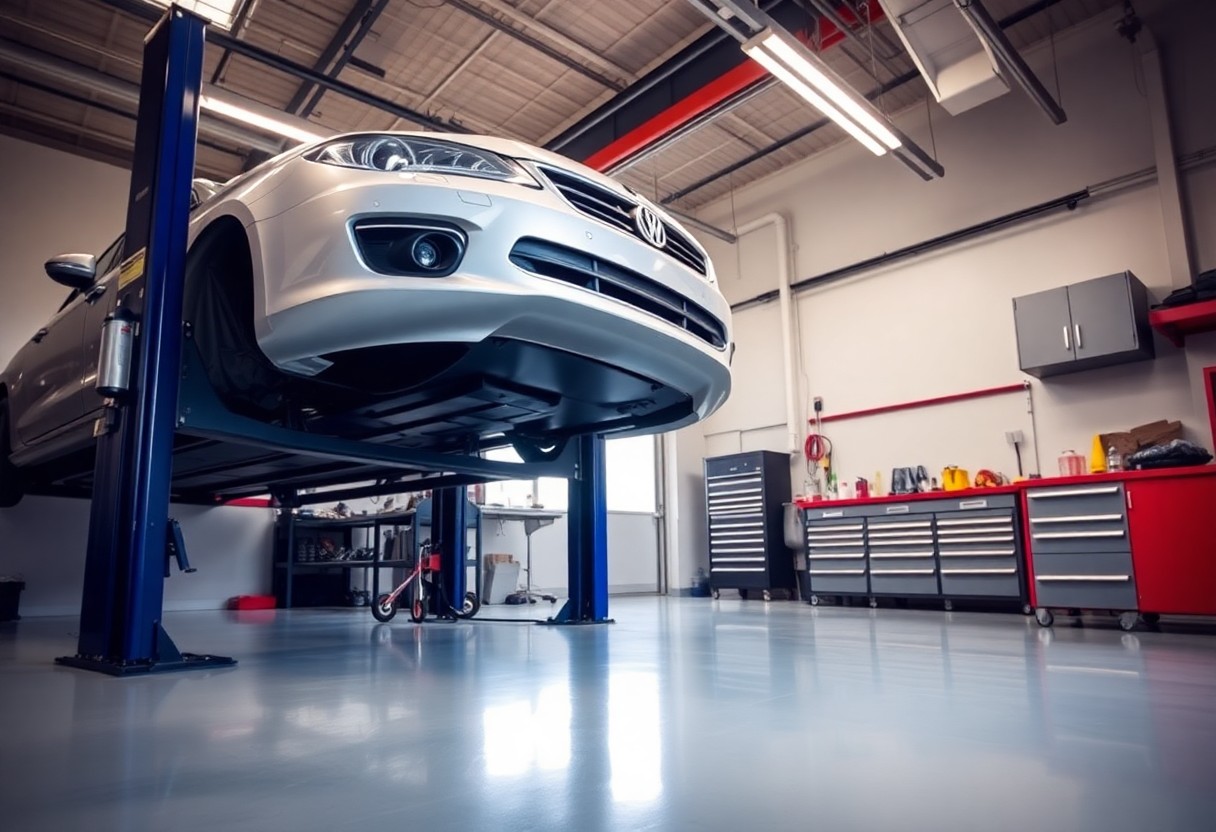
The Emira is the last combustion Lotus, and the Evija is one of 130 electric hypercars that will ever exist. Both are engineered around lightweight bonded structures that were validated in a British climate, not a Mojave one. REVCity Auto Storage, 7185 Bermuda Rd, Las Vegas NV 89119, keeps them at 50–70°F and 40–50% relative humidity in a fully enclosed, UV-free building with a BendPak four-post lift at every space. Call 725-272-1803 to discuss a space.
Lotus built its modern reputation on a manufacturing idea rather than an engine: extruded aluminum sections bonded together with structural epoxy adhesive and riveted at the joints. The Elise proved it, the Exige and Evora refined it, and the Emira carries it forward. It is lighter than a welded steel monocoque, stiffer per pound, and it depends entirely on the adhesive staying within its design envelope.
Structural epoxy adhesives soften as they approach their glass transition temperature. The bond does not fail catastrophically at 120°F — that is not the concern. The concern is cumulative. A car parked outdoors in Las Vegas puts its structure through a 60 to 80 degree thermal cycle every single day for four months a year, and aluminum expands roughly twice as much as the adhesive bonding it. Every cycle works the joint slightly. Over years, that shows up as creaks, shifted panel gaps, and doors that no longer close the way they did.
The Evija goes the other direction — a one-piece carbon fiber monocoque, the lightest EV hypercar structure Lotus has ever produced. Carbon fiber has its own heat problem, and it is the resin, not the weave. Automotive epoxy resins soften between roughly 150°F and 220°F, and exposed carbon panels in Las Vegas sun measure 160–190°F. We cover that failure mode in detail in our guide to Las Vegas heat and carbon fiber body panels.
A steel-bodied classic that gets hot expands and contracts as one homogeneous material. A bonded aluminum or carbon composite structure is three or four materials with different expansion rates held together by a polymer. Lightweight construction and desert thermal cycling are a bad pairing, and Lotus is the purest expression of lightweight construction on sale.
The Emira arrived in two mechanical flavors and they store differently. The 3.5-litre supercharged Toyota-sourced V6 is the known quantity — robust, well understood, and available with a manual gearbox. The 2.0-litre turbocharged AMG four is the more thermally sensitive unit, with a turbo, an intercooler circuit, and tighter tolerances throughout.
Then there is the interior. The Emira’s cabin is a significant step up from anything Lotus built before — Alcantara, real leather, actual screens. A cabin that reaches 160–190°F in direct summer sun bakes the adhesives holding trim to substrate, dries the leather, and cooks the electronics. Climate-controlled storage extends interior component lifespan by up to 50%.
Tires deserve a line of their own. Emira buyers routinely spec Michelin Pilot Sport Cup2 or comparable performance rubber. Those compounds are soft by design and they harden fast in heat, then flat-spot if the car sits loaded. A four-post BendPak lift unloads the suspension entirely for the storage term, which is why every space at REVCity has one — the reasoning is laid out in our BendPak storage guide.
The Evija is a different problem. Roughly 2,000 horsepower from four motors, a carbon monocoque, and a large lithium-ion pack — and lithium-ion chemistry is the single most heat-sensitive component in any vehicle REVCity stores.
Calendar aging in a lithium-ion pack — the capacity a battery loses simply by existing, independent of cycles — is driven by two variables: state of charge and temperature. High state of charge accelerates it. High temperature accelerates it dramatically. The rule of thumb that battery degradation roughly doubles for every 15°F increase applies here with real money attached, because an Evija pack is not a part you order from a catalog.
The second issue is that an EV in a hot environment does not sit passively. The battery management system runs its thermal loop to protect the pack, which draws from the pack, which means the car self-discharges faster in heat than in cool air. In a 120°F garage that is a system fighting the environment continuously for months. At 50–70°F it barely has to work at all.
For long-term storage, most manufacturers of high-performance EVs recommend leaving the pack near the middle of its range — roughly 50–60% — rather than fully charged or nearly empty, and keeping it plugged in where the vehicle supports maintenance charging. Combine that with a stable 50–70°F environment and calendar aging drops to near its practical floor. Always follow the specific guidance in your owner documentation.
Our broader treatment of electric vehicle storage in the desert is in the EV storage guide.
Hagerty, the leading collector-vehicle insurer, treats storage conditions and documented maintenance history as material to agreed-value coverage. For a limited-production car this is not paperwork — it is the difference between a claim settled at the number you expect and a negotiation.
The Evija’s case is obvious: 130 cars worldwide, and the market prices condition and provenance ruthlessly. The Emira’s case is quieter but real. It is the last internal-combustion Lotus. Cars that mark the end of an era — the final air-cooled 911, the last manual-only Ferrari — historically hold and then recover value, and the ones that do best are the ones with clean, documented, climate-controlled histories.
On the other side of the ledger: sun and heat degradation costs a car up to 10% of resale value, and none of it is covered by any collector policy, because progressive environmental wear is not a loss event. It is simply a bill that arrives later.
Change the oil going in, not coming out. On the AMG-engined Emira especially. Used oil carries acidic combustion byproducts and holds them against bearing surfaces and turbo internals for the whole term. Not applicable to the Evija — but its reduction-gear and cooling system fluids still get a condition check.
Stabilize the fuel on the Emira. Fill to roughly 90% to limit condensation headspace and treat with PRI-G or Sta-Bil 360, then run the engine long enough to move treated fuel through the injectors and rails — not just the tank.
Use a real battery tender. A microprocessor-controlled tender that monitors state of charge and floats, not a constant-current trickle charger that will cook a 12V battery over six months. Every space at REVCity is set up for one.
Decontaminate before you store. Wash, iron-remove, clay, and dry fully. Monsoon dust from July through September is mineral-heavy and mildly alkaline; sealed under a coating or left on composite clamshells for months, it etches.
Get it on the lift. Suspension unloaded, tires off the ground, no flat spots on Cup2s, no set in the springs and bushings. This is the single highest-value structural decision in long-term storage of a lightweight car.
Do not start it monthly. Hagerty has been explicit on this for years: a monthly cold start that never reaches full operating temperature introduces moisture and unburned fuel into the oil and does more harm than leaving the car alone in a correct environment. Properly stored, it stays alone.
Store it uncovered indoors. Inside a filtered, conditioned, UV-free building a cover only traps residual dust against composite and carbon surfaces. The full sequence is in our long-term storage guide, and the environmental case is in our guide to Las Vegas heat damage. If you are still comparing facility types, start with climate-controlled vs. temperature-controlled storage.
REVCity sits on Bermuda Road in the airport corridor south of the Strip — under ten minutes from Harry Reid International, which matters when the car lives here and the owner does not.
Approximate drive times from 7185 Bermuda Rd, Las Vegas NV 89119. Actual times vary with traffic and route.
Yes, in the right environment. The Emira’s bonded aluminum chassis and composite body panels are sensitive to repeated thermal cycling, so the requirement is stable temperature rather than short-term shelter. At 50–70°F and 40–50% relative humidity with no UV exposure, an Emira can be stored indefinitely with routine fluid and battery preparation.
Indoors, climate-controlled, with the battery near the middle of its state-of-charge range rather than full or empty, and plugged in where the vehicle supports maintenance charging. Lithium-ion calendar aging is driven by temperature and state of charge — a pack held at 50–70°F ages far more slowly than one sitting in a 120°F garage. Follow the specific guidance in your owner documentation.
Not immediately, but cumulatively. The structural epoxy bonding the aluminum sections softens as it warms, and aluminum expands roughly twice as much as the adhesive holding it. A 60–80°F daily thermal swing works those joints every day of summer, which over years produces creaks, shifted panel gaps, and door fit changes.
No. Hagerty and most collector-storage specialists advise against monthly start-ups that never reach full operating temperature, because they introduce moisture and unburned fuel into the oil without burning it off. A correctly prepared car in a stable climate-controlled environment is better left alone.
Yes. Composite panels do not rust, but the gelcoat and clearcoat above them chalk, fade, and craze under a UV index of 10–12, which Las Vegas runs from May through September. The repair path is refinishing rather than bodywork, and it is not cheap. Enclosed, UV-free storage eliminates the exposure entirely.
Yes. REVCity is a purpose-built climate-controlled facility at 7185 Bermuda Rd, Las Vegas NV 89119, with BendPak four-post lifts at every space, quality battery tender support, and 24/7 monitored gated access. Call 725-272-1803 to discuss requirements for an Evija or any high-value EV.
Founder of REVCity Auto Storage and Nostalgia Hot Rods. Dustin has spent decades building, restoring, and protecting collector and exotic vehicles across the Las Vegas Valley. He built REVCity to be the climate-controlled facility he always wanted for his own cars. Read his story →
50–70°F, 40–50% humidity, zero UV, a BendPak lift at every space, and 24/7 monitored access — ten minutes from Harry Reid International.
REVCity Auto Storage · 7185 Bermuda Rd, Las Vegas NV 89119 · 725-272-1803