
Car Covers in Indoor Storage: Help or Harm
Everyone tells you to use a breathable cover. Almost nobody asks what the cover is doing, and in a sealed building the honest answer is usually not much.
A cover does four jobs: it keeps dust off, blocks sunlight, hides the car and takes the knocks. Work out which of those still apply where your car is actually going and the decision answers itself. REVCity Auto Storage is at 7185 Bermuda Rd, Las Vegas, NV 89119. Call 725-272-1803 about space.
The Advice Is Right, for the Wrong Building
Search this and you’ll get a clear answer: use a breathable cover, never plastic. That’s good advice and it isn’t wrong.
It’s just written for a car in an ordinary garage. There the cover is earning its keep, because the building isn’t doing any of those four jobs. Dust comes in under the door, sunlight comes through the window, the car is visible from the street, and there are bicycles and bins to catch a wing mirror.
Change the building and the list changes with it. That’s the whole of this page, and it’s the question none of the guides ask before giving you their answer.
Most of the detailed cover guidance online is published by companies that sell covers, capsules or detailing products. The advice is usually accurate. It is also never going to conclude that you don’t need one. We sell storage, not covers, so we have no reason to talk you into either.
The Four Jobs, and Which Survive Indoors
Go through them one at a time against the building the car is going into.
| What a cover does | In a home garage | In a sealed climate controlled building |
|---|---|---|
| Keeps dust off. | Earns its keep. Dust gets in and settles for months. | Mostly redundant. The layer doesn’t build if the air isn’t shared. |
| Blocks sunlight. | Matters if there’s a window or a gap. | Nothing to block. There’s no daylight in ours. |
| Hides the car. | Worth something if the garage gets opened. | Already handled by a gated building with monitored access. |
| Takes knocks and scuffs. | Real. Garages hold bikes, bins and ladders. | Low. Cars are on lifts in their own space. |
So three of the four reasons stop applying, and the fourth drops a long way. What’s left is the risk a cover brings with it, which is the part the guides rush past.
How a Cover Damages Paint
Two mechanisms, and both are avoidable rather than theoretical.
The first is abrasion. A cover over a car that already carries dust holds that grit against the paint, and then the cover moves: air shifts in the building, somebody brushes past, the fabric settles. The cover becomes a cloth, and the grit under it is harder than clear coat. That’s the same mechanism as what dust and grit actually do to paint, which is worth reading alongside this.
The second is trapped moisture. A non breathable cover stops air moving at the paint surface, so anything damp underneath stays damp. That’s a problem in a humid climate. In this valley the air is usually too dry rather than too wet, which changes the risk but doesn’t remove it: a car put away damp from a wash, under plastic, is creating its own weather.
Both failures come from the same place. The cover isn’t the problem. Putting it on at the wrong moment is.
What We Would Actually Do
Plain answers, by situation, with no product to sell you.
| The situation | What we would do |
|---|---|
| Clean car, dusty building. | A breathable cover is reasonable. |
| Dusty car, any building. | Wash and dry it properly first. Never cover grit. |
| Clean car, sealed building. | A cover is solving a problem you don’t have. |
| Plastic or waterproof cover indoors. | Avoid it. It holds moisture at the paint. |
| Car you’re attached to. | Leave it alone. Handling causes more marks than air does. |
If you already own a good breathable cover and you’d feel better with it on, use it. Put it on a car that’s clean and completely dry, and don’t keep taking it off to look. Every removal and replacement is a chance to drag something across a panel.
One thing worth knowing about climate: a cover doesn’t help with temperature or humidity. It isn’t insulation. The air around the car is the building’s job, which is the difference between climate control and temperature control, and what humidity a stored car actually needs covers why the number matters more than the fabric.
Insurance, Liability and Who Is Responsible for the Paint
Worth settling before the car goes anywhere, because cover marks are exactly the sort of damage nobody can attribute later.
A storage building’s own insurance covers the building and the building’s negligence. It isn’t cover on your vehicle. Fine scratching that accrued under a cover over five months has no single moment anyone can point at, so it tends to be nobody’s claim. Keep your own policy in force and read how insurance works on a stored vehicle before you change anything.
The practical protection isn’t a policy, it’s a photograph. Record the paint in good light before the car goes in, close enough to see the finish. Documenting a collector car before storage is the method, and it takes an afternoon once.
What Happens When You Store With Us
The process is short and there’s no trick to it.
Most owners book a walkthrough first, which is the right instinct: you’ll answer the cover question yourself once you’ve stood in the building and seen that there’s no daylight and nothing settling. From there we schedule a drop off that suits you and go through the intake with the car in front of us.
Bring it clean and dry. If you’re having it washed, coated or detailed, do that first and bring it straight here afterwards rather than parking it outside for a week in between. How to prepare a car for long term storage is the full checklist, and what to ask a storage facility before you book covers what else is worth asking.
How long the car stays doesn’t change the answer. A season, a winter or an open ended arrangement all run the same way, described in long term car storage in Las Vegas. What a month costs depends on the vehicle and the space it needs, so ask rather than work from a number you saw somewhere else.
Owners store with us from Summerlin, Henderson, The Ridges, MacDonald Highlands, Seven Hills, Southern Highlands, Lake Las Vegas and Boulder City.
Frequently Asked
It depends on the building, not the cover. In an ordinary garage a breathable cover earns its keep. In a sealed, daylight free, climate controlled building three of the four reasons for a cover have already been handled, so it’s mostly solving a problem you don’t have.
Breathable, every time, and never plastic indoors. A non breathable cover stops air moving at the paint and holds any moisture there. If the only cover you have is plastic or waterproof, it’s better off the car than on it.
Yes, and it’s the most common way covers do harm. A cover over a dusty car holds grit against the surface and then moves slightly with the air and with handling. The grit in household and garage dust is harder than clear coat, so the cover works like a very fine abrasive.
No. A cover isn’t insulation and it doesn’t control moisture. The air around the car is the building’s job. If the building isn’t holding a temperature and a humidity range, a cover won’t make up the difference.
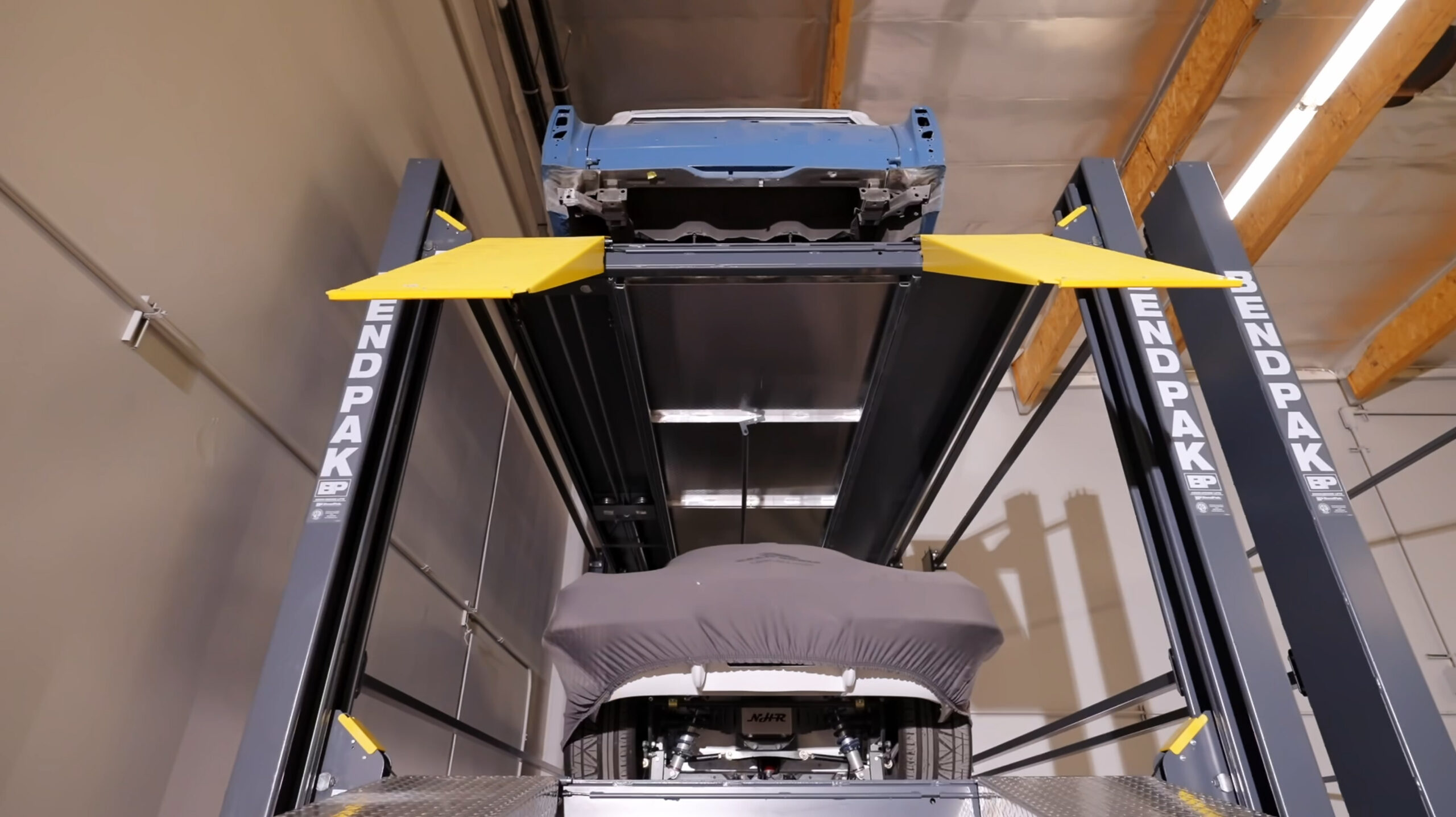
That’s a question to ask us directly rather than assume, and we’d rather say so than imply an answer here. What we do provide is a sealed building with no daylight, held at 50 to 70°F and 40 to 50% relative humidity, with a BendPak four post lift at every space.
Leave it, or wash it properly first. Dust sitting on paint does very little. Dust under a cover that moves is abrasive. If a full wash isn’t practical before the drop off, tell us and bring it uncovered. Call 725-272-1803 to arrange a time.
See Why the Cover Question Answers Itself
Climate controlled storage for exotic, classic and collector vehicles in a sealed building with no daylight, held at 50 to 70°F and 40 to 50% relative humidity, with a BendPak four post lift at every space and 24 hour monitored gated access. 7185 Bermuda Rd, Las Vegas, NV 89119.
7185 Bermuda Rd, Las Vegas, NV 89119