
Dust and Grit in Storage: What Actually Scratches Paint
Dust sitting on a car does almost nothing. The scratches arrive the moment somebody wipes it off, and in this valley what settles is sharper than most owners realise.
Here’s the uncomfortable part of storing a car in the Mojave. The dust itself is patient and mostly harmless. The harm is done by a well meaning hand and a dry cloth. REVCity Auto Storage is at 7185 Bermuda Rd, Las Vegas, NV 89119, in a sealed building with no daylight in it. Call 725-272-1803 about space, and read this before you touch a dusty panel.
Dust Is Not Dirt. It Is Abrasive.
The mental model most people carry is that dust is untidy. For a painted panel that’s the wrong model entirely.
What settles on a car in a garage isn’t a soft grey fluff. It’s a mix of mineral grit, brake dust from whatever else lives in the building, and fibres. The mineral fraction is the problem: it’s harder than clear coat. Sitting still it does nothing at all. Dragged across the surface under the weight of a hand, it behaves like very fine sandpaper.
That’s why a stored car can come out with a dull, finely marked finish that nobody can account for. Nothing hit it. Somebody dusted it.
Never wipe a dusty car dry. Not with a microfibre cloth, not with a duster, not with a feather brush, and above all not with a shop rag. If a car needs the dust taken off, it needs water and a lubricant between the grit and the paint, or it needs nothing doing at all.
Why the Mojave Makes This Worse Than It Sounds
Generic storage advice treats indoor dust as an afterthought. That advice was not written for a desert.
This valley supplies very fine mineral particles in volume, and the monsoon months drive them into every building that isn’t sealed against them. A garage with a gap under the door, a swamp cooler, or a roof vent is a building that breathes the outside air, and everything in that air lands on your paint. We’ve written about the weather side of this in how a Las Vegas dust storm reaches a car and in how monsoon dust damages a stored car, which cover the event. This page is about what the dust does once it has arrived.
The compounding problem is time. A daily driver gets washed. A stored car sits, and the layer builds for months until it’s thick enough that somebody feels they ought to deal with it. That’s the moment the damage happens.
What Lands on a Car, and What Each Part Does
It helps to separate what’s actually in the layer, because the three parts behave differently.
| What it is | Where it comes from | What it does to paint |
|---|---|---|
| Mineral grit. | Outside air, open doors, anything tracked in. | Harder than clear coat. This is what scratches. |
| Brake and tyre dust. | Other vehicles moving in the same building. | Fine, dark, and it bonds as it sits. |
| Fibres and organic matter. | Covers, cardboard, people, pests. | Mostly harmless, but it holds the grit in place. |
The useful conclusion is that a building with cars driving in and out all day puts a different layer on your paint than a building where almost nothing moves. It isn’t only about whether the doors are sealed.
Why a Cover Often Makes It Worse
This is the part that surprises people, and it follows directly from the first section.
A cover put over a car that already carries a layer of grit holds that grit against the paint and then moves, slightly, every time the building’s air moves or somebody brushes past. The cover becomes the cloth. A breathable cover over a clean car in a dusty building makes sense. A cover of any kind over a dusty car is a slow polishing machine.
| The situation | What we would do |
|---|---|
| Clean car, dusty building. | A breathable cover is reasonable. |
| Dusty car, any building. | Wash it properly before anything goes over it. |
| Clean car, sealed building. | A cover is mostly solving a problem you don’t have. |
| Plastic or waterproof cover indoors. | Avoid it. It traps moisture against the paint. |
Inside a sealed building with no daylight, the main jobs a cover does outdoors have already been taken care of. There’s no sun to fade anything and very little settling to block.
What We Do About It, and What We Will Not Claim
The honest version: the fix is the building, not a product.
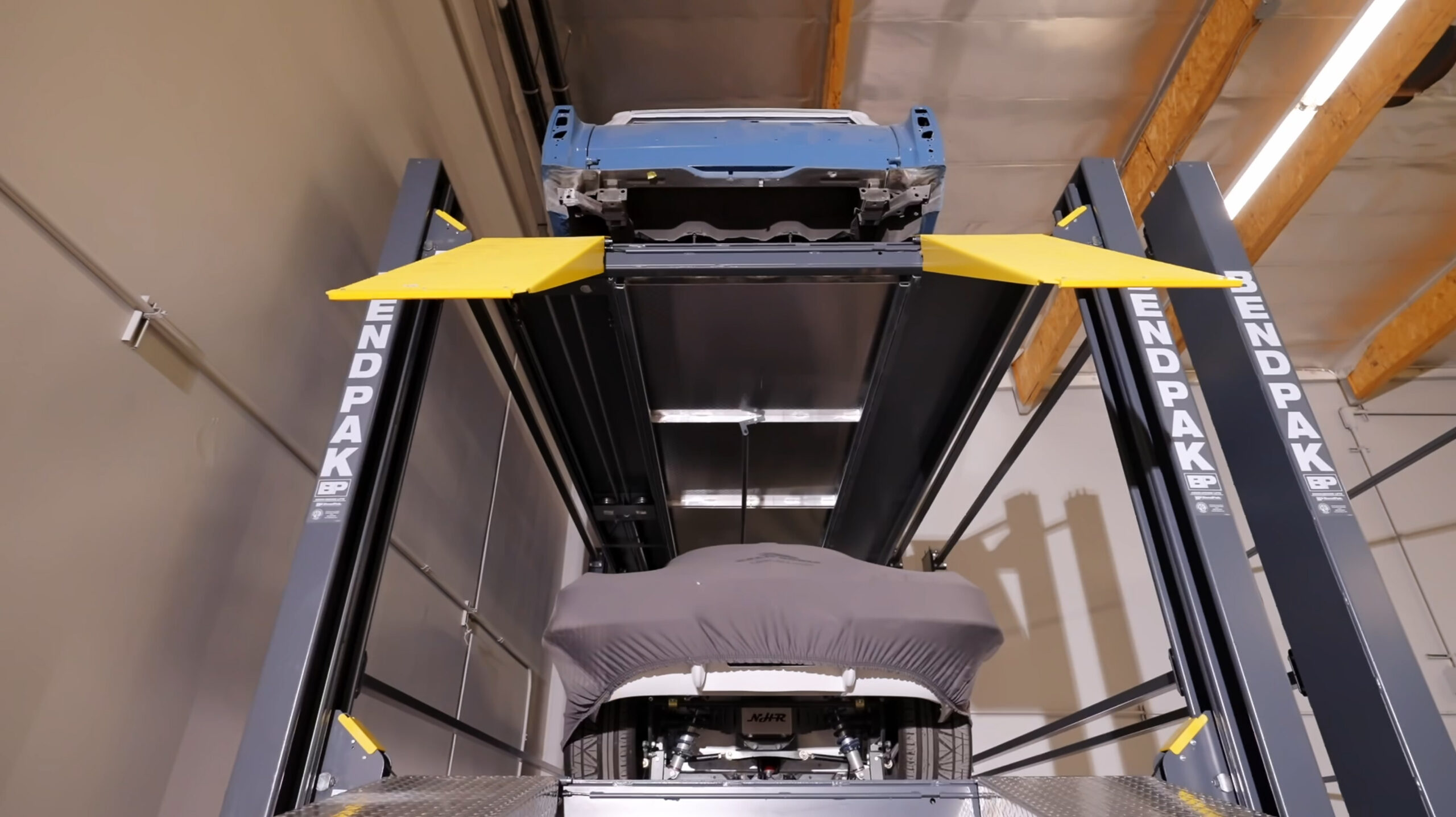
Our building is sealed and there’s no daylight in it. We hold 50 to 70°F and 40 to 50% relative humidity year round, every space carries a BendPak four post lift so cars aren’t standing on the floor, and access is gated and monitored around the clock. A car that isn’t sharing its air with the outside doesn’t accumulate the layer in the first place, which removes the temptation that causes the scratches.
What we’re not going to do is quote you a filtration specification, an air change rate or a particulate figure, because we haven’t published one and inventing one would be worse than saying nothing. If you want to know how the building handles air, ask on a walkthrough and you’ll get a straight answer from somebody standing in it.
If the paint matters enough that you’re reading this, ceramic coating against paint protection film is worth a look before the car goes in, and indoor car storage in Las Vegas covers what an enclosed building changes more broadly.
Insurance, Liability and Who Carries the Paint Risk
Worth being clear eyed about this, because paint damage is exactly the kind of loss people assume is covered and then find isn’t.
A storage building’s own insurance covers the building and the building’s negligence. It isn’t cover on your vehicle, and fine scratching accumulated over months is a difficult thing to attribute to anybody. Keep your own policy in force, and understand that the cover which suits a car being driven often isn’t the cover that suits one standing still. How insurance works on a stored vehicle goes through that properly.
The practical defence isn’t a claim. It’s a record. Photograph the paint before the car goes in, in good light, close enough to see the finish. Documenting a collector car before storage is the method, and it takes an afternoon once rather than an argument later.
What to Do Before You Drop It Off
Short list, and the order matters more than the products.
Wash the car properly and dry it properly. Not a wipe over, a wash: the point is to get the grit off with water and lubrication rather than friction. If you’re having it detailed or coated, do that first and bring it in afterwards rather than the other way round.
Then leave it alone. The hardest instruction to follow with a car you love is to stop touching it, but a stored car in a sealed building genuinely does better untouched than attended to. If you visit and it looks dusty, tell us rather than reaching for a cloth.
How long the car stays doesn’t change any of this. A season, a winter or an open ended arrangement all run the same way, described in long term car storage in Las Vegas, and how to prepare a car for long term storage is the full checklist. What a month costs depends on the vehicle and the space, so ask rather than work from a number you saw somewhere else.
Owners store with us from Summerlin, Henderson, The Ridges, MacDonald Highlands, Seven Hills, Southern Highlands, Lake Las Vegas and Boulder City.
Frequently Asked
Sitting still, almost not at all. The damage happens when it’s moved across the surface. The mineral fraction of household and garage dust is harder than clear coat, so a dry cloth turns a harmless layer into very fine abrasive. The dust isn’t the problem. Wiping it off is.
With water and lubrication, or not at all. A proper wash takes the grit away rather than dragging it. If a full wash isn’t practical, leave the dust where it is: it does less harm sitting there than it does under a cloth.
Only over a clean car, and only a breathable one. A cover over a dusty car holds grit against the paint and moves with the air, which is the worst of both. In a sealed building with no daylight, a cover is mostly solving a problem that isn’t there.
If your garage has a gap under the door, a vent or a swamp cooler, it breathes the outside air and everything in that air lands on the car. Ours is sealed with no daylight in it, which is why the layer doesn’t build in the first place.
We haven’t published a filtration specification and we’re not going to invent one for a web page. What we will state is what we hold: 50 to 70°F, 40 to 50% relative humidity, year round, in a sealed building. Ask on a walkthrough and you can see how the air is handled.
Treat that as a question for your insurer rather than an assumption. A facility’s policy covers the building and its negligence, not your vehicle, and fine scratching accrued over months is hard to attribute. Photograph the paint before the car goes in. Call 725-272-1803 to ask about space.
Keep the Layer Off in the First Place
Climate controlled storage for exotic, classic and collector vehicles in a sealed building with no daylight, held at 50 to 70°F and 40 to 50% relative humidity, with a BendPak four post lift at every space and 24 hour monitored gated access. 7185 Bermuda Rd, Las Vegas, NV 89119.
7185 Bermuda Rd, Las Vegas, NV 89119