
Storing a Financed Car: What Your Lender Expects
You still owe money on it and it’s about to sit for months. Three things are worth settling before the car goes anywhere.
The web answers half of this well. It’ll tell you a lender wants full coverage until the loan is paid. What it won’t tell you is that the address your car is garaged at is part of your policy, and moving the car changes it. That’s the part owners find out afterwards.
Three Things To Settle Before It Goes In
A car you own outright can be parked and forgotten. A financed car can’t, because two other parties have an interest in where it is and what it’s covered for.
Those parties are your lender and your insurer, and they want different things. The loan agreement is the authority on the first. Your policy and your agent are the authority on the second. Neither of them is the storage facility, and we’d be wrong to tell you otherwise.
| What to settle | Who answers it | Why it matters now |
|---|---|---|
| The coverage your lienholder requires | Your loan agreement, in writing. | Reducing coverage on a financed car can breach the loan. |
| The garaging address on the policy | Your insurer or agent. | It’s a rating factor, so changing it is notifiable. |
| Whether registration stays current | Your insurer and the state. | An unregistered car can complicate the policy behind the loan. |
Do all three before the car moves rather than after. It’s a twenty minute job in advance and a tedious one to unpick later.
What Your Lender Requires While You Still Owe
A lender holding a lien on your car has one interest: the car is collateral, and collateral that gets destroyed uninsured leaves them with a loan and no asset.
So lenders generally require physical damage coverage for the life of the loan. That means comprehensive and collision, not just liability. Liability only coverage is usually not available to you at all while the car is financed, which surprises owners who assume a parked car can be stripped back to the minimum.
Dropping below what the agreement requires doesn’t go unnoticed. Insurers notify lienholders about changes and lapses, and a lender that finds the collateral uninsured will act. Exactly what they do and how quickly is in your paperwork rather than in anything we could tell you.
Every lender words this differently and some are stricter than the general rule. The sentence that governs your car is in your loan documents, so find it before you change anything about the policy.
The Garaging Address Almost Nobody Mentions
This is the one that catches people, and it has nothing to do with the lender.
Your policy records where the car normally lives. Insurers price risk partly on that location, because theft rates, weather and claims history all vary by address. It’s called the garaging address and it’s a rating factor, which is a dull way of saying it affects what you pay.
Move the car into storage for several months and the address on the policy is no longer where the car is. That’s generally notifiable. It isn’t automatically bad news, because a secure monitored building can read better to an insurer than a driveway does, but the decision is theirs and they can only make it if you tell them.
Owners who live elsewhere hit this hardest. There’s more on that in our page about storing a car when you don’t live in Las Vegas.
Can You Reduce Coverage While It Sits?
Sometimes, and it’s worth asking, but the order matters.
Many insurers will write a storage endorsement for a car that isn’t being driven. It typically keeps comprehensive cover for fire, theft and damage while suspending the parts that only apply to a car on the road. On a car you own outright that can cut the premium noticeably.
On a financed car the lender’s requirement comes first. If the agreement demands comprehensive and collision, a storage endorsement that drops collision isn’t yours to take, however sensible it looks. Ask your insurer what the endorsement actually suspends, then check that against the loan.
We’ve written up how the storage endorsement itself works in more detail.
We can tell you what the building is and how the car is kept, which is often what an insurer asks. We can’t tell you what coverage to carry, and anything about how your policy is written belongs with your insurer.
Registration While The Car Sits
A stored car still has a registration status, and letting it lapse is a decision rather than an accident.
Some owners keep it current so the car can be driven the day they want it. Others let it expire deliberately and deal with it before the car moves again. Both happen. What matters with a loan involved is that your insurance usually depends on registration, and your lender’s requirement depends on the insurance.
Ask your insurer what happens to the policy if the registration lapses. That one question tells you whether this is a simple choice or a chain of consequences.
What The Building Means For The Conversation
When an insurer or a lender asks where the car is going, specifics help more than adjectives.
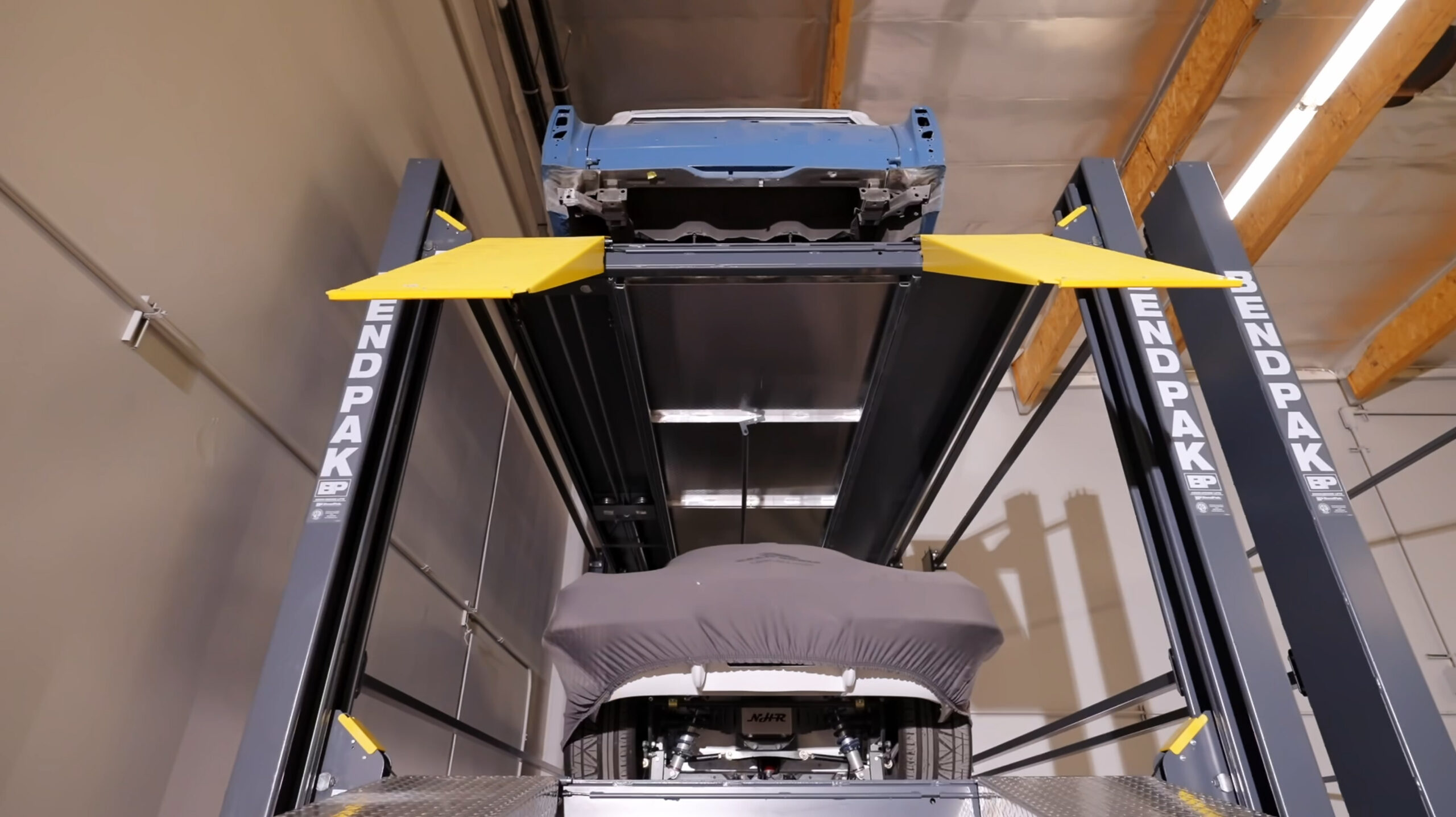
Ours is an indoor facility on Bermuda Road, held between 50 and 70°F with relative humidity between 40 and 50 percent. Access is gated and the building is monitored. Every space has a BendPak four post lift, so the car sits with its weight off the tyres rather than on a slab. Las Vegas heat and monsoon dust stay outside.
Those are the facts people quote to an insurer. We’ll put them in writing for your own records if that helps the conversation.
Preparing It, And How Long It Stays
The mechanical side doesn’t change because there’s a loan on the car, but it’s worth doing properly if the car is an asset somebody else has a claim on.
Put a battery tender on it, get the fuel level and oil right before it goes in, and move the car occasionally so the tyres don’t set a flat spot. For long term storage over a season or several months, those three things account for most of what goes wrong in cars that sit.
| Before it goes in | What it prevents |
|---|---|
| A battery tender on the terminals | A dead battery and a ruined cell. |
| Fresh oil and a sensible fuel level | Acid sitting in the engine and fuel going stale. |
| Weight off the tyres on the lift | A flat spot set into the contact patch. |
| A dated condition record at check in | An argument later about how the car arrived. |
Tell us how many months you expect when you book, because it changes what we’ll suggest. Summer and winter absences are the common patterns here.
Cost, And Getting It Booked
Price depends on the space your car needs and how long it’s staying, so we quote rather than publish a rate that won’t match your car.
When you’re ready, reserve the space and schedule a walkthrough first. Bring the car for drop off and we’ll check in its condition with you there, which gives you a dated record of how it arrived. Owners with a financed car tend to want that record, and it’s sensible.
Call 725-272-1803 and tell us roughly how long you need the space.
Bermuda Road, minutes from the airport. If your insurer wants to know where the car’s going, come and see it first and ask us anything while you’re here.
Frequently Asked
Storing it generally isn’t the issue. What the agreement cares about is the coverage you carry while it sits, so check that clause rather than asking permission to park.
Ask them, and assume yes. The address your car’s kept at is part of how the policy was priced.
Usually not while the car’s financed. Comprehensive and collision are typically required for the life of the loan, and your agreement is the authority.
Ask us directly about what you need. We’d rather sort out your specific paperwork question on the phone than have you rely on a general answer here.
That’s a question for your insurer first, because the policy often depends on it and the loan depends on the policy.
Tell Us What You Need And We’ll Quote It
Bring the questions your lender and your insurer have asked and we’ll tell you exactly what the building is and how your car would be kept. Then you’ve got real answers to give them rather than a guess.
