Where Does The Car Go While The Garage Is Being Renovated?
A renovation isn’t a short gap in the schedule. It’s a dust event with a deadline that moves, and that combination is harder on a car than a long trip ever is.
The garage is coming apart next month and nobody’s said where the car goes. Most people tarp it and park it on the driveway. That’s the option worth thinking about twice. REVCity Auto Storage is at 7185 Bermuda Rd, Las Vegas, NV 89119. Call 725-272-1803 to talk about a short stay, and here’s why a renovation is its own problem rather than a small version of a long one.
A Renovation Isn’t A Short Trip
The storage industry talks about short term storage as a smaller version of long term. Less time, less money, less to think about.
A renovation turns that upside down. The car isn’t parked somewhere safe for a few weeks. It’s parked next to the work, and the work is the problem.
Three things stack up at once. There’s dust, and construction dust is relentless. There’s exposure, because the car has nowhere indoors to be. And there’s the schedule, which slips.
You plan for four weeks on the driveway. Materials run late, an inspection reschedules, and it becomes eleven. Nobody tarps a car for eleven weeks on purpose, but plenty of people end up doing it.
Construction Dust Is The Abrasive You Already Worried About
Cutting concrete, sanding drywall and demolishing anything throws grit into the air that settles on everything nearby. In an open garage or a driveway, that includes your paint.
The mechanism isn’t mysterious and we’ve written it up in full. Fine particles sit on the clear coat. Anything that moves across them, a cover flapping, a sleeve, a wash mitt, drags them over the surface. How dust and grit actually damage paint has the detail.
A cover makes it worse rather than better. People reach for one because it feels protective. Over a dusty car on a windy driveway, a cover becomes a sanding pad that moves every time the wind does.
Then there’s the valley itself. Sun does its own damage over a few weeks of exposure, and what heat does to a car parked outside here is a separate problem running at the same time.
| Where the car sits | What it’s exposed to | What that costs you later |
|---|---|---|
| Inside the garage under a sheet | Everything the work throws off, at close range, with no airflow. | Grit ground into the clear coat and settled into vents and seals. |
| On the driveway with a cover | Construction dust plus sun, wind and whatever blows in off the street. | Cover abrasion on the paint and sun damage to trim and interior. |
| On the street | All of the above, plus traffic, door dings and people walking past. | The same abrasion, with an added risk nobody controls. |
| In a sealed building | Held temperature and humidity, no daylight, and no blown grit. | Nothing to put right when the work is done. |

What A Short Stay Actually Needs
A car doesn’t need less care because it’s only going away for a month. It needs the same care for a shorter time.
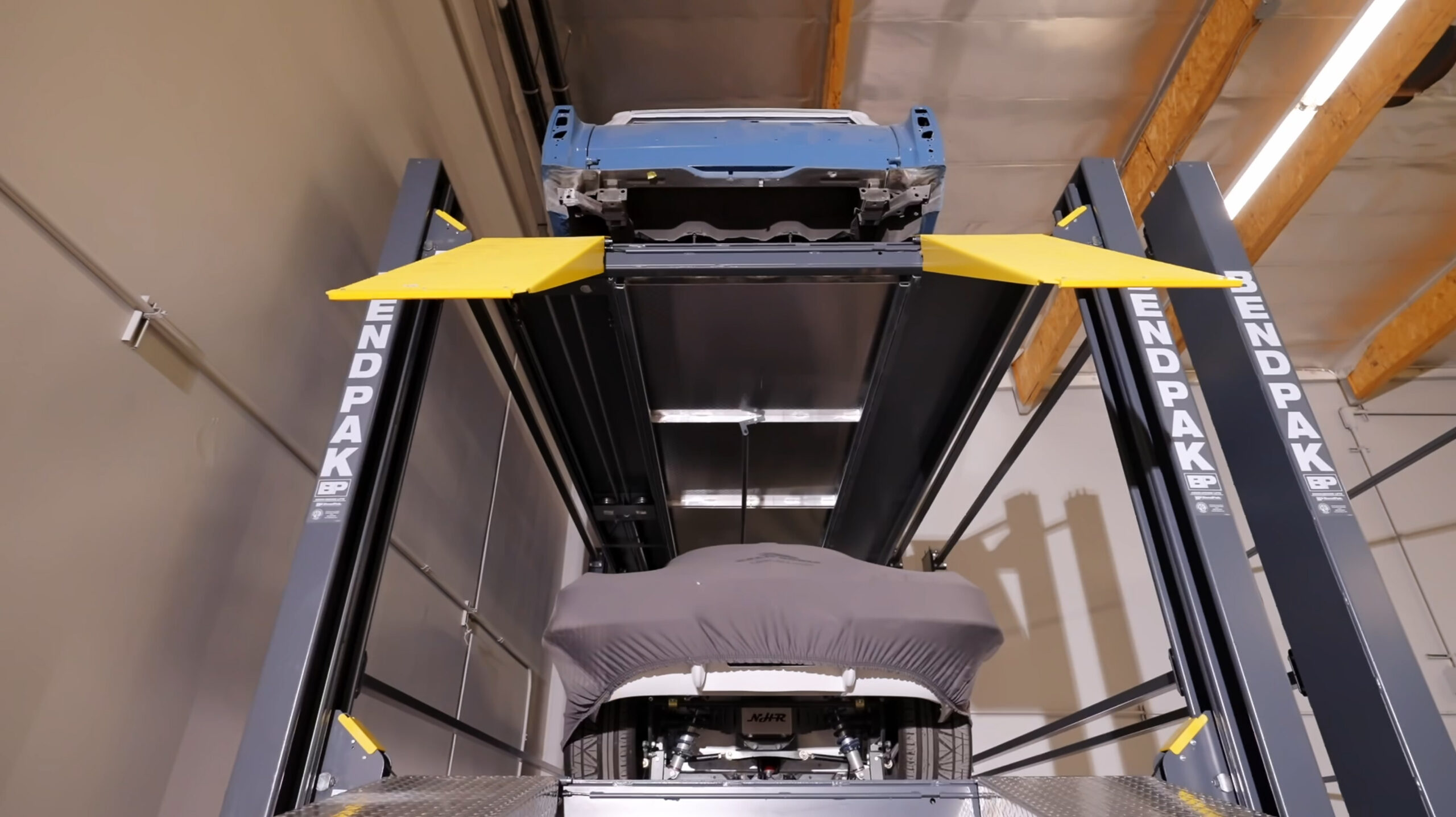
Tyres still take a set if the car sits on them, which is why every space here has its own four post lift and the car goes up on it. A battery still goes flat, so a quality tender stays on it. Humidity still matters to an interior, and ours is held between 40 and 50% whatever the season is doing outside.
Prepare it roughly the way you would for a longer stay. Wash it before it goes in, because sealing dirt onto paint for six weeks helps nobody. Top up the fuel. Decide what you’re doing about the battery. You don’t need a full long term routine for a month, but you do need the basics.
If the renovation turns into something longer, and renovations do, our short term storage page and the indoor storage page cover how the building works either way.
Access, Insurance And What It Costs
Three practical questions come up every time, and they’re worth settling before you book anything.
Access first. You’ll probably want the car during the work, for a weekend or an errand, and that’s normal. Ask how retrieval works and how much notice anyone needs. Here it’s gated and monitored around the clock, so getting to a car goes through people rather than a door on a public row. Call ahead and we’ll have it down and waiting.
Insurance next. Tell your insurer where the car is going. We’re not going to tell you what your homeowner’s policy covers, because that’s between you and them and it varies. What we will say is that a car damaged during building work is a messy claim, and moving it out of the way is the simplest way to avoid having one.
On cost, compare the monthly rate against what you’d be spending anyway. Paint correction after a season of grit isn’t cheap. Neither is a respray. For a renovation that’s already over budget, the storage line is usually the smallest number in the conversation.
| Question to settle first | Why it matters during a renovation |
|---|---|
| How do I get the car back for a weekend? | You’ll want it mid project, and a facility that needs days of notice doesn’t suit. |
| What happens if the work overruns? | Renovation dates move, so find out how the term works before you need it to flex. |
| Does my insurer need telling? | Most want to know where a vehicle is kept, and it’s a short call to make. |
| What’s included in the rate? | A lift, a tender and held climate aren’t standard everywhere, so compare properly. |
Ask those four wherever you’re considering. The wider list of questions worth asking covers the rest.
Booking It Around A Date That Will Move
The process is simple enough, and the only unusual part is the moving target.
Call with your rough dates and we’ll talk through what’s available. You’re welcome to book a walkthrough and see the building first, which most people do. When you’re happy, you reserve the space and we schedule the drop off.
Give yourself a few days of margin at the front. Work tends to start before anyone expects it, and the worst version of this is a car still on the driveway on day one of demolition.
At the back end, don’t collect it the moment the builders leave. Dust hangs around after the work stops, and a final clean usually comes later. Wait until the garage is actually finished and cleaned, then call 725-272-1803 and we’ll have it ready.
We’re at 7185 Bermuda Rd, Las Vegas, NV 89119, a few minutes from the airport and an easy drive from most of the valley.
Frequently Asked
You can, and plenty of people do. The trouble is that a cover over a dusty car moves in the wind, and every movement drags grit across the clear coat. For a few days it’s fine. For the eleven weeks a four week renovation often becomes, it’s the expensive option.
That’s the wrong comparison. The question isn’t whether a month is long. It’s whether the driveway next to a building site is a good place to spend it. A short stay in the wrong place does more damage than a long stay in the right one.
It usually does, which is worth planning for rather than hoping against. Ask how the term works before you commit anywhere, so an extra month isn’t a problem when it arrives.
Yes, and most people want to. Call ahead and we’ll have it down off the lift and ready. Access is gated and monitored, so collection goes through people rather than a public row of doors.
Wash it, so you’re not sealing dirt onto the paint. Sort the fuel and the battery. You don’t need the full long term routine for a few weeks, but a dirty car put away dirty comes out worse than it went in.
Get It Out Of The Dust Before Day One
Tell us roughly when the work starts and roughly when you think it ends. We’ll assume the second date moves, because it usually does, and we’ll talk through what that means for the space.
7185 Bermuda Rd, Las Vegas, NV 89119